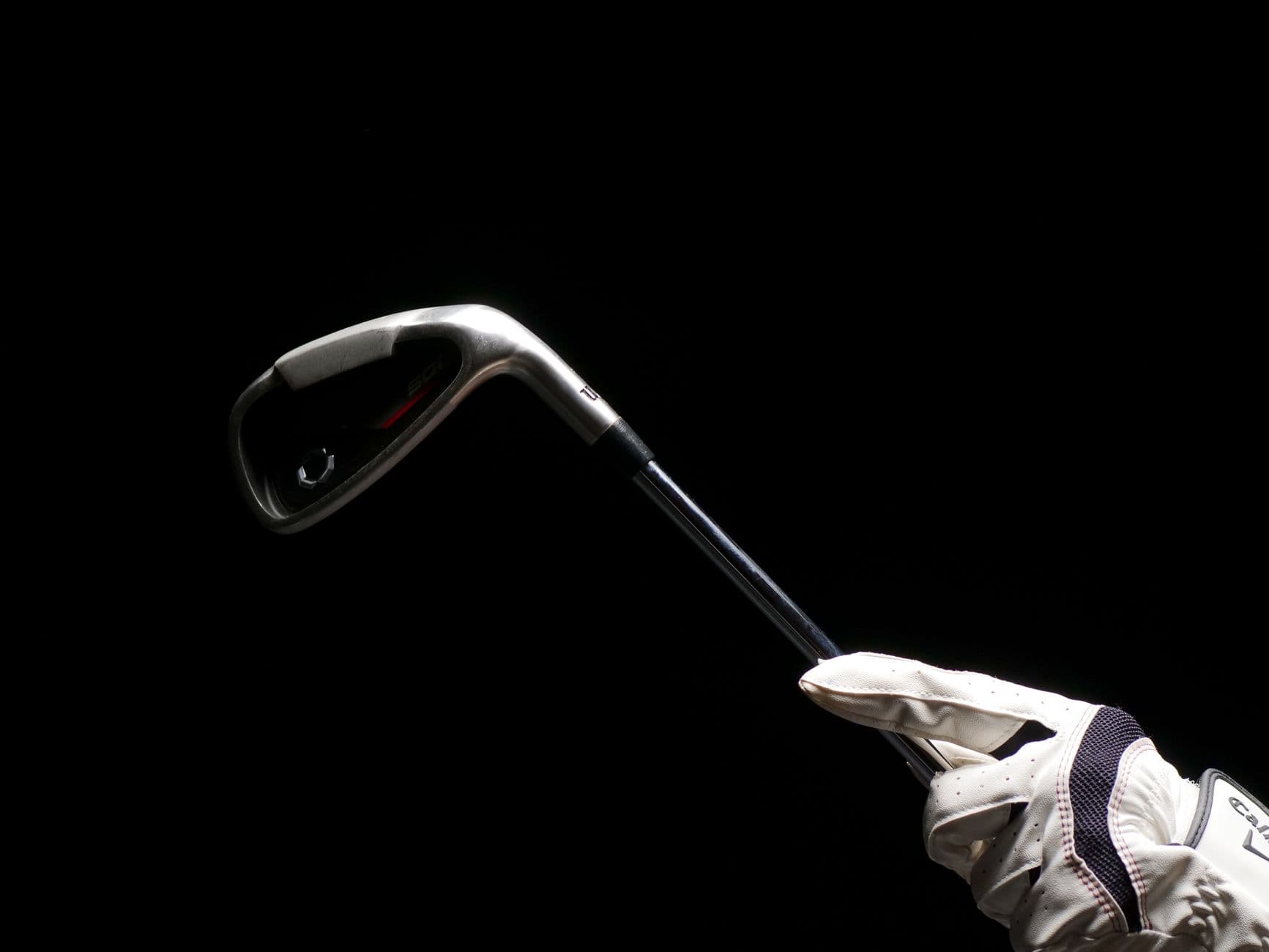
Walk the range at any PGA Tour or DP World Tour event in 2026 and you'll notice something subtle but significant: the driver shafts being slid into player bags look different from five years ago. Lighter overall weights, more aggressive low-kick profiles, and a renewed obsession with spin optimization are reshaping how elite players think about the stick connecting their hands to the clubhead.

The conversation has moved well beyond stiffness ratings. Tour reps and club fitters operating at the highest levels are now deep in the weeds on torque gradients, butt stiffness profiles, and tip deflection patterns — variables that were once the exclusive domain of equipment engineers but are now routinely discussed in player-caddie conversations.
The result is a tour landscape where shaft fitting has become as individualized as a putting stroke. No two elite players are gaming the same profile for the same reason. Understanding what's driving these changes — and what the underlying physics demands — is where real performance gains hide.
The Low-Launch, Low-Spin Arms Race
For the better part of the last decade, the prevailing wisdom on tour was to chase high launch with low spin — a combination that maximizes carry distance on the kind of firm, fast fairways that define modern tournament setups. That equation hasn't changed, but the means of achieving it has evolved considerably.
What we're seeing in 2026 is a bifurcation. Longer hitters with elite clubhead speed — think the players competing comfortably above 120 mph — are increasingly gravitating toward extra-stiff profiles with extremely low torque ratings, often in the 2.0 to 2.5 range. The goal is to eliminate any unwanted face rotation through impact, which becomes a primary dispersion variable at those velocity levels.
Meanwhile, players in the 110–118 mph window are often moving in the opposite direction: toward shafts with softer tip sections that promote earlier load and a more aggressive kick into impact. The counterintuitive finding from multiple tour fitting programs is that these players gain more consistent attack angle control with a profile that "moves" more, provided the mid and butt sections remain relatively firm.
Weight Has Become the New Flex
- Lightweight shafts in the 45–55g range are increasingly appearing in tour bags, particularly among players prioritizing tempo consistency over raw stiffness
- Sub-50g profiles are no longer considered "senior" options — several elite ball-strikers are gaming them to elevate club speed without sacrificing feel
- Heavier 65–75g shafts remain the preference for players who prioritize feedback and want to feel the clubhead load through the swing
- Counter-balanced builds — heavier grips paired with lighter shafts — are gaining traction among players looking to flatten their swing arc
The weight conversation is perhaps the most significant shift of recent seasons. Shaft engineers have become remarkably adept at engineering very light carbon fiber constructions that maintain the butt and mid stiffness of a heavier profile while dramatically reducing overall mass. The upshot is that players can increase swing speed by a meaningful margin without the tradeoff in directional control that plagued earlier lightweight designs.

Adjustability and the Custom-Build Revolution
Tour vans in 2026 are essentially mobile engineering labs. The ability to fine-tune loft, lie, and face angle on modern driver heads has shifted enormous pressure onto the shaft to handle the remaining variables — most critically, spin rate and launch angle. This means shaft selection is now the primary lever a fitter pulls after the head has been dialed in.
Custom tip-trimming protocols are also more sophisticated than ever. A shaft manufacturer's standard tip trim recommendation is increasingly treated as a starting point rather than a specification. Tour reps will sometimes tip-trim aggressively to stiffen the tip section for players producing high spin off the face, or pull back on trimming for players who need help loading the shaft and generating that critical pre-impact bow.
We're not fitting shafts anymore. We're fitting energy transfer profiles. The question isn't 'stiff or X-stiff' — it's 'where do you want the shaft to store and release energy relative to your transition tempo?'
— Tour Shaft Fitting Specialist, DP World Tour
Wind Play and Links Demands
With The Open Championship and other links-style events demanding a very different ball flight than the target-golf courses dominating the US schedule, a growing number of tour players are carrying multiple shafts for the same driver head. It's an equipment strategy that was once reserved for wedge play but has migrated up the bag as players and caddies recognize how dramatically launch and spin conditions need to change in coastal wind.
For links play specifically, the emphasis shifts toward shafts with firmer tip sections that keep spin down even when the player's natural tempo produces a slightly higher dynamic loft at impact. This is where the ball's compression characteristics interact with shaft behavior in ways that are easy to miss on a launch monitor but become brutally obvious when a 20-mph headwind turns a well-struck drive into a rising balloon shot.
It's worth noting that ball construction plays a significant role in this equation as well. At Attomax, our High-Density series — available in Soft, Medium, and Hard compression options — is specifically engineered to work in concert with optimized shaft profiles. Pairing the right compression ball with a shaft tuned for your transition tempo is where elite players find the 5–8 yards of net gain that separate good drives from great ones, especially in variable conditions.
The Smash Factor Optimization Mindset
Smash Factor — the ratio of ball speed to clubhead speed — remains the most honest measurement of energy transfer efficiency. The best drivers of the ball on tour are consistently hitting smash factors above 1.48, and in several documented cases approaching 1.50. The shaft's contribution to this number is often underestimated.
A shaft that loads and unloads in sync with a player's specific tempo adds measurable ball speed at impact by effectively adding to the clubhead's velocity at the critical millisecond of contact. The opposite is also true: a shaft that releases too early or too late — even by a fraction — will cost smash factor regardless of how technically sound the swing is. This is why tour-level fittings now involve high-speed cameras analyzing shaft deflection throughout the entire downswing, not just at address or impact.
What Ambitious Amateurs Can Take Away
The shaft engineering happening at the tour level in 2026 has clear implications for serious club golfers — particularly single-digit handicaps managing their equipment as a performance system rather than a collection of clubs. The gap between tour-specification shafts and what's available to the public has never been narrower.
- Prioritize a dynamic shaft fitting over a static one — your shaft choice should be based on measured data from your actual swing, not your perceived swing speed
- Don't dismiss lighter weight shafts on the basis of tradition; modern sub-55g designs have solved the control problems that plagued their predecessors
- Test tip trim variations during your fitting — a single additional trim can meaningfully change launch and spin characteristics without changing shaft model
- Consider how your shaft choice performs in wind, not just on calm range days; links-style conditions expose shaft mismatches that favorable weather masks
The driver shaft conversation on tour in 2026 is ultimately about precision at high speed. The players leading the way aren't necessarily the ones with the most exotic equipment — they're the ones who understand exactly what their shaft is doing at every point in the swing and have deliberately chosen a profile that amplifies their strengths. That level of intentionality is available to anyone willing to invest in a proper fitting process.
Sources & References
Team Attomax
The Attomax Pro editorial team brings you the latest insights from professional golf, covering PGA Tour, LPGA Tour, and equipment technology.