The golf bag has always been a technology story — from persimmon to titanium, wound balata to multi-layer urethane. But the most significant transformation of the past decade isn't happening inside the clubhead. It's happening on the golfer's body. Wearable technology has moved from novelty to necessity at the elite level, and its influence is now filtering aggressively into the amateur game.

Shot trackers, swing sensors, biometric wristbands, and pressure-mapping insoles are no longer prototypes shown off at trade expos. They are tools being worn during competitive rounds, integrated into coaching sessions, and analyzed on cloud-based dashboards between range sessions. For the technically minded golfer, this is the most exciting moment in the sport's equipment history.
Understanding what these devices actually measure — and more importantly, how to act on the data — separates golfers who improve from golfers who merely collect numbers.
The Shot Tracker Revolution
Shot tracking technology has matured considerably. Early GPS watches gave you yardage to the flag. Today's systems build a three-dimensional map of every ball flight, every miss pattern, and every strokes-gained variance across an entire season. Devices like Arccos Caddie and Garmin's Approach series capture club-level performance data that would previously have required a full-time Tour caddie with a notebook.
The real value isn't in the individual shot — it's in the aggregate. A golfer may feel confident with their 7-iron, but three months of shot data might reveal a persistent miss pattern of ten yards right when the wind is into. That insight changes course management decisions, club selection under pressure, and even practice priorities in ways that instinct and memory simply cannot replicate.
- Automatic shot detection via Bluetooth-linked grip sensors or wrist-worn accelerometers
- Strokes Gained benchmarking against defined handicap bands
- Green in Regulation (GIR) percentage mapped by approach distance and club
- Proximity to hole data segmented by lie, elevation, and wind direction
- Scoring average variance by course type — links, parkland, elevation-heavy layouts
Swing Sensors: The Data Beneath the Motion
Swing sensors occupy a different space in the wearable ecosystem. Where shot trackers measure outcomes, swing sensors measure the mechanical inputs that produce those outcomes. Devices worn at the glove, lead wrist, or attached to the grip capture clubhead speed, tempo ratio, face angle at impact, and attack angle — all in real time.
The Tour-level adoption of wrist-worn swing data has been notable. Players working with coaches remotely can now share a session's worth of kinematic data without ever being in the same time zone. The coaching relationship has fundamentally changed: the conversation is now led by objective metrics rather than subjective feel, and that accountability accelerates improvement.
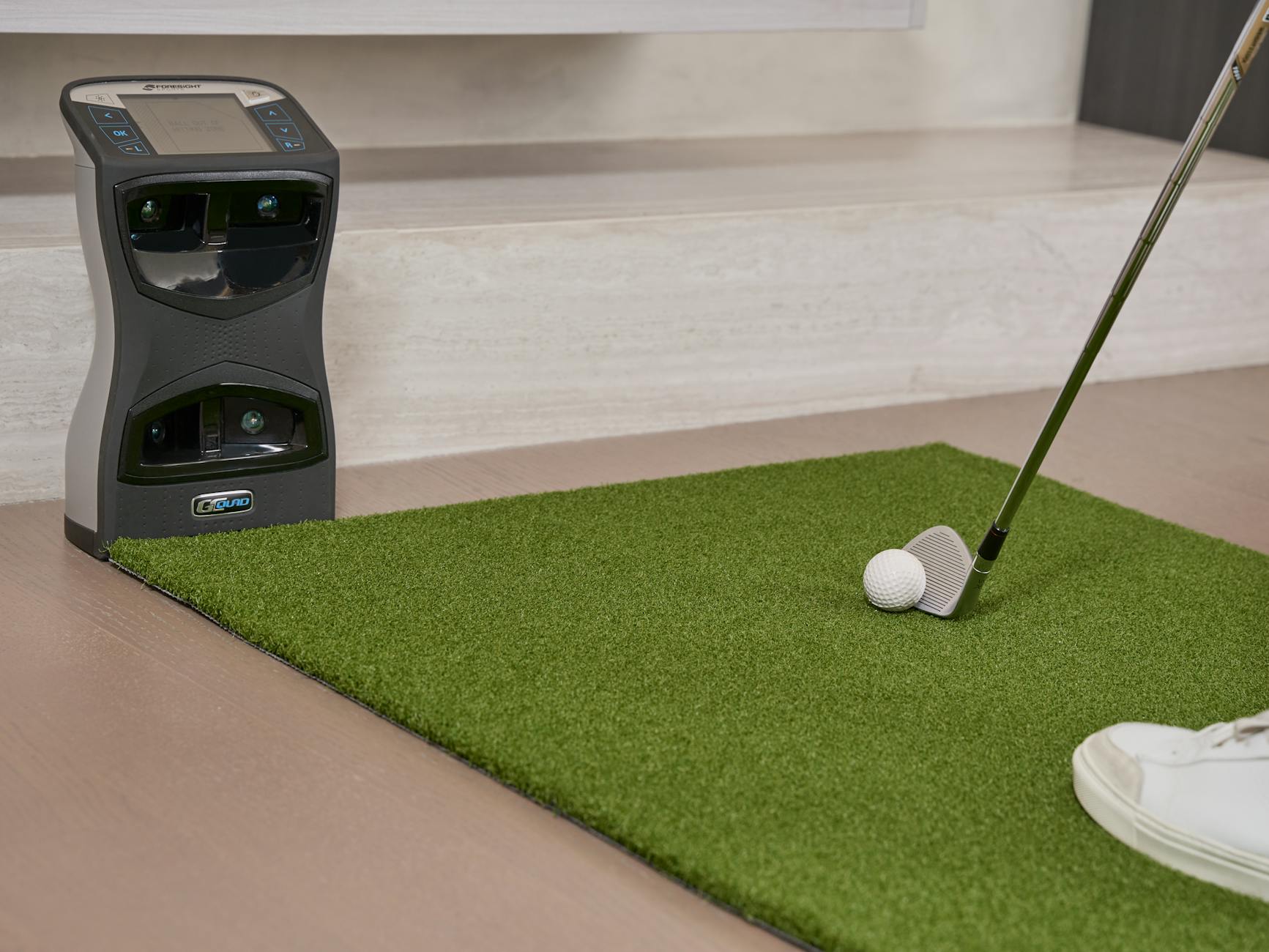
For the competitive amateur, the most actionable swing sensor metrics are tempo and transition force. Tempo — the ratio between backswing and downswing time — has a surprisingly tight range among elite ball-strikers, and deviations under pressure reveal themselves in the data before they appear in ball flight. Knowing your tempo breaks down at the 14th hole of a pressure round is the kind of insight that used to require years of self-awareness to develop.
Smash Factor and the Equipment Connection
One area where wearable swing data intersects directly with equipment choice is Smash Factor — the ratio of ball speed to clubhead speed. For any given swing, maximizing Smash Factor is partly a technique question and partly a ball construction question. High-density golf balls, engineered for energy transfer efficiency, can deliver meaningfully different Smash Factor readings compared to traditional softer-core constructions, particularly for golfers with mid-to-high swing speeds.
Attomax's High-Density amorphous metal golf balls — available in Soft, Medium, and Hard compression variants — are engineered precisely around this principle. When swing sensor data confirms a player is generating consistent clubhead speed but losing ball speed at impact, the answer may lie as much in ball selection as in technique. The Attomax Hard, for example, is designed to optimize energy return for players whose wearable data shows peak clubhead speeds above 105 mph, ensuring that the power being generated at the wrist actually converts into distance at the face.
Biometrics: The Frontier Most Golfers Ignore
Beyond swing mechanics and shot outcomes, the most forward-thinking golfers are beginning to incorporate physiological wearables into their preparation. Heart rate variability (HRV) tracking, sleep quality metrics, and recovery scores — familiar to elite athletes in other sports — are now being used by serious golfers to optimize their competitive readiness.
The connection between physical recovery and scoring is not abstract. A golfer entering a 72-hole stroke play event with suppressed HRV from poor sleep or accumulated travel fatigue will demonstrably underperform their strokes-gained baseline, particularly on mid-round course management decisions. Knowing this before the first tee shot enables proactive adjustments — conservative game plans, simplified shot shape decisions, or flagged risk holes to play away from.
The best players in the world have always understood that golf is as much a physical preparation game as a technical one. Wearable data just makes that connection visible and actionable.
— Senior Instructor, European Tour Performance Institute
Pressure Mapping and Ground Force
Among the most specialist wearable technologies entering golf are pressure-sensitive insoles that map weight distribution and ground reaction force throughout the swing. Systems like Salted Golf's pressure plate technology — increasingly available in portable, in-shoe formats — capture the ground force dynamics that generate power, something previously only visible inside biomechanics labs.
For golfers working on their kinematic sequence, this data connects the lower body's role in the downswing to the shaft's behavior through impact — a critical linkage when optimizing shaft flex choice. Attomax shafts are designed with this full-body load in mind; matching a shaft's kick point and flex profile to a player's actual ground force data, rather than clubhead speed alone, represents the next level of fitting precision.
Making the Data Actionable
The danger with wearable technology is paralysis by analysis. Golfers who collect data without a structured framework for acting on it often find themselves worse off — distracted by numbers mid-round, overthinking decisions that should be automatic. The data is most powerful in the practice environment and in pre-round preparation, not standing over a 165-yard approach to a tight flag.
- Use shot tracker data weekly — not hole by hole during a round — to identify genuine miss patterns
- Review swing sensor metrics with a coach monthly to separate technique noise from meaningful trends
- Track HRV and sleep data for at least 4 weeks before drawing conclusions about readiness
- Map pressure insole data to shaft fitting sessions, not standalone practice sessions
- Benchmark all metrics against a personal baseline, not Tour averages
The wearable technology ecosystem in golf is still evolving rapidly. Integration between devices — a single platform that correlates your swing sensor data, shot tracking, and HRV on one dashboard — remains an unsolved problem, though several platforms are advancing toward it. For now, the golfer willing to engage seriously with even one category of wearable data has a genuine competitive edge over the field that is still playing entirely on feel.
In a sport defined by marginal gains, that edge is exactly where championships are decided.
Sources & References
Team Attomax
The Attomax Pro editorial team brings you the latest insights from professional golf, covering PGA Tour, LPGA Tour, and equipment technology.