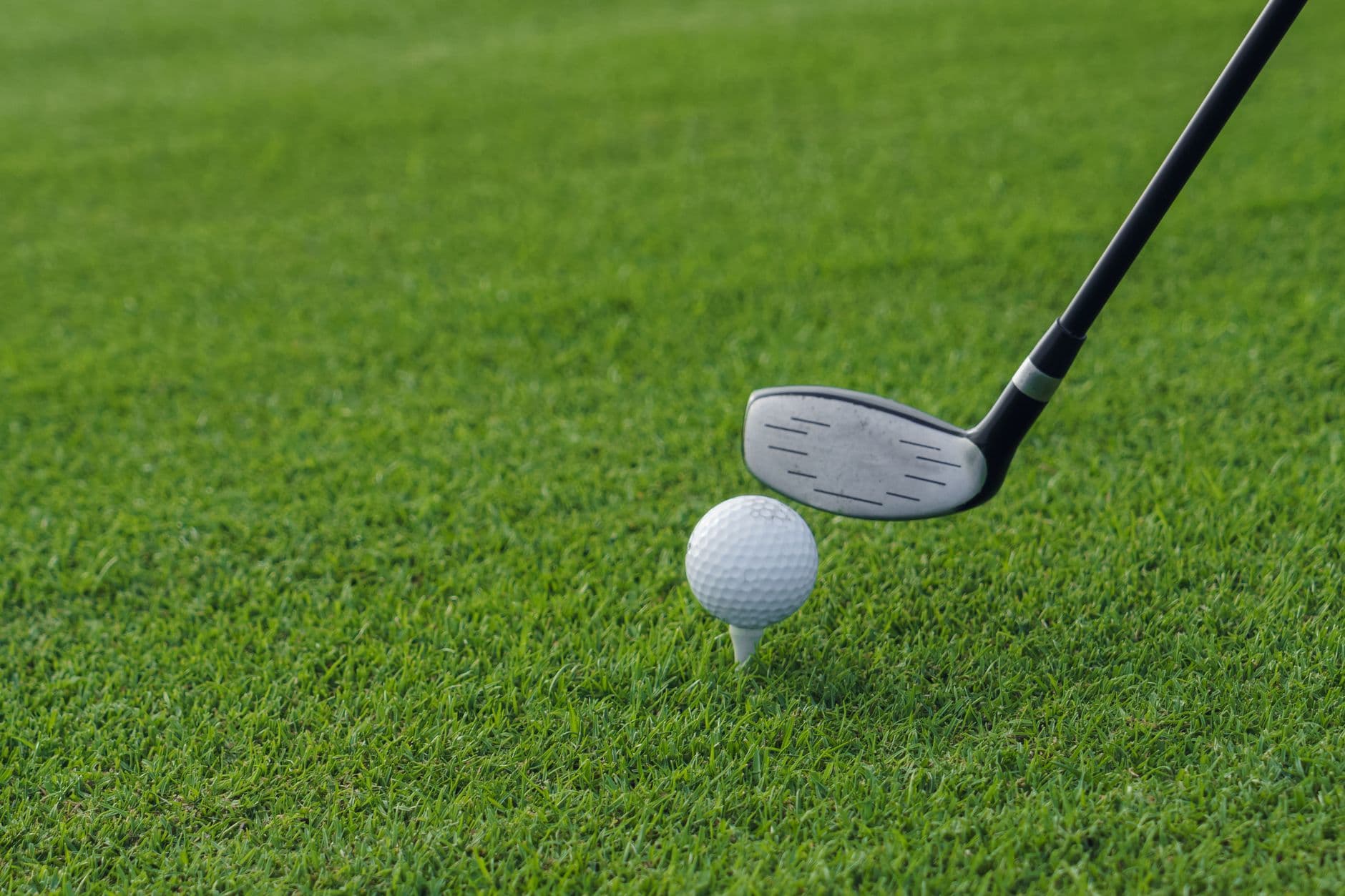
There's a moment in every approach shot that separates the club champion from the weekend player—that split second when the ball lands, grips the green, and either releases toward the pin or spins back into collection areas. Spin control isn't merely about creating impressive check-up shots for social media; it's the foundation of precision iron play and the difference between birdie putts and scrambling for par.

The physics of spin generation involves a complex interplay of clubhead speed, angle of attack, dynamic loft, and friction coefficient at impact. Elite players don't simply hit down on the ball and hope for the best—they engineer specific launch conditions based on the shot at hand, adjusting their technique to produce the exact spin profile required.
Understanding these principles transforms wedge play from guesswork into calculated execution. Let's break down the mechanics and strategies that define spin mastery at the highest levels of the game.
The Physics of Spin Generation
Backspin on a golf ball is created when the clubface slides under the ball at impact, generating friction between the grooves and the cover. The resulting rotation—measured in revolutions per minute (RPM)—determines how quickly the ball decelerates upon landing and whether it will check, release, or spin back.
Three primary factors influence spin rate: clubhead speed, angle of attack, and the quality of contact. Faster clubhead speeds generally produce higher spin, but only when paired with proper strike quality. A descending blow creates more friction than a sweeping motion, which is why tour professionals often produce significantly higher spin rates than amateurs despite similar swing speeds.
- Clubhead speed: Higher velocity increases friction potential at impact
- Angle of attack: Descending strikes create more spin than shallow approaches
- Strike quality: Center-face contact maximizes energy transfer and groove engagement
- Ball construction: Multi-layer urethane-covered balls respond more dramatically to spin inputs
- Groove condition: Fresh, sharp grooves create superior friction coefficients
The ball itself plays a crucial role in this equation. High-density constructions with urethane covers demonstrate superior spin response compared to ionomer-covered distance balls, particularly on partial wedge shots where feel and precision matter most.
Angle of Attack: The Spin Multiplier
While many golfers focus on hitting down aggressively to create spin, the relationship between angle of attack and spin production is more nuanced than simply steepening the descent. Yes, a negative angle of attack generally increases spin, but an excessively steep approach leads to thin strikes, chunked shots, and inconsistent contact.
The optimal angle of attack for wedge shots typically falls between four and six degrees downward. This creates sufficient compression against the ball while maintaining the loft needed for proper launch. Steeper angles deloft the club too aggressively, launching shots too low and reducing stopping power on firm greens.
Spin control isn't about hitting down harder—it's about matching your attack angle to the shot shape you need. Sometimes less aggression produces more stopping power.
— PGA Tour Short Game Coach
To calibrate your angle of attack, focus on shaft lean at impact. Your hands should lead the clubhead through the hitting zone, but not excessively. A forward press of two to three inches ahead of the ball position produces optimal compression without sacrificing the loft you need.
Reading Conditions: Spin Strategy by Situation
Spin control extends far beyond technical execution—it requires reading environmental conditions and adjusting expectations accordingly. Wind, humidity, green firmness, and lie quality all influence how much spin you can realistically generate and how the ball will behave upon landing.
Into the wind, spin rates naturally increase due to the ball's aerodynamic properties. A shot that normally generates 8,000 RPM might produce 9,500 RPM into a two-club breeze. This means you can expect more stopping power but must account for the ball climbing and potentially coming up short.
Downwind conditions present the opposite challenge. Spin rates decrease significantly, and the ball tends to release more upon landing. In these situations, landing the ball shorter of your target and allowing for roll becomes essential strategy.
- Firm greens: Play for less spin and more release; land short of the pin
- Soft greens: Maximize spin and fly the ball to your target
- Morning dew: Moisture between clubface and ball reduces friction—expect less spin
- Tight lies: Reduced grass interference allows cleaner contact and higher spin potential
- Rough lies: Grass intervenes at impact, dramatically reducing spin generation
The Trajectory-Spin Relationship
Launch angle and spin rate exist in constant tension. Higher launches generally accompany lower spin rates, while lower trajectories tend to correlate with higher spin. Understanding this relationship allows you to select the appropriate shot shape for each situation.
When you need maximum stopping power—say, a back pin position with limited green depth—a lower, more spinning trajectory often proves more effective than a high floater. The ball lands with more horizontal velocity, and the backspin works against that momentum to stop the ball quickly.
Conversely, when carrying a bunker to a front pin, a higher trajectory with moderate spin lands more softly, reducing the risk of spinning back off the green. Elite wedge players carry multiple trajectory options for the same distance, selecting their shot shape based on pin position, wind, and green conditions.
Controlling Trajectory with Ball Position
Ball position remains your primary trajectory control mechanism. Moving the ball back in your stance promotes a lower launch with increased spin, while a more forward position creates higher flights with reduced spin rates. A one-inch adjustment can change launch angle by two to three degrees—significant when precision matters.
Practice hitting the same wedge distance from three different ball positions: one inch back of center, center, and one inch forward. This drill develops the feel necessary to match trajectory to situation without mechanical overhaul.
Equipment Considerations for Spin Optimization
Your equipment choices directly influence spin potential. Wedge grooves wear over time, reducing their friction coefficient and diminishing spin rates. Tour professionals replace their wedges regularly—often every few months—to maintain peak spin performance.
Ball selection matters enormously for spin control. High-density constructions with soft urethane covers generate dramatically more spin than firmer, distance-focused alternatives. If short game precision represents a priority in your game, matching your ball choice to that objective proves essential.
Shaft weight and flex also influence spin production, though less directly. Heavier wedge shafts promote more consistent strike patterns, while softer flexes can increase dynamic loft at impact. Experimenting with different shaft profiles often reveals unexpected improvements in spin consistency.
Practice Protocols for Spin Mastery
Developing spin control requires dedicated practice with immediate feedback. Launch monitors provide invaluable data, but even without technology, you can develop feel by practicing to specific targets on the range and observing ball behavior.
Start with half-wedge shots, focusing entirely on strike quality. Clean contact produces a distinctive sound and feel that becomes increasingly recognizable with repetition. Once you've grooved center-face contact, begin varying your angle of attack and observing the resulting spin differences.
The ultimate test of spin mastery comes on the course, where varying lies, pressure, and conditions challenge your technical skills. Approach each wedge shot as a problem-solving exercise: what spin profile does this situation demand, and what adjustments will produce it? That analytical approach, combined with refined technique, defines the path to approach shot excellence.
Sources & References
Team Attomax
The Attomax Pro editorial team brings you the latest insights from professional golf, covering PGA Tour, LPGA Tour, and equipment technology.