Long before launch monitors, optimized spin rates, or Tour-spec shafts, there were the linksland corridors of coastal Scotland — windswept, unforgiving, and utterly magnificent. These courses did not merely host golf; they invented it. The fescue-laced fairways stretching between the North Sea dunes and ancient town boundaries gave the game its geometry, its philosophy, and its enduring soul.
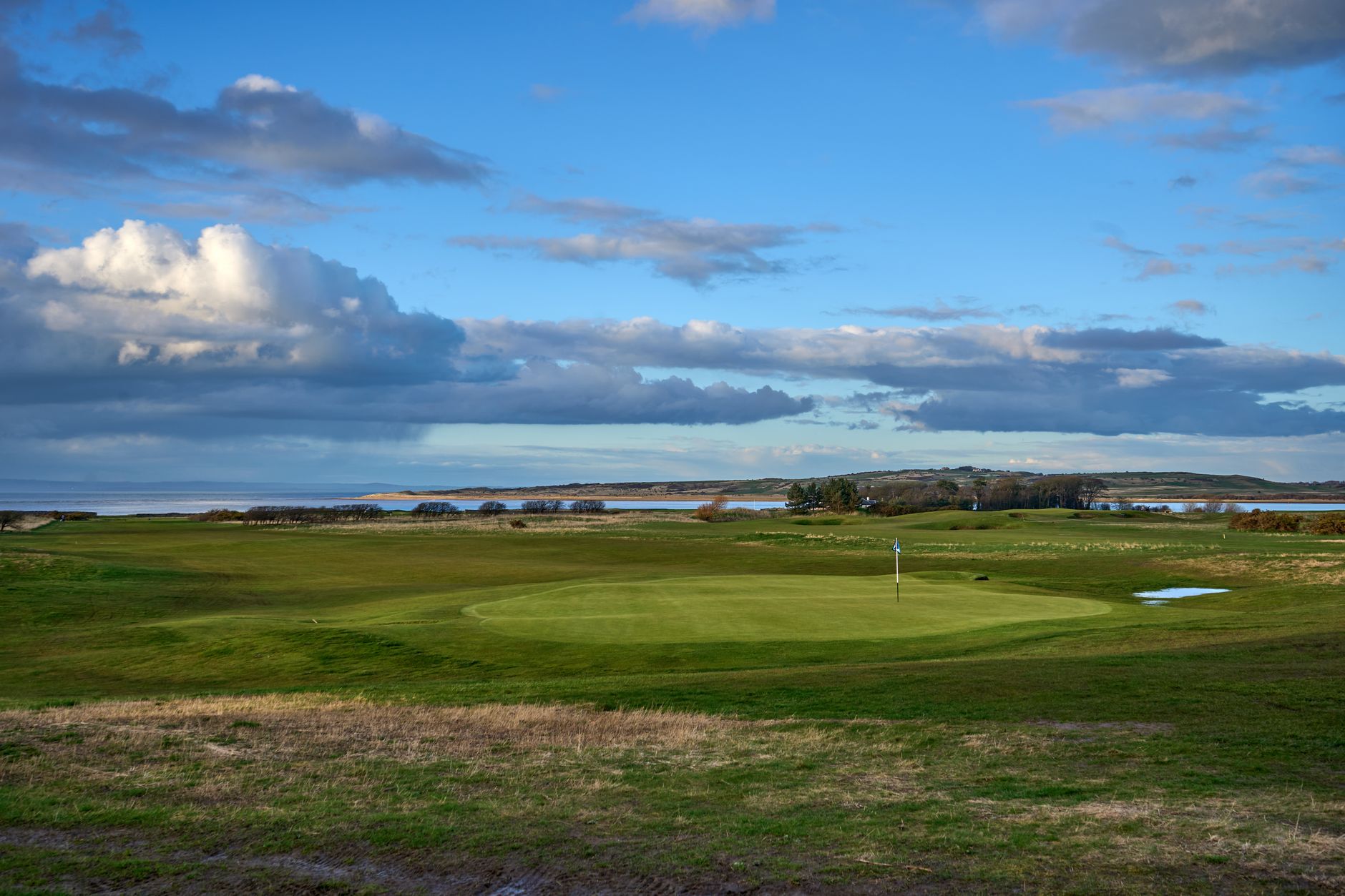
To walk the Old Course at St Andrews, or stand on the tee of Carnoustie's infamous 18th with a crosswind pushing 25 knots, is to understand something that no modern parkland course can fully replicate: golf was never meant to be fair. It was meant to be a negotiation — between the player, the ground, and the weather.
That negotiation, refined over centuries, remains the highest expression of the game. And it continues to shape how elite golfers think, how equipment engineers design, and how every serious student of golf measures their true skill ceiling.
The Geography That Built a Game
Links golf owes its character entirely to geology. The term 'links' derives from the Old English 'hlinc,' referring to the undulating ground connecting coastline to inland terrain. This narrow band of land — too sandy and exposed for farming, too vast to ignore — became the unlikely canvas for what would become the world's most strategically complex sport.
The soil profile of true linksland is almost entirely sand-based, which produces firm, fast-running turf that rewards ground game strategy as much as aerial assault. Pot bunkers, hollowed out by centuries of wind erosion and sheep grazing, are not decorative hazards — they are geological features repurposed into the most punishing traps in golf.
- St Andrews Links (Old Course): Widely regarded as the home of golf, dating back to at least the 15th century
- Carnoustie Golf Links: Host of multiple Open Championships, renowned for its brutal finishing holes
- Royal Dornoch: Remote Highland links considered among the purest expressions of natural golf course design
- Muirfield: East Lothian's immaculate links, home of the Honourable Company of Edinburgh Golfers
- Turnberry (Ailsa Course): Ayrshire clifftop links with some of the most dramatic scenery in world golf
- Royal Troon: Home of the postage stamp 8th, one of golf's most iconic short holes
Course Design Philosophy: Built, Not Manufactured
The great paradox of Scottish links design is that the best holes were never truly designed at all. The Old Course's iconic Road Hole — the 17th — evolved organically around the former railway sheds and the road itself. Natural ridges determined fairway lines. Prevailing winds decided which direction holes should run. The architect's role was curation, not creation.
This philosophy profoundly influenced every major course architect who followed. Donald Ross, who grew up playing Royal Dornoch before emigrating to the United States, embedded links principles — crowned greens, collection areas, ground-level complexity — into American courses like Pinehurst No. 2. Alister MacKenzie, co-designer of Augusta National, studied Scottish contour design obsessively before drawing his most famous routing.
The object of a golf course architect is to provide the player with a pleasant and equitable test of golf, and to give the maximum of pleasure to the greatest number of players.
— Alister MacKenzie, Golf Architecture (1920)
The Open Championship: Links Golf at Its Highest
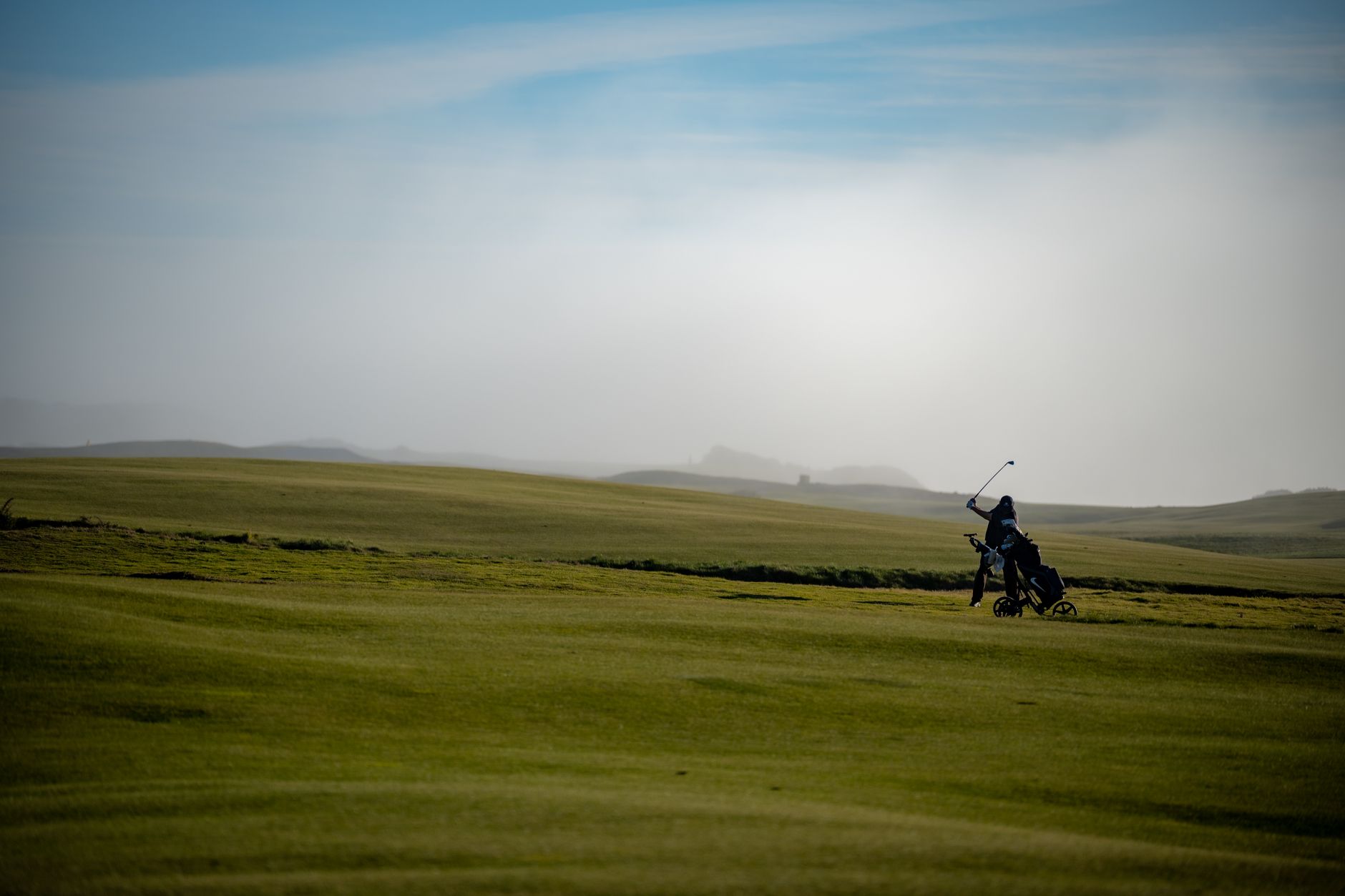
No major embodies the links tradition more completely than The Open Championship — the oldest Major in golf, played exclusively on links or links-adjacent courses across Great Britain and Ireland. When The Open returns to Scottish venues like St Andrews or Carnoustie, it consistently produces the game's most demanding and intellectually rich examination.
The routing at these courses demands a complete reassessment of course management. Drivers are frequently shelved in favour of long irons to maximise run-out on firm fairways. Trajectory control — hitting low, penetrating ball flights that cut beneath the wind — becomes more valuable than raw distance. Greens that in benign conditions appear straightforward become treacherous when a stiff westerly adds two or three club lengths to approach distances.
Wind Management: The True Test of Ball Selection
Nowhere is ball technology tested more rigorously than on a Scottish links in tournament conditions. The relationship between ball compression, aerodynamic profile, and wind performance is not theoretical — it is existential. A ball that spins excessively into a headwind ballooning trajectory can add thirty yards of unwanted carry deviation. Conversely, a ball optimised for penetrating flight keeps a tighter dispersion window and gives the player genuine control over where the ball lands versus where it releases.
This is precisely the environment in which Attomax's high-density amorphous metal core technology was stress-tested against conventional ball construction. The controlled deformation properties of the Attomax Hard and Medium variants deliver a notably flatter, more stable trajectory under crosswind conditions — the kind of performance differential that becomes measurable in scoring terms when playing into a genuine North Sea gale rather than a controlled practice bay.
Membership Traditions and Club Culture
Scottish links clubs carry a weight of tradition that most golf institutions can only aspire to. The Royal and Ancient Golf Club of St Andrews, founded in 1754, codified the rules of golf and governed the global game for centuries before the R&A was established as a separate governing body. Membership at these clubs is not a transaction — it is an inheritance, passed across generations with the solemnity of a family heirloom.
Muirfield, home to the Honourable Company of Edinburgh Golfers — the world's oldest golf club, with records dating to 1744 — maintains one of the most selective membership processes in world golf. Royal Dornoch, despite its remote Highland location, maintains a waiting list that reflects the global pilgrimage status the course has acquired among serious golfers seeking an authentic links experience unmarred by commercialisation.
- Honourable Company of Edinburgh Golfers (Muirfield) — founded 1744, world's oldest golf club with documented records
- Royal and Ancient Golf Club of St Andrews — founded 1754, historical global governing body of golf
- Royal Dornoch Golf Club — founded 1877, consistently ranked among the world's top courses
- Royal Troon Golf Club — founded 1878, host of multiple Open Championships
- Carnoustie Golf Club — founded 1842, home of one of the most demanding links layouts in existence
The Enduring Legacy: What Links Golf Teaches Modern Players
For all the data analytics, launch monitor optimization, and course-management software that defines elite golf in 2026, the lessons encoded into Scottish linksland remain irreducibly relevant. Playing a links course correctly demands imagination over execution — the ability to visualise a running approach shot, to play for a bounce off a slope, to accept that perfection is impossible and that recovery is a skill as valuable as ball striking.
The mental resilience required on a links — where a bogeyed hole can transform in an instant when the wind shifts and suddenly becomes a birdie opportunity — cultivates a tournament mindset that the world's best players consistently identify as a differentiator at the highest level.
If you can play links golf, you can play anywhere. It teaches you to be humble in a way nothing else can.
— A widely held sentiment among touring professionals who grew up playing coastal courses
Scotland's links courses are not relics. They are laboratories — still producing lessons in strategy, equipment performance, and the psychological demands of elite competition that no modern parkland design can fully replicate. For any golfer serious about understanding the game at its most complete, a pilgrimage to the Scottish coast is not nostalgia. It is essential education.
Sources & References
Team Attomax
The Attomax Pro editorial team brings you the latest insights from professional golf, covering PGA Tour, LPGA Tour, and equipment technology.