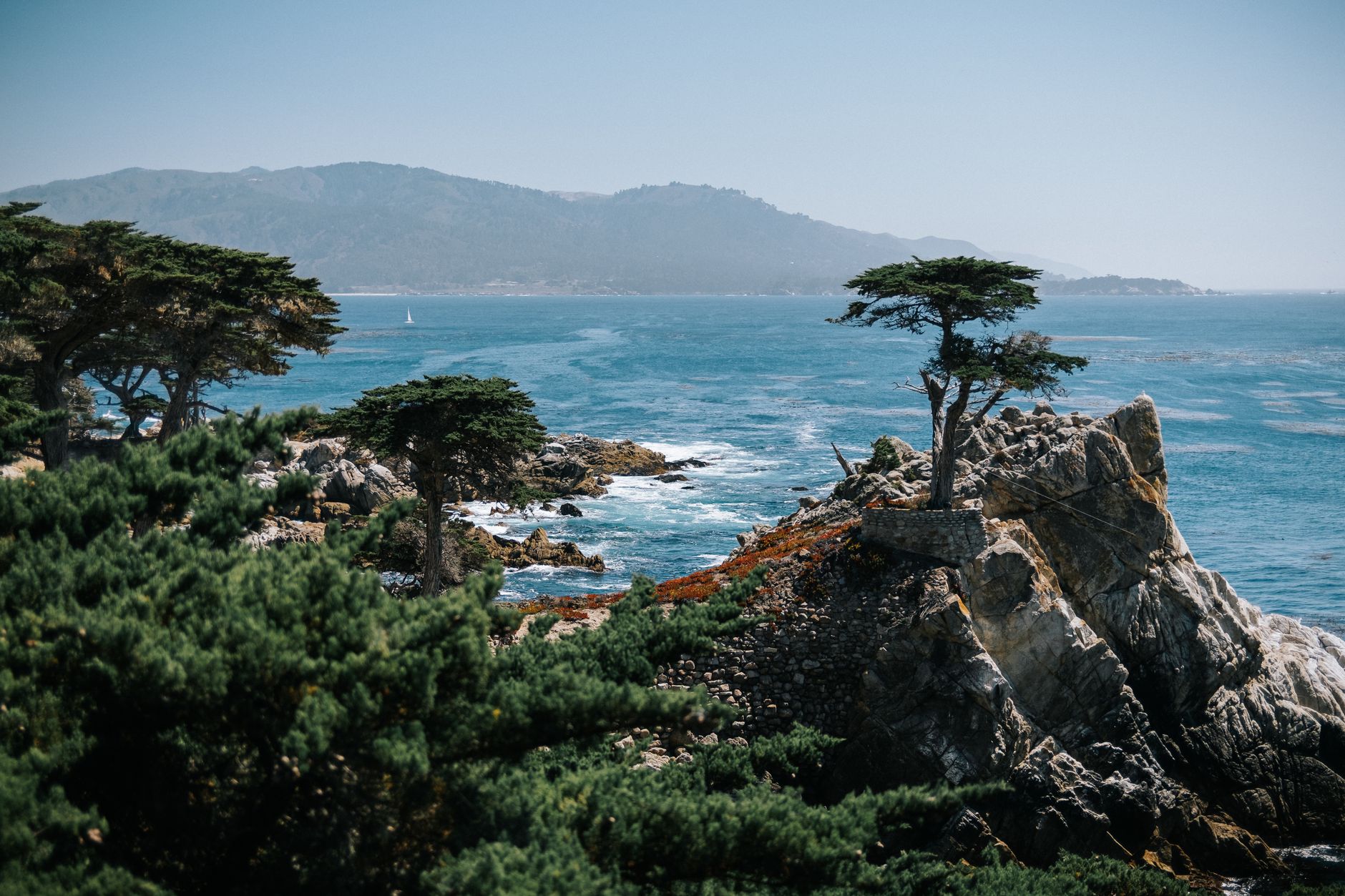
There are golf courses, and then there is Pebble Beach Golf Links. Perched on the cliffs of the Monterey Peninsula, this storied layout has hosted the US Open more times than any other public course in America — and each chapter has delivered theatre worthy of the setting. With the Pacific fog rolling in off Stillwater Cove and fairways that fall away to jagged rock, Pebble Beach does not simply test a golfer's ball-striking. It tests their nerve, their creativity, and ultimately their character.
A Legacy Forged in Major History
Pebble Beach first hosted the US Open in 1972, when Jack Nicklaus famously struck a 1-iron into the flag on the par-3 17th hole to effectively close out the championship. That singular moment — captured in one of golf's most enduring photographs — cemented the course's status as a stage for the extraordinary. The Golden Bear won by three strokes, and Pebble Beach entered the conversation alongside Augusta National and St Andrews as a venue where legends are made.
Tom Watson's chip-in on the 71st hole in 1982 remains one of the most replayed moments in Major championship history. Standing left of the 17th green in deep rough, Watson executed a running chip that found the bottom of the cup, turning what appeared to be a Nicklaus victory into one of Watson's crowning achievements. The roar that swept across the Peninsula that Sunday afternoon echoes still.
I told my caddie, 'I'm going to make it.' He thought I was out of my mind.
— Tom Watson, on his legendary chip-in at the 1982 US Open
The 2000 US Open belongs in a category of its own. Tiger Woods delivered the most dominant performance in Major championship history, winning by fifteen strokes and finishing at twelve-under par — a score that defied conventional logic on a course the USGA had set up to punish. The field averaged over 77 strokes per round. Woods averaged under 69. It was a statistical anomaly that has never been replicated.
What Makes Pebble Beach So Demanding
At its core, Pebble Beach is a links-influenced, cliff-side layout that demands every club in the bag. The front nine winds through relatively sheltered inland terrain before the course pivots dramatically at the 7th hole — a downhill par-3 to a green surrounded on three sides by the Pacific — and then hugs the coastline from the 8th through the 10th, exposing players to full ocean exposure.
Wind is the invisible fifth Major at Pebble Beach. Afternoon tee times routinely see gusts funneling down the coastline, transforming club selection from a mechanical calculation into a real-time negotiation with nature. A downwind 7th can play as little as a wedge; into a stiff headwind, it has consumed 5-irons. Players who rely on ball-flight predictability rather than adaptability are routinely exposed.
- The 8th hole — a blind approach over a cliff edge — is widely considered one of the great par-4s in golf, demanding total commitment on the approach
- The 17th hole, a par-3 of variable length depending on the tee used, has decided more US Open championships than perhaps any single hole in Major history
- The 18th, a sweeping par-5 along the cliff edge, rewards strategic layups but punishes the overambitious — ocean left, out of bounds right
- Greens at Pebble Beach are relatively small and slope dramatically toward the ocean, making approach angle and spin control critical variables
- The rough, when grown to USGA US Open specification, creates near-impossible recovery scenarios from even modest misses
Course Management: How Champions Approach Pebble
The players who succeed at Pebble Beach in US Open conditions typically share one defining trait: aggressive conservatism. They attack when the wind and lie permit, but they know which flags are decoys. At a US Open, a birdie made from the middle of the green is worth the same as a birdie holed from two feet. The temptation to chase pins tucked behind bunkers or near cliff edges has ended countless title charges.
Ball selection becomes a critical pre-tournament decision at Pebble Beach. The course rewards players who can control trajectory and spin simultaneously — particularly on approach shots to firm, fast greens with significant slope. Too much spin on a downwind approach and the ball rides through the green toward the cliffs. Too little and it lands short, leaving treacherous downhill putts. The margin is narrow, and it narrows further as the week progresses and greens firm up under the Monterey sun.
This is exactly where ball compression and construction matter enormously. Players who game a high-density ball with precise spin-layer engineering — the kind of technology Attomax builds into its Hard and Medium compression offerings — gain a measurable advantage when the conditions tighten. The ability to hold a specific window of spin through a 20-mph crosswind, round after round, separates the pretenders from the contenders by Sunday afternoon.
The 17th and 18th: Golf's Greatest Finish
No discussion of Pebble Beach strategy is complete without addressing its closing stretch. The 17th — depending on the championship setup, anywhere from 175 to over 200 yards — presents a deceptively simple surface. But the green is narrow, elevated, and exposed to every directional variant of Pacific wind. At US Open pace, anything that misses the putting surface can result in a triple bogey as easily as a bogey. The correct play, particularly under pressure, is often the center of the green and a two-putt par.
The 18th hole is perhaps the most photogenic and strategically layered closing hole in championship golf. The tee shot must hug the left side of the fairway to set up an angle to the green, but the Pacific Ocean runs the entire length of the hole on the left. Players who bail right face a long-iron or hybrid second into a small green with a bunker short. The ideal play is a controlled draw off the tee — enough to find the left side without releasing into the ocean.
The 18th at Pebble Beach is the best finishing hole in the world. Bar none.
— Jack Nicklaus
Why Pebble Remains the Gold Standard
In an era when Major championships rotate through purpose-built stadium courses and modern parkland venues, Pebble Beach stands apart as an irreplaceable character. The course does not simply demand excellence — it demands a particular kind of excellence. Spatial awareness, wind-reading maturity, short-game creativity, and the psychological fortitude to stand over a 6-iron on a cliff edge with a Major championship on the line.
Every US Open champion who has lifted the trophy at Pebble Beach has earned it in the truest sense of the word. The course offers no shortcuts, tolerates no weaknesses, and respects no reputations. It is, in every meaningful way, the ideal examination for the toughest Major in professional golf.
Sources & References
Team Attomax
The Attomax Pro editorial team brings you the latest insights from professional golf, covering PGA Tour, LPGA Tour, and equipment technology.