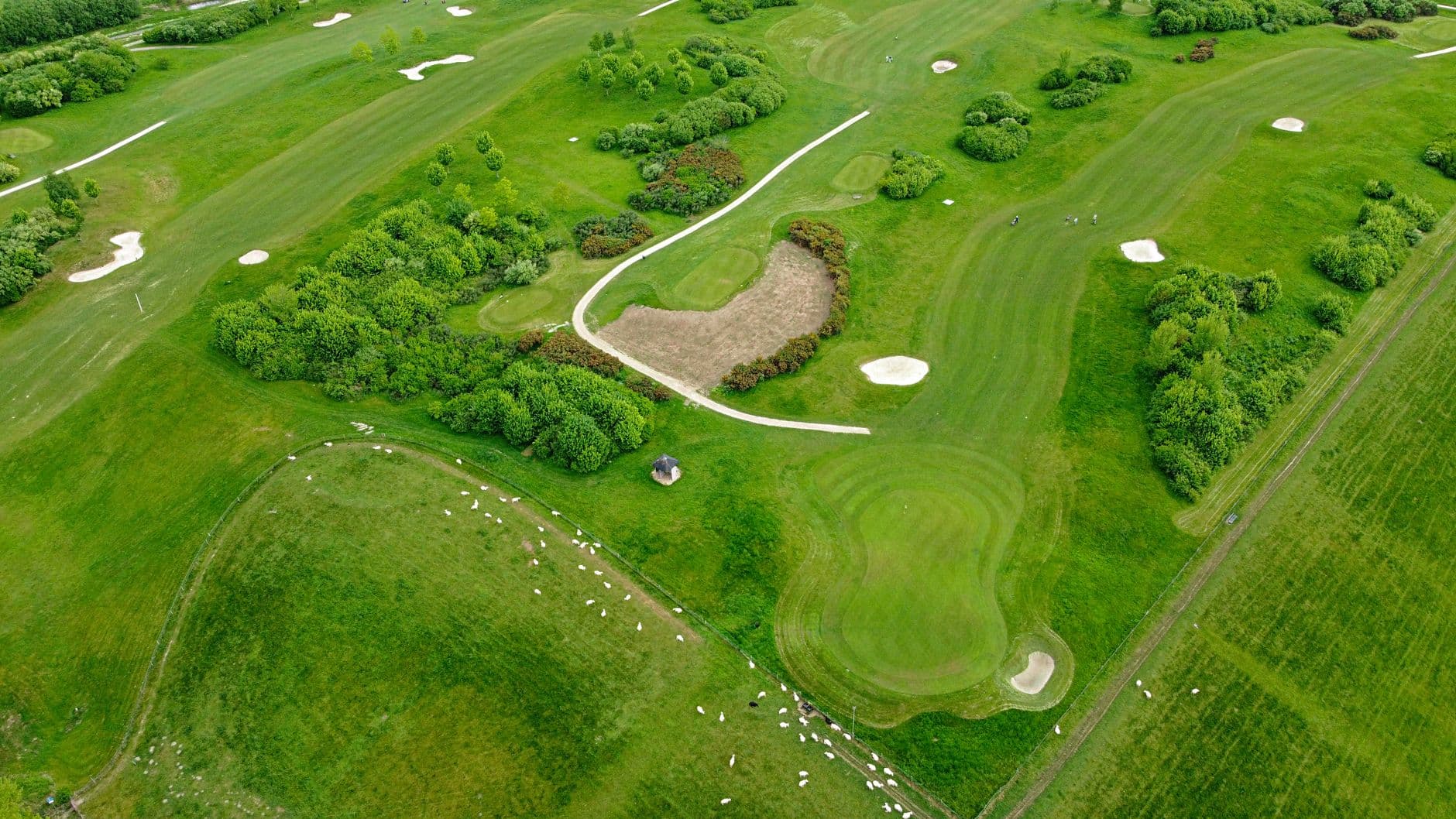
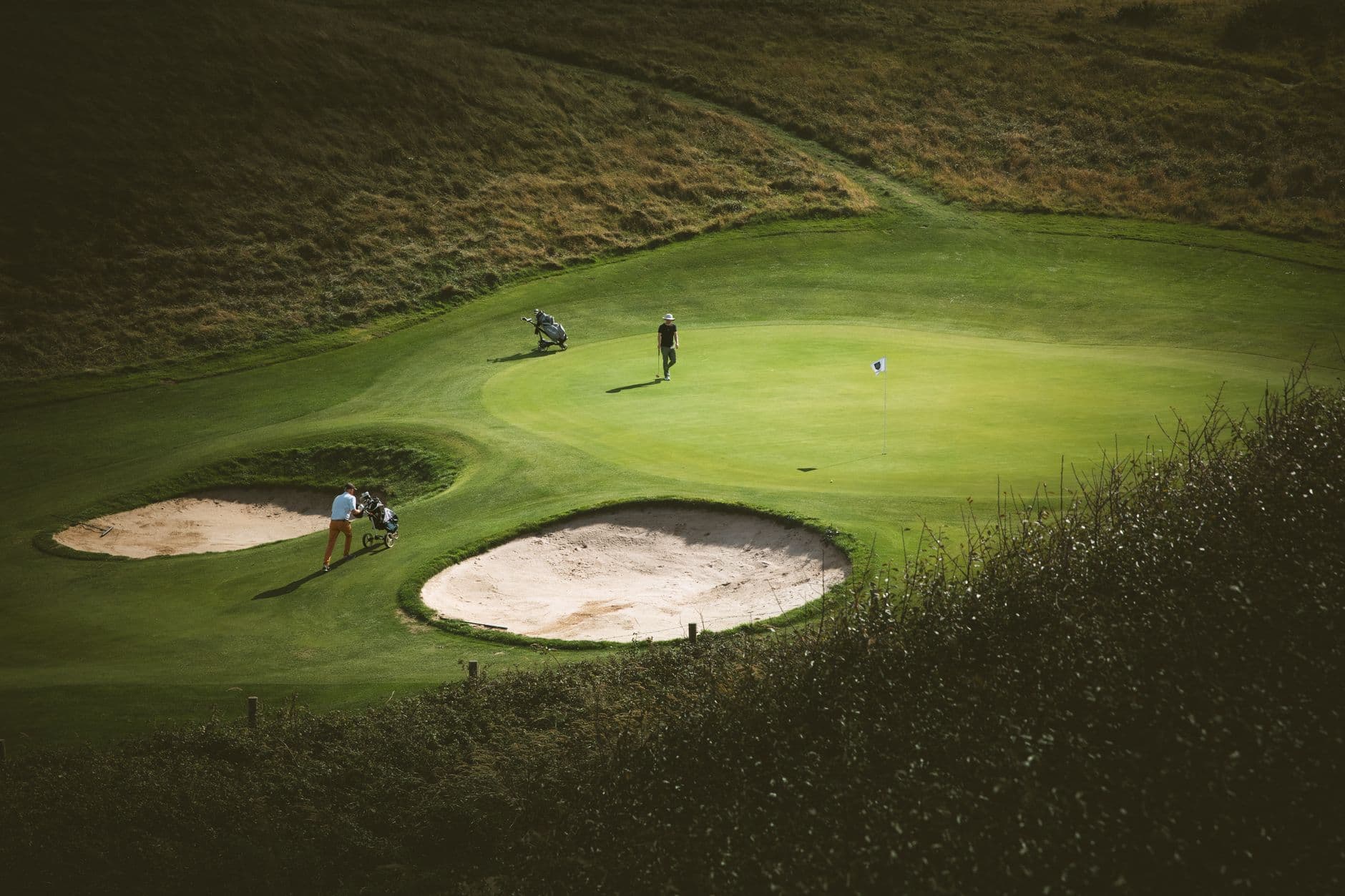
There exists a particular quality of light on the Scottish coast that photographers spend careers chasing and golfers remember long after their final putts have dropped. It arrives sideways through the haar, that distinctive sea mist that rolls in without warning, transforming a benign par-4 into a navigation exercise worthy of ancient mariners. This is links golf in its purest form—the game as it was conceived centuries ago on the sandy, undulating terrain between Scottish fishing villages and the North Sea.

The word 'links' itself derives from the Old English 'hlinc,' meaning rising ground or ridge. These coastal strips of land were considered worthless for farming—too sandy, too windswept, too unpredictable. Yet this very inhospitality created the perfect canvas for a game that would captivate the world.
Understanding Scottish links golf requires abandoning everything modern course architecture has taught us. There are no tree-lined fairways providing shelter, no irrigation systems maintaining predictable surfaces, no cart paths offering comfortable passage between holes. Instead, you encounter firm, fast-running turf where a well-struck 7-iron might release 40 yards past its intended target—or stop dead if it catches a hidden hollow.
The Old Course: Where It All Began
St Andrews needs no introduction, yet it perpetually surprises even those who have walked its fairways dozens of times. The Old Course operates on principles that confound first-time visitors: enormous double greens serving two holes simultaneously, hidden bunkers with names like Hell, Coffin, and the Principal's Nose, and a routing that sends players out along the coastline before turning home in a continuous loop.
What makes the Old Course endure isn't nostalgia—it's the infinite variety of its examination. The same hole plays entirely differently depending on wind direction, pin position, and the firmness of conditions. A downwind 12th might tempt an aggressive line over the gorse, while an into-the-wind 12th demands a conservative strategy that accepts bogey as a reasonable outcome.
- The Old Course features 112 bunkers, many invisible from the tee
- Seven double greens create approach shots of vastly different lengths depending on pin placement
- The Swilcan Bridge, dating to the 15th century, has witnessed every great champion cross its stones
- Wind direction can make the same hole play as much as five clubs different
Reading the Wind: Links Golf's Essential Skill
No element separates accomplished links golfers from casual visitors more than wind management. The Scottish coast delivers winds that swirl, shift, and occasionally lie dormant just long enough to deceive you into a catastrophic club selection. The ability to flight the ball low—the punch shot, the knockdown, the stinger—becomes not a specialty shot but a survival requirement.
Modern equipment has complicated this ancient challenge. High-launching drivers and spin-generating wedges perform magnificently in calm conditions but can become liabilities when 30-knot gusts arrive. This is precisely where ball selection becomes critical.

Premium high-density golf balls, such as those engineered by Attomax, offer measurable advantages in these demanding conditions. Their concentrated mass and optimized dimple patterns create a more penetrating ball flight that resists being knocked off line by crosswinds—a quality links specialists have long sought.
Beyond St Andrews: Scotland's Links Treasures
While the Old Course commands global attention, Scotland's western and northern coasts harbor links courses of equal challenge and perhaps greater visual drama. Royal Troon's 'Postage Stamp'—the par-3 8th measuring barely 120 yards—has humiliated champions and rewarded the timid with aces in the same afternoon.
Turnberry's Ailsa Course stages its examination against the backdrop of the granite dome of Ailsa Craig rising from the Firth of Clyde. The lighthouse standing sentinel beside the 9th tee has become one of golf's most photographed locations, yet the true test lies in navigating the coastal stretch where errant shots find rocky beaches rather than rescue areas.
Links golf is the only form of the game where Mother Nature is as much your opponent as the course itself. You're not playing against par—you're negotiating with the elements.
— Tom Watson
Course Management: The Links Mindset
Successful links golf demands a fundamental shift in strategic thinking. Target golf—selecting a precise landing spot and executing a shot to reach it—fails spectacularly on terrain where the ball rarely stops where it lands. Instead, links players must visualize entire shot sequences, accounting for bounce, roll, and the subtle contours that feed balls toward or away from trouble.
The bump-and-run, essentially extinct from American tournament golf, remains the percentage play around links greens. Running an 8-iron from 60 yards, using the firm turf as an ally rather than fighting it, produces more consistent results than attempting high-spinning lob shots that the wind will gladly redirect.
- Study the ground between your ball and the target—elevation changes and firmness matter as much as distance
- Choose clubs based on trajectory, not just yardage—a low 6-iron often outperforms a high 9-iron in wind
- Accept that approach shots will release significantly—aim for the front portion of greens
- Use the putting surface's contours—many links greens are designed to funnel balls toward the hole from specific angles
The Modern Links Experience
Contemporary Scottish links courses have evolved while preserving their essential character. Improved drainage prevents the waterlogged conditions that once closed courses for weeks, while maintenance practices have created more consistent putting surfaces without sacrificing the firm, fast conditions that define the links experience.
The Open Championship, returning annually to Scottish venues, continues demonstrating that links golf produces a different kind of champion. Here, creativity trumps pure power, course management outweighs shot-making pyrotechnics, and patience proves more valuable than aggression.
For serious golfers contemplating a Scottish links pilgrimage, the experience transcends mere course collection. Walking these windswept stretches of coastline—for links golf is fundamentally a walking game—connects you to centuries of players who faced the same impossible lies, celebrated the same fortunate bounces, and discovered that golf, in its original form, remains the most honest examination of skill, judgment, and temperament the sporting world has devised.
The Scottish links await, unchanged in their essential challenge, ready to humble the overconfident and reward those who approach with appropriate respect. Pack your waterproofs, select a ball engineered for wind stability, and prepare to play the game as it was meant to be played.
Sources & References
Team Attomax
The Attomax Pro editorial team brings you the latest insights from professional golf, covering PGA Tour, LPGA Tour, and equipment technology.