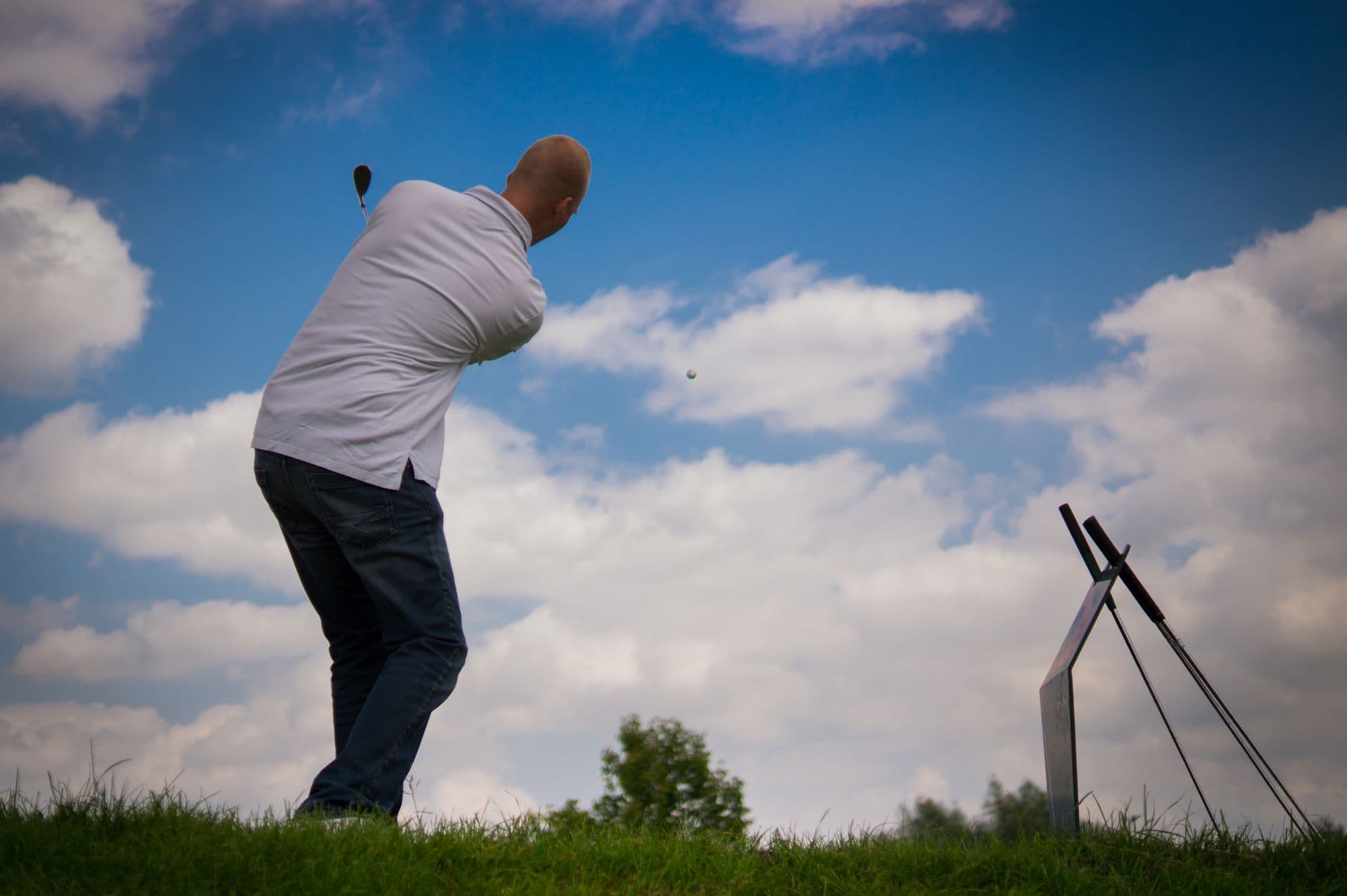
There's a moment in every serious golfer's development when hitting the ball straight stops being the goal. The pursuit of trajectory control—the ability to shape shots on demand and manipulate ball flight through varying conditions—marks the transition from competent player to true shotmaker.

Watch any top-tier professional navigate a dogleg par-4 or work the ball against a crosswind, and you're witnessing thousands of hours of deliberate practice manifesting in real-time decision-making. Shot shaping isn't merely about curving the ball; it's about owning every trajectory in your arsenal and deploying the right one at the precise moment.
The distinction matters more than ever in 2026. As course setups continue to evolve and tournament committees push architectural challenges to their limits, the golfer who can flight the ball high into receptive greens or keep it low beneath coastal winds holds a decisive advantage.
The Physics of Intentional Curvature
Shot shaping fundamentally comes down to the relationship between club path and face angle at impact. When your club path moves in-to-out relative to the target line while the face remains slightly closed to that path (but open to the target), you generate draw spin. The inverse—an out-to-in path with a face open to the path but closed to target—produces controlled fade spin.
What separates recreational attempts from tour-caliber execution is the margin of error. Elite players operate within 2-3 degrees of variance between path and face, producing predictable, repeatable curves. The amateur attempting a draw often introduces 6-8 degrees of difference, resulting in hooks that find trouble rather than fairway.
- Path Direction: Controls the starting line of the ball
- Face Angle: Determines the curve relative to the path
- Attack Angle: Influences launch and spin loft
- Clubhead Speed: Amplifies or dampens curvature intensity
- Strike Location: Gear effect can add or subtract spin axis tilt
Understanding these variables intellectually is step one. Internalizing them through purposeful repetition until they become subconscious is where mastery lives.
Trajectory Windows: High, Medium, and Low
Beyond lateral curvature, vertical trajectory control separates the complete player from the one-dimensional ball-striker. Every shot shape exists across multiple height windows, and the ability to hit a low draw or high fade on command exponentially increases your course management options.

Low trajectory shots require forward ball position adjustments, reduced dynamic loft, and often a quieter lower body through impact. The hands must lead more aggressively, delofting the club while maintaining face control. Players who struggle with trajectory often make the mistake of trying to 'help' the ball down by leaning the shaft forward excessively, which promotes thin contact and loss of control.
High trajectories demand the opposite approach: ball position moves slightly forward, the player maintains width in the downswing, and the release pattern allows the club to work more upward through the zone. The sensation often described is one of 'staying behind the ball' while letting the loft do its work.
The greatest shotmakers don't think about mechanics during execution. They see the shot, feel the shape, and trust the motion they've grooved in practice.
— Butch Harmon
Wind Play: Where Trajectory Control Meets Strategy
Nowhere does trajectory mastery pay greater dividends than in windy conditions. The conventional wisdom of 'taking more club and swinging easier' into a headwind addresses only half the equation. True wind players manipulate both their trajectory window and spin rate to minimize the wind's influence.
Into a headwind, the optimal strategy combines a lower launch with reduced backspin. This is where equipment selection matters significantly. A ball designed with a firmer compression and aerodynamic dimple pattern can maintain velocity through gusts while a softer, higher-spinning ball balloons and loses distance dramatically.
- Headwind: Lower trajectory, reduced spin, club up 1-2 clubs, 75% swing effort
- Downwind: Higher launch maximizes carry, consider spin for stopping power
- Left-to-right crosswind: Aim left and ride the wind, or shape a draw to hold the line
- Right-to-left crosswind: Opposite logic—aim right or commit to a fade that fights the breeze
The mental trap many golfers fall into is fighting the wind rather than using it. A 15 mph left-to-right crosswind can become an ally when you aim at the left rough and let a gentle fade ride the air toward the center. The ball travels a curved path but lands where you intended. Fighting that same wind with a hard draw requires exceptional execution and carries significantly higher risk.
Practice Protocols for Developing Shape Control
Developing reliable shot shapes requires structured practice, not random experimentation. Begin each range session with a defined objective: today might be 'stock fade, three trajectory windows.' Hit ten shots at each height, recording results and noting the feel of successful executions versus misses.
The nine-shot drill remains one of the most effective training exercises for versatility. Hit three shots of each shape (draw, straight, fade) at three trajectory heights (low, medium, high). Nine distinct ball flights, each requiring subtle adjustments to setup, ball position, and swing thought. When you can execute all nine on demand, you've developed genuine command over your ball flight.
On-course practice accelerates learning faster than range work alone. Play intentional shot shapes even when a straight ball would suffice. Hit draws off the tee when the hole doesn't demand it. Flight approach shots low into uphill greens that would accept a higher trajectory. Building confidence in execution requires trusting these shots under competitive pressure.
Equipment Considerations for the Shotmaker
Your equipment can either enhance or limit your shot-shaping capabilities. Shafts with specific bend profiles respond differently to manipulation—a tip-stiff shaft typically promotes lower, more penetrating ball flights, while a softer tip can help launch the ball higher with increased spin.
Ball selection matters enormously for trajectory control. High-density core constructions, like those found in Attomax's amorphous metal technology, offer exceptional stability through the air. When you commit to a low punch draw into a crosswind, you need confidence that the ball will hold its line rather than ballooning unpredictably. The density and aerodynamic properties of your ball can be the difference between a shot that executes as planned and one that gets eaten by the elements.
The marriage of proper shaft flex, ball construction, and developed technique creates a system where shot shaping becomes second nature rather than a heroic effort.
The Mental Game of Commitment
Perhaps the most overlooked aspect of shot shaping is the mental commitment required for execution. Doubt kills curves faster than mechanical errors. When standing over a shot requiring a 10-yard draw around a tree, any hesitation—any small voice suggesting a bail-out straight ball might be safer—introduces tension that disrupts the swing.
Commit fully to your chosen shape or don't hit the shot. The middle ground produces neither the safe play nor the creative one. Elite players visualize the entire ball flight before taking their stance, seeing the apex, the curve, and the landing spot with absolute clarity. By the time they swing, the shot already exists in their mind—the body simply follows.
Shot shaping separates artists from technicians, creative problem-solvers from robotic ball-strikers. Master it, and you don't just play golf courses—you compose your way around them.
Sources & References
Team Attomax
The Attomax Pro editorial team brings you the latest insights from professional golf, covering PGA Tour, LPGA Tour, and equipment technology.