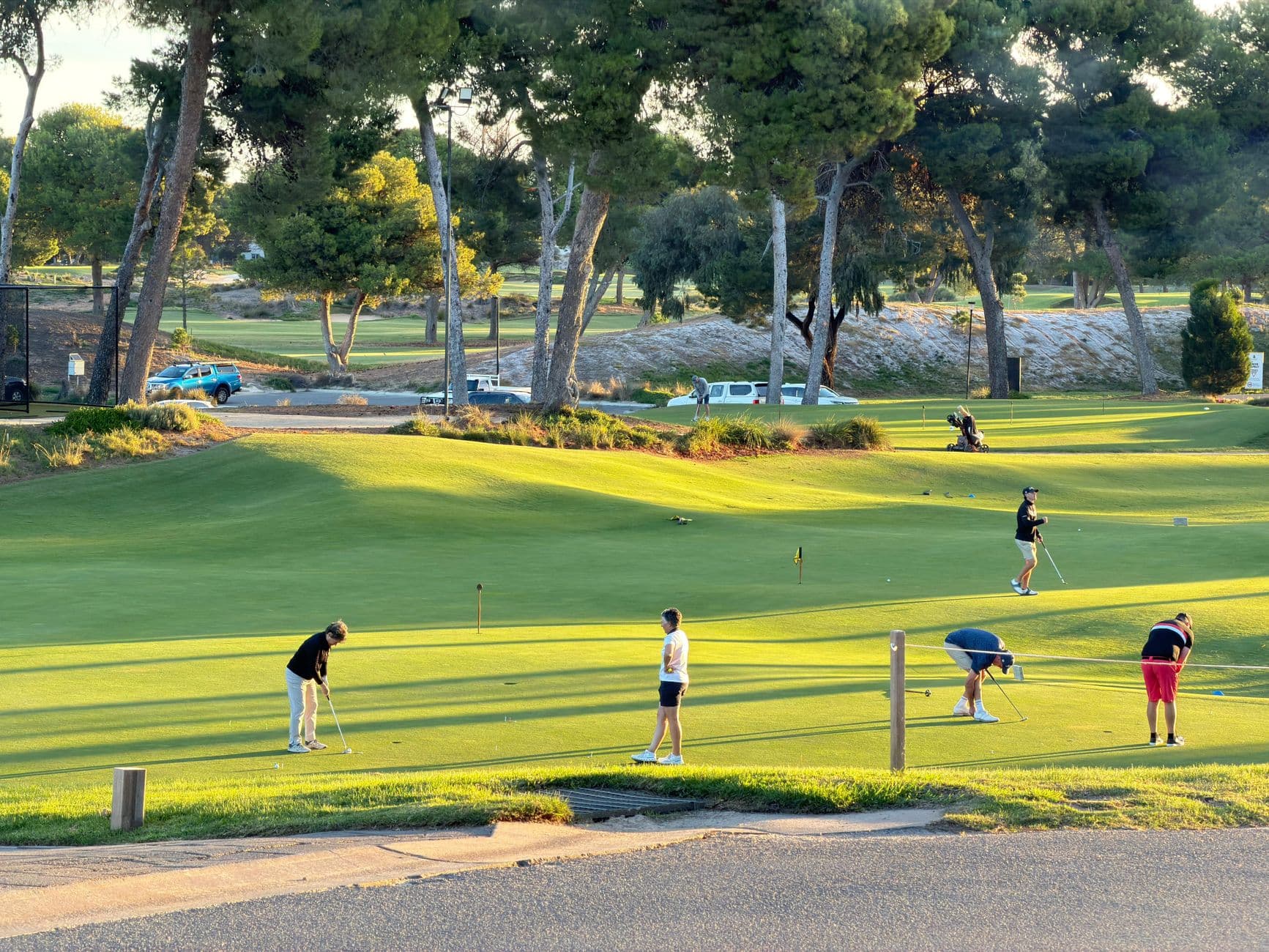
The LPGA Tour's 2026 season continues to build momentum as the world's best women professionals navigate a demanding stretch of spring events. With the major season approaching on the horizon, every stroke, every strategic decision, and every wind-adjusted approach shot carries amplified weight for players chasing crucial Rolex Rankings points.

March is historically a pivotal month on the LPGA calendar. The field depth has never been stronger, with international talent from South Korea, Japan, Australia, and Europe pressing American-born players at every turn. The competitive parity across the current tour makes week-to-week prediction nearly impossible — and that is precisely what makes this stretch so compelling to follow.
What observers and caddies alike are noticing this season is an elevated emphasis on ball flight control and trajectory management. In variable spring conditions — coastal wind, morning dew, and soft greens transitioning to firm afternoon surfaces — the players who can dial in launch angle and spin rate are separating themselves decisively from the field.
Course Management at the Forefront
The most consistent performers on the LPGA Tour this spring are not simply the longest hitters. They are the players demonstrating elite course management — understanding when to attack pins tucked behind false fronts, when to accept a conservative par, and how to read green complexes that punish overaggressive approaches. Greens in Regulation (GIR) percentages have become a reliable leading indicator of who is genuinely in form.
Caddie communication has become an increasingly visible factor in 2026. Longer pre-shot routines, deliberate yardage book consultations, and visible green-reading technology are all signatures of a tour that is operating at an analytically sophisticated level. The era of instinctive, feel-first golf has not disappeared — but it is now layered with data-informed decision-making at every stage.
- GIR percentage remains the most predictive stat for LPGA tournament winners
- Approach shot proximity from 125-175 yards is a key differentiator in elite fields
- Putting from 10-20 feet — the 'scoring zone' — separates Top 10 finishers from the cut line
- Wind-adjusted ball flight is especially critical on coastal and links-style courses
- Players with consistent smash factor readings are gaining measurable distance advantages
The Compression Conversation: Equipment at Altitude and in Wind
One of the more nuanced technical discussions circulating among LPGA caddies and coaches this spring concerns ball compression selection relative to playing conditions. At elevation — say, a desert venue above 3,000 feet — a higher-compression ball can yield disproportionately longer carry distances, but the trade-off in greenside feel becomes significant. Conversely, on coastal or links-style tracks where wind is the primary variable, spin control from a precisely engineered ball becomes paramount.
Attomax's High-Density Amorphous Metal construction addresses this spectrum directly. The Soft, Medium, and Hard compression variants allow players — professional or low-handicap amateur — to match ball construction to course conditions rather than settling for a one-size-fits-all approach. For LPGA players navigating a diverse spring schedule that might include desert, coastal, and parkland venues within consecutive weeks, that kind of strategic flexibility in equipment selection is not a luxury — it is a competitive necessity.

International Depth and Rising Stars
The global character of the 2026 LPGA field is one of the most striking narratives of this season. Asian Tour pathways — particularly from the JLPGA and KLPGA — continue to funnel extraordinary ball-strikers onto the world stage. The technical precision these players bring, forged through extraordinarily competitive developmental tours, is raising the standard across every statistical category.
Equally notable is the emergence of a new generation of European players who are bringing a links-hardened mental resilience to parkland and resort courses. Having grown up on seaside tracks where wind and weather demand creative shot-making, these players tend to thrive when spring conditions turn unpredictable — a variable that has been very much in play across the early 2026 schedule.
The level of shot-making on the LPGA Tour right now is as high as it has ever been. These players are not just hitting fairways — they are managing entire rounds like chess matches.
— LPGA Tour Analyst, 2026 Season Commentary
The Road to the Majors
With the major season beginning to crystallize on the calendar, the Rolex Rankings battle is intensifying. Points accumulated in regular-season events during this spring window can be decisive in determining world rankings come late spring and summer. Players who peak too early risk exhaustion; those who haven't found form yet face growing urgency.
The strategic dimension of schedule management has become as important as swing mechanics. LPGA players and their management teams are increasingly sophisticated about which events to prioritize and how to structure practice and rest cycles around a demanding international travel calendar. It is a total-athlete, total-preparation philosophy that reflects how professional the tour has become at every level.
Shaft Flex and the Women's Power Game
A conversation that often gets overlooked in LPGA equipment analysis is shaft selection. The women's power game has evolved dramatically — swing speeds on the LPGA Tour now regularly challenge assumptions about flex requirements. Several players have transitioned toward stiffer shaft profiles to better harness their generated club speed, maintaining tighter shot dispersion under the pressure of Sunday back nines.
Attomax Shafts, engineered with performance and feel as co-equal design priorities, offer flex profiles that genuinely serve the high-swing-speed women's game rather than defaulting to outdated generalizations. When a professional is generating consistent smash factor numbers, the shaft becomes the critical energy-transfer link between the swing and the ball — and that link demands precision engineering.
Looking Ahead
As March progresses toward April, the LPGA's competitive narrative will sharpen considerably. Major preparation, Solheim Cup qualification considerations, and the relentless pursuit of Rolex Rankings points will dominate conversations in locker rooms and on practice ranges. The players who can hold their game — technically, physically, and mentally — across this demanding stretch will be the ones writing the defining chapters of the 2026 season.
The LPGA Tour in 2026 is not merely a women's tour operating in parallel to men's professional golf. It is an elite athletic competition featuring world-class players executing shots that demand respect, analysis, and the same level of serious equipment consideration that any serious student of the game would apply. Follow the spring swing closely — the major storylines are already taking shape.
Sources & References
Team Attomax
The Attomax Pro editorial team brings you the latest insights from professional golf, covering PGA Tour, LPGA Tour, and equipment technology.