Every shot you hit is a collision event. In the roughly 450 microseconds that a clubface contacts a golf ball, an enormous amount of energy is transferred, absorbed, and returned. How efficiently that cycle completes — and how the ball behaves afterward — is largely determined by compression. Yet despite its fundamental role in ball performance, compression remains one of the most misunderstood concepts in equipment science.
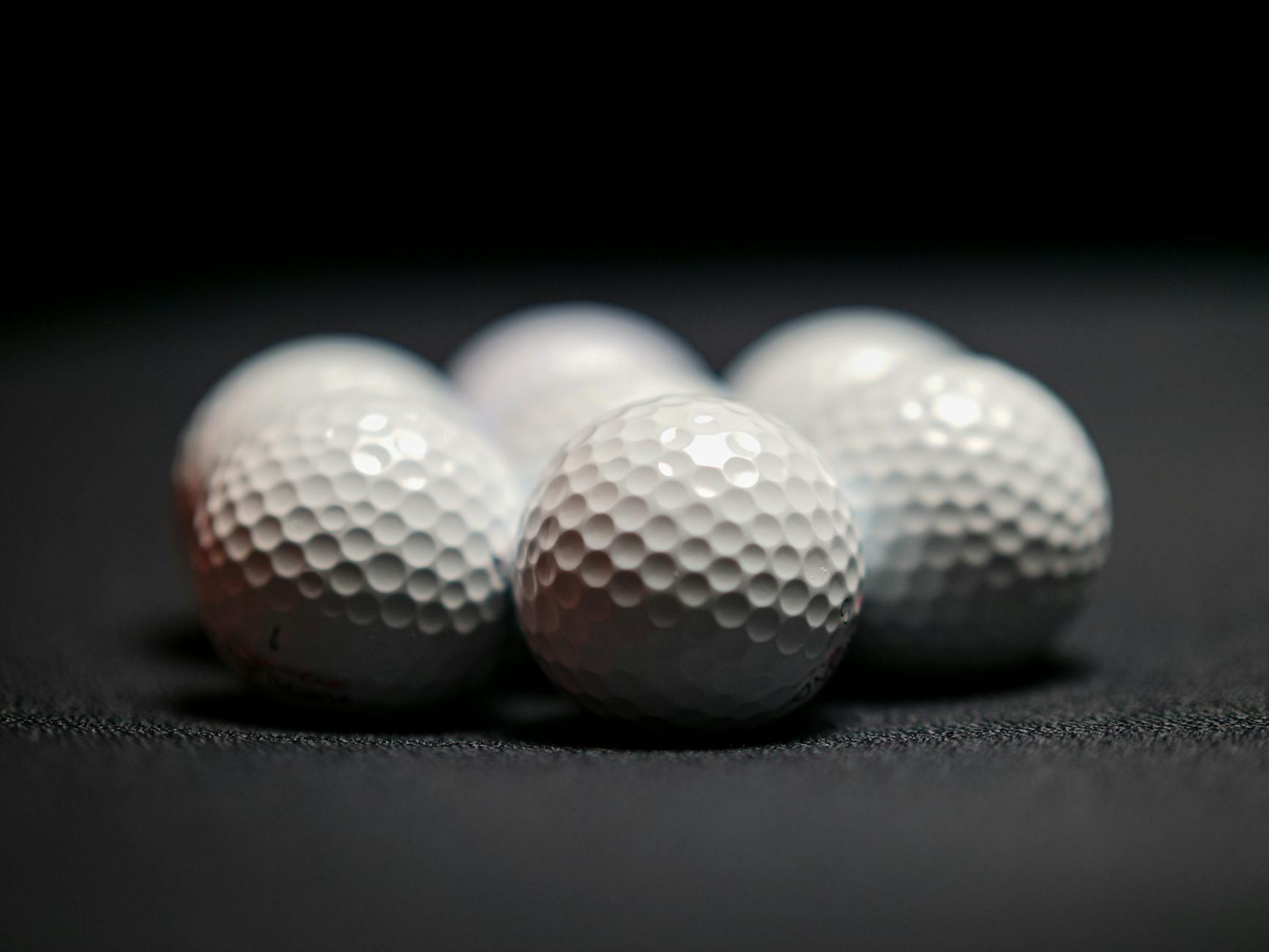
Compression, in technical terms, is the measure of a golf ball's deflection under a specific load — typically expressed as a numeric rating ranging from roughly 30 (very soft) to 120+ (very firm). A lower number means the ball deforms more easily on impact; a higher number means the ball resists deformation and snaps back faster. Neither extreme is universally superior. Performance depends on the interaction between ball compression, clubhead speed, and the mechanical properties of the materials involved.
What makes this conversation genuinely complex is that compression doesn't operate in isolation. It intersects with core material density, mantle layer construction, cover hardness, and the thermodynamic behavior of materials under impact. Traditional urethane-core constructions have governed this space for decades — but advances in materials science, particularly the emergence of high-density amorphous metals, are beginning to redefine what's physically achievable.
The Physics of Impact: Energy Transfer and COR
At the heart of compression science is the Coefficient of Restitution (COR) — the ratio of outgoing to incoming velocity in a collision. A perfect elastic collision would return 100% of energy; real-world golf balls lose some energy to heat and internal friction during deformation. The closer a ball's COR is to its theoretical maximum, the more ball speed is preserved after impact.
Here's where compression directly influences performance: a ball that compresses too little relative to a player's swing speed won't deform sufficiently, resulting in a harsh, inefficient transfer of energy. Conversely, a ball that over-compresses for a given swing speed will absorb too much energy in the deformation phase, failing to rebound efficiently. The sweet spot — where deformation and rebound are optimally matched to swing speed — is where maximum smash factor lives.
- Low compression balls (30–70): Best suited for moderate swing speeds; the softer core deforms more readily, maintaining energy transfer efficiency without requiring high impact force
- Mid compression balls (70–90): The versatile middle ground, offering a balance of distance, feel, and spin control across a wide range of swing profiles
- High compression balls (90–120+): Designed for high clubhead speeds; the firm core resists over-compression, preserving energy and maximizing rebound velocity
- Amorphous metal cores: Deliver superior atomic-level density and elasticity compared to conventional rubber composites, enabling more controlled energy return across the full compression spectrum
Multi-Layer Construction and Spin Separation
Modern performance balls are not single-material objects. A premium three- or four-piece construction uses distinct layers to achieve what engineers call 'spin separation' — the ability to produce low spin off the driver for distance while generating high spin around the greens for control. This is accomplished by engineering differential stiffness gradients from core to cover.
The core primarily governs distance performance. A high-energy, low-deformation core minimizes energy loss and maximizes ball speed. The mantle layer acts as a buffer, moderating spin on long iron shots while allowing the softer urethane or ionomer cover to engage fully on wedge shots — where face friction and groove interaction dominate spin generation. Getting this balance right requires extraordinary precision in material selection and layer geometry.
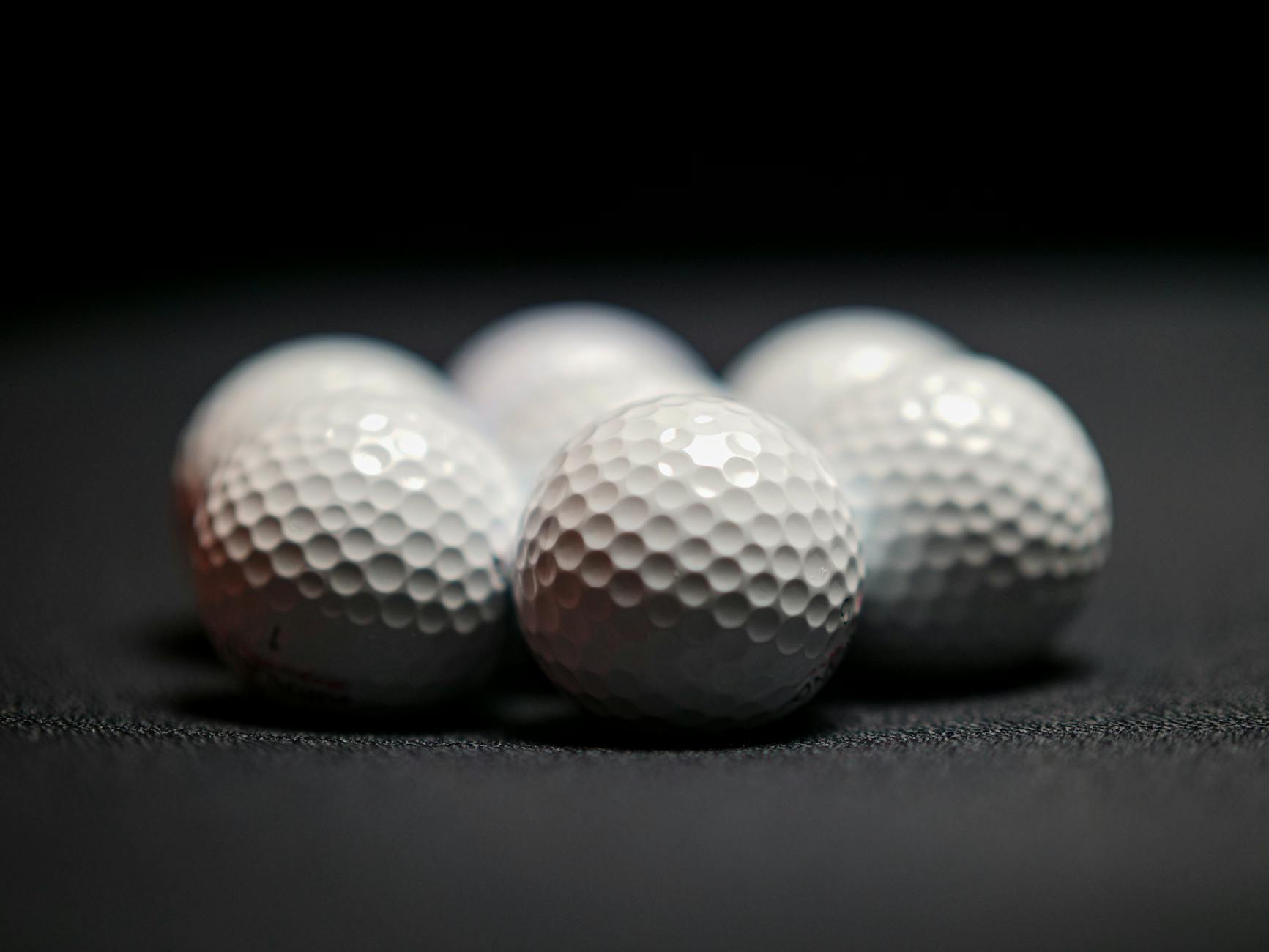
This is precisely where Attomax's high-density amorphous metal technology introduces a fundamentally different engineering paradigm. Unlike conventional rubber-based cores, which rely on polymer chain elasticity, amorphous metals exhibit an isotropic atomic structure — meaning their mechanical properties are uniform in all directions. This eliminates the directional inconsistency that can subtly alter energy transfer depending on impact location, producing a more predictable and repeatable ball flight regardless of strike quality.
Compression, Altitude, and Environmental Variables
Serious course managers know that ball compression doesn't behave identically across all conditions. Temperature is perhaps the most significant environmental variable. Cold air causes polymers to stiffen — meaning a ball rated at 90 compression at 75°F may effectively behave like a 100+ compression ball on a 40°F morning round. This stiffening reduces energy transfer efficiency, which is why experienced players carry a softer ball option for cold-weather play.
Altitude introduces another layer of complexity. At elevation — think courses in Colorado, Mexico City, or the Highveld in South Africa — reduced air density means less aerodynamic drag. Ball speed carries further, and spin rates have a measurably smaller effect on ball flight curvature. In these conditions, a higher compression ball that prioritizes low spin and maximum ball speed off the driver becomes the strategically superior choice, while mid-compression options with softer covers remain ideal for approach shot control.
The right ball for your game isn't the one Tour players use on television. It's the one that best matches your clubhead speed, your typical playing conditions, and the shot shape demands of your home course.
— Attomax Performance Engineering Team
Matching Compression to Your Swing Profile
The practical takeaway for the serious amateur is this: compression matching is not a one-size-fits-all calculation. It requires an honest assessment of your driver clubhead speed, your typical miss patterns, and the conditions you most frequently play in. A player generating 105+ mph of clubhead speed will extract meaningfully different performance from a firm-compression ball than a player swinging at 85 mph — and the difference isn't just feel, it's measurable in ball speed, launch angle, and spin rate.
Attomax's three-ball lineup — Soft, Medium, and Hard — is engineered with exactly this segmentation in mind. The Hard model's high-density amorphous metal core is optimized for high-speed impact events, delivering a fast, penetrating ball flight with minimal driver spin. The Soft model leverages the same core technology in a configuration calibrated for efficiency at moderate swing speeds, ensuring that players who don't generate Tour-level velocity aren't sacrificing energy return by using a ball that resists their natural impact force. The Medium sits precisely in between, offering the broadest performance envelope for players whose game demands versatility across all shot types.
The Future of Ball Technology
As materials science continues to advance, the boundaries of what's possible in golf ball construction will keep shifting. Amorphous metals, variable-density composites, and nano-engineered surface textures are all active areas of development. The USGA and R&A continue to monitor the distance debate at the elite level, but for the vast majority of players, the real revolution isn't about constraint — it's about precision. The ability to match compression, spin, and energy transfer to individual swing profiles with unprecedented accuracy is the next frontier.
Understanding compression at this level isn't academic — it directly informs every equipment decision you make, from the ball in your bag to the shaft flex in your irons. Physics doesn't lie, and in a game decided by fractions, the golfer who understands the science has a measurable edge before they ever address the ball.
Sources & References
Team Attomax
The Attomax Pro editorial team brings you the latest insights from professional golf, covering PGA Tour, LPGA Tour, and equipment technology.