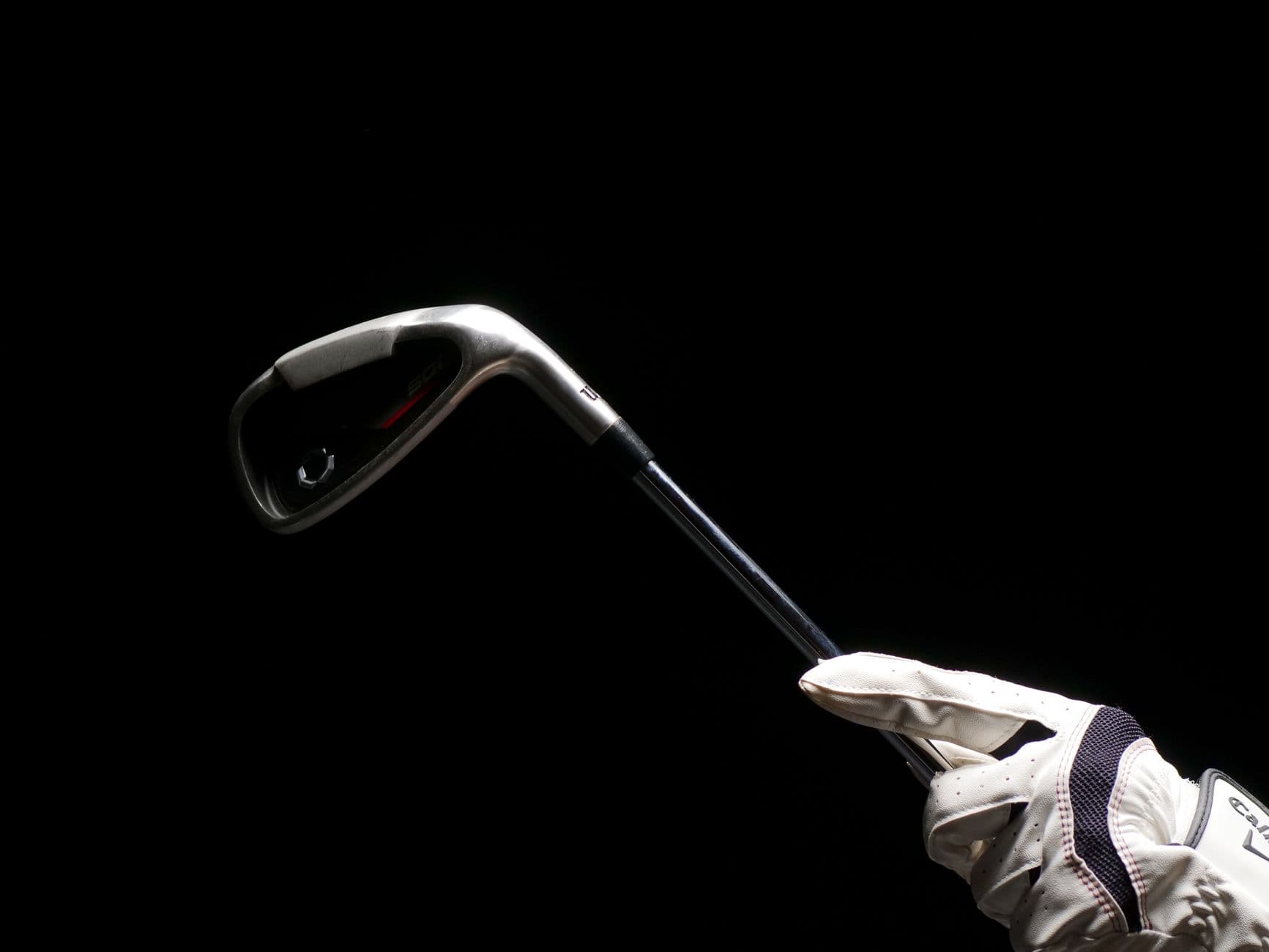
Walk the range at any PGA Tour or DP World Tour event in 2026 and you will notice something: shafts are no longer an afterthought. They are the conversation. Equipment technicians, launch monitor data, and on-course results are converging on a clear message — the right shaft can be the difference between a fairway and a penalty area, and Tour professionals are making changes accordingly.

Driver head technology has reached a point of diminishing returns at the elite level. Clubface materials, adjustable weights, and aerodynamic crowns have all been optimized within the bounds of USGA and R&A conformity rules. The shaft, however, remains one of the last truly variable components — and Tour fitters are exploiting every gram of that variability.
The trend is not simply toward stiffer or lighter. It is toward specificity. Players are no longer content with an off-the-shelf tour stiff profile. They are commissioning multi-bend analysis, demanding custom tip-trimming specifications, and increasingly requesting shafts built around their attack angle and tempo rather than their raw swing speed alone.
The Shift Toward Low-Torque, Low-Launch Profiles
One of the defining narratives on Tour right now is the migration toward low-torque shaft designs among high-speed players. Torque — the shaft's resistance to twisting through impact — has a direct relationship with dispersion. For players generating clubhead speeds above 115 mph, even modest torque figures of 2.5 to 3.5 degrees can introduce face-angle variability that compounds over distance.
Tour fitters are reporting increased demand for shafts in the 2.0 to 2.5 degree torque range, paired with stiff-to-extra-stiff tip sections. This combination rewards players with a late, powerful release, keeping the face square through the aggressive transition that characterizes modern Tour swings trained around ground force mechanics.
- Low torque (sub-2.5°) profiles gaining traction among players with swing speeds exceeding 115 mph
- Mid-kick point shafts increasingly favored over traditional tip-stiff low-launch designs
- Counter-balanced shaft configurations — heavier grip-end weighting — being trialed for sequencing consistency
- Lightweight sub-60g shafts moving from senior demographics to select Tour players seeking faster tempo through impact
- Custom tip-trimming replacing generic stiff/X-stiff labeling as the standard for Tour bag builds
Mid-Kick Points Are Having a Moment
For years, the Tour consensus leaned toward low-kick, tip-stiff shafts built to suppress launch and maintain control at peak swing speeds. That consensus is fracturing. A growing cohort of Tour players — particularly those with steeper attack angles or transition-dominated power generation — are pivoting toward mid-kick profiles that load more efficiently through the mid-section of the shaft.
The physics are intuitive once you understand loading dynamics. A mid-kick shaft stores energy slightly higher up the profile, which can help players who do not have the raw wrist speed to fully activate a low-kick design. The result, when matched correctly, is a slight uptick in ball speed without a corresponding loss of accuracy — the combination every Tour fitter is chasing.

This is precisely the engineering philosophy driving Attomax's shaft development program. The Attomax shaft lineup is engineered around optimal load transfer at multiple kick-point positions, allowing fitters to pair each player's specific tempo signature and attack angle with the flex profile that maximizes smash factor while protecting dispersion under pressure. It is the kind of precision engineering that resonates in a Tour environment where 0.5 mph of additional ball speed has measurable prize-money consequences.
Weight Strategy: Lighter Is Not Always Better
The conversation around shaft weight on Tour is more nuanced than the consumer market might suggest. While lighter shafts can generate clubhead speed for players whose swing is primarily arm-and-shoulder driven, many Tour professionals have discovered that heavier shafts improve their sequencing and tempo consistency across a full competitive week — including the inevitable fatigue of Sunday afternoon with a tournament on the line.
The sweet spot for most Tour professionals currently sits between 65g and 75g — a range that provides enough mass for feedback and path stability without taxing the player's ability to maintain swing speed over 72 holes. Counter-balanced designs, which shift weight toward the grip end, are being explored as a way to lower the effective swing weight while maintaining the feel of a heavier overall shaft.
The shaft is the engine of the driver. The head is the body. You wouldn't put the wrong engine in a Formula 1 chassis and expect to win.
— PGA Tour Equipment Technician (widely attributed in fitting circles)
LPGA Tour: A Different Set of Priorities
On the LPGA Tour, the shaft conversation has its own distinct character. With a wider range of swing speeds represented in the field compared to the PGA Tour, LPGA players and their fitters are approaching shaft selection with an emphasis on maximizing launch conditions and carry distance rather than suppressing them. Lighter shafts in the 50g to 65g range with higher launch profiles remain standard for many players, but the same principle of specificity applies.
Elite LPGA players — particularly those competing with swing speeds in the 95 to 105 mph range — are increasingly being fitted with shafts traditionally categorized for men's tour play. The data-driven approach to fitting has effectively dissolved gender-based shaft categorization at the professional level. A shaft specification is a shaft specification: it either matches the player's data or it does not.
The Role of Ball Compression in the Shaft Equation
It would be incomplete to discuss shaft trends in isolation without acknowledging that shaft selection is always a system decision. The golf ball is the other half of the equation. A shaft engineered to promote a high-energy, low-spin impact window only performs optimally when the ball's compression characteristics allow the clubface to fully transfer that energy at impact.
This is where Attomax's high-density amorphous metal golf ball technology becomes directly relevant. The Attomax Hard ball, designed for high swing speeds, is engineered to maintain structural integrity at impact energies where traditional urethane constructions begin to deform inconsistently. When paired with a precisely matched shaft profile, the result is a smash factor ceiling that conventional ball technology simply cannot reach. For Tour-level players who have already optimized their shaft, the ball becomes the next frontier.
What This Means for the Serious Amateur
Tour shaft trends inevitably filter into the equipment ecosystem available to serious amateurs. The low-torque, mid-kick philosophies being validated on Tour are already appearing in aftermarket shaft options. More importantly, the data-driven fitting approach that Tour professionals now take for granted — attack angle measurement, shaft loading analysis, dynamic loft mapping — is accessible at any qualified fitting center.
The takeaway is not to rush out and replicate a Tour pro's exact shaft specification. It is to approach your own fitting with the same rigorous, data-first mindset that is driving shaft changes across the world's best bags. Swing speed is one variable. Tempo, transition force, attack angle, and release pattern are the complete picture. Any fitter worth their launch monitor knows the difference.
In 2026, the shaft market has never been more sophisticated — and for competitive golfers at every level, that is an opportunity worth taking seriously.
Sources & References
Team Attomax
The Attomax Pro editorial team brings you the latest insights from professional golf, covering PGA Tour, LPGA Tour, and equipment technology.