Custom fitting is no longer a luxury reserved for tour professionals or low-handicap club members. By March 2026, the practice has become the baseline expectation for any serious golfer looking to extract measurable performance gains — and the technology powering those sessions has advanced to a level that would have been unrecognizable even a decade ago.
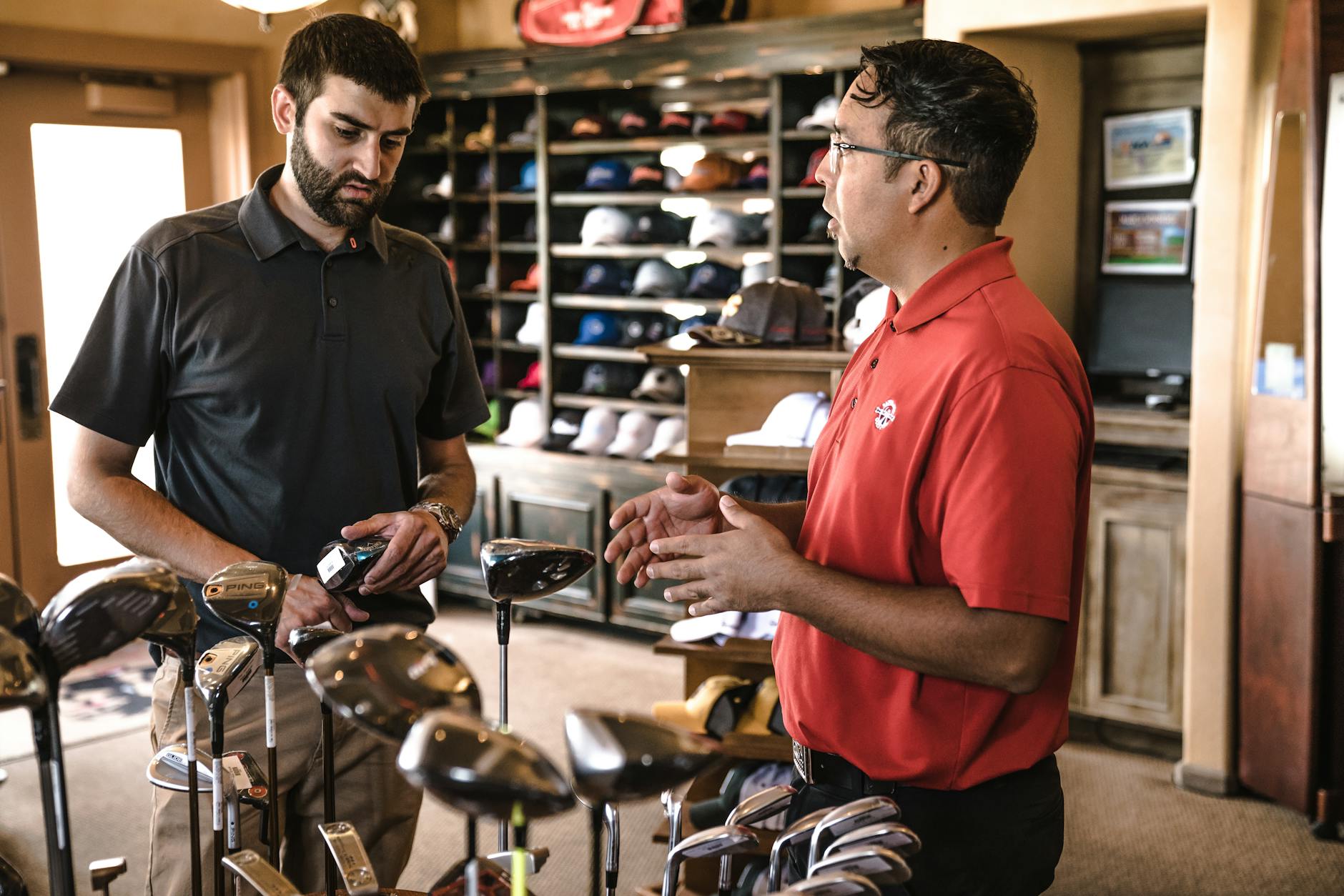
What's changed most dramatically isn't the hardware sitting in the fitting bay — it's the philosophy behind the process. Fitters are no longer simply matching shaft flex to swing speed. They're building a complete performance profile: attack angle, dynamic loft, spin loft, smash factor, and increasingly, how a player's ball choice interacts with every club in the bag.
The shift toward whole-bag fitting sessions — where a golfer is assessed from driver through wedge, including their ball — reflects a more sophisticated understanding of how equipment variables compound across a full round. Optimizing a driver in isolation, while playing a ball that undermines wedge spin or iron trajectory, leaves meaningful strokes on the table.
Launch Monitor Data: The New Language of Fitting
The proliferation of high-fidelity launch monitors — both at professional fitting centers and in consumer hands — has fundamentally changed the conversation between fitter and golfer. Metrics that once required a PGA Tour van and a data analyst are now visible in real time on a tablet in a retail fitting bay.
Elite fitters today focus less on raw ball speed and more on efficiency ratios. A player generating strong smash factor but losing distance to excessive spin, or carrying a driver that peaks too low in the window for their typical course elevation, is a fitting candidate regardless of their handicap index. The data exposes inefficiencies that feel-based club selection simply cannot.
- Spin loft optimization is now considered as important as total spin rate in driver fitting
- Attack angle data has shifted fitting recommendations significantly for players who previously under-performed with standard loft configurations
- Dynamic shaft profiling — measuring how a shaft loads and unloads through the delivery zone — has replaced simple flex categorization at premium fitting centers
- Ball speed consistency across the face (not just peak speed) is now a primary driver selection metric
- Whole-bag fitting sessions, including ball fitting, are increasingly standard at serious facilities
Shaft Profiling: Beyond Flex Categories
The old S, R, X, A labeling system for shaft flex has been quietly rendered obsolete by sophisticated players and fitters alike. Two shafts labeled 'Stiff' from different manufacturers can behave completely differently in terms of bend profile, tip stiffness, torque, and weight — all of which influence trajectory, dispersion, and feel.
Modern shaft fitting maps a player's tempo, transition force, and release point against a shaft's EI (bending stiffness) curve. A player with a fast tempo but a smooth transition may actually perform better in a shaft that feels counterintuitively softer through the mid-section, because it matches how their hands and body sequence through impact. This level of nuance is where fitting becomes genuinely transformative.
Attomax shafts are designed with this philosophy in mind — engineered for players who understand that flex is a starting point, not a destination. Matching the right shaft profile to a verified swing delivery is the difference between a club that performs and one that merely fits in the bag.
Ball Fitting: The Most Overlooked Variable
Across the fitting landscape, ball selection remains the most undervalued component of equipment optimization. Most golfers — including many single-digit handicappers — select their ball based on brand preference, playing partners' recommendations, or what they find in the pro shop. Very few have sat through a structured ball fitting that tests compression, spin layer response, and feel across multiple club categories simultaneously.
The core question in ball fitting is no longer simply about compression and swing speed. It's about how a ball's construction interacts with the player's specific delivery conditions. A golfer with high attack angle and aggressive impact who generates significant driver spin may need a ball that reduces spin off the tee while still producing the short-game control they rely on inside 100 yards. That's a precise specification.
The best fitting session in the world is incomplete if it ends before you've matched the right ball to the swing. The ball is the only piece of equipment that touches every shot.
— Industry fitting specialist perspective
Attomax's high-density amorphous metal construction addresses this challenge directly. The Soft, Medium, and Hard compression options in the Attomax lineup are designed to be fit — not guessed. Golfers playing at altitude, on fast-running links-style courses, or in cold conditions where compression behavior shifts measurably, benefit from understanding exactly where on the compression spectrum their swing and course conditions align. It's precision that traditional ball construction simply doesn't offer with the same consistency.
The Rise of Dynamic and Remote Fitting
One of the more significant trends entering 2026 is the mainstreaming of dynamic outdoor fitting sessions — conducted on actual fairways, not just on artificial turf mats under fluorescent lighting. The gap between indoor and outdoor data can be significant for certain player profiles, particularly when assessing driver carry in real atmospheric conditions or evaluating wedge spin on actual turf interaction.
Simultaneously, the fitting industry has seen growth in remote and hybrid fitting models. High-resolution swing capture combined with detailed launch data submitted to a master fitter — who may be located in a different country — is now a credible pathway for golfers who don't have access to elite local fitting infrastructure. For international club members and traveling professionals, this has meaningfully expanded access to top-tier fitting expertise.
Course-Specific Fitting: The Next Frontier
Perhaps the most sophisticated evolution in fitting is the emergence of course-specific setup consultations. Rather than fitting to a general performance baseline, elite fitters are now working with low-handicap golfers to optimize specific clubs — or even ball choice — for the courses they play most regularly. A member at a links-style coastal track with prevailing crosswinds has fundamentally different equipment needs than a golfer whose home course features tree-lined fairways and soft Bentgrass greens.
Wind play, in particular, is driving renewed interest in shaft and ball pairing for trajectory control. Lower-launching setups demand different flex profiles and compression characteristics than the optimal high-launch, high-spin configurations that dominate fitting recommendations for inland, calm-condition play. This is where understanding ball compression — and the precise behavior of high-density construction under different environmental loads — becomes a genuine competitive variable, not just a marketing specification.
What Serious Golfers Should Demand from a Fitting
The standard for a credible fitting session has risen considerably. Any serious golfer investing in a full bag fitting should expect a process that goes well beyond a 20-minute driver session on a range mat. The benchmarks worth demanding include full delivery data capture across multiple shots, shaft profile analysis rather than simple flex assignment, and an integrated ball fitting component.
- Insist on outdoor or realistic turf-surface fitting conditions wherever possible
- Request delivery zone data — not just ball flight output metrics — to understand cause, not just effect
- Include a structured ball fitting as part of any whole-bag session
- Ask your fitter to document your attack angle and spin loft numbers — they are the foundation of every subsequent fitting decision
- Revisit your fitting after any significant change in swing pattern, fitness level, or primary playing conditions
Custom fitting in 2026 rewards the golfer who treats equipment as a precision instrument rather than a purchase. The data is available, the technology is accessible, and the performance gap between a properly fit setup and a guessed one has never been more quantifiable. The only remaining variable is the willingness to commit to the process with the same seriousness applied to the game itself.
Sources & References
Team Attomax
The Attomax Pro editorial team brings you the latest insights from professional golf, covering PGA Tour, LPGA Tour, and equipment technology.