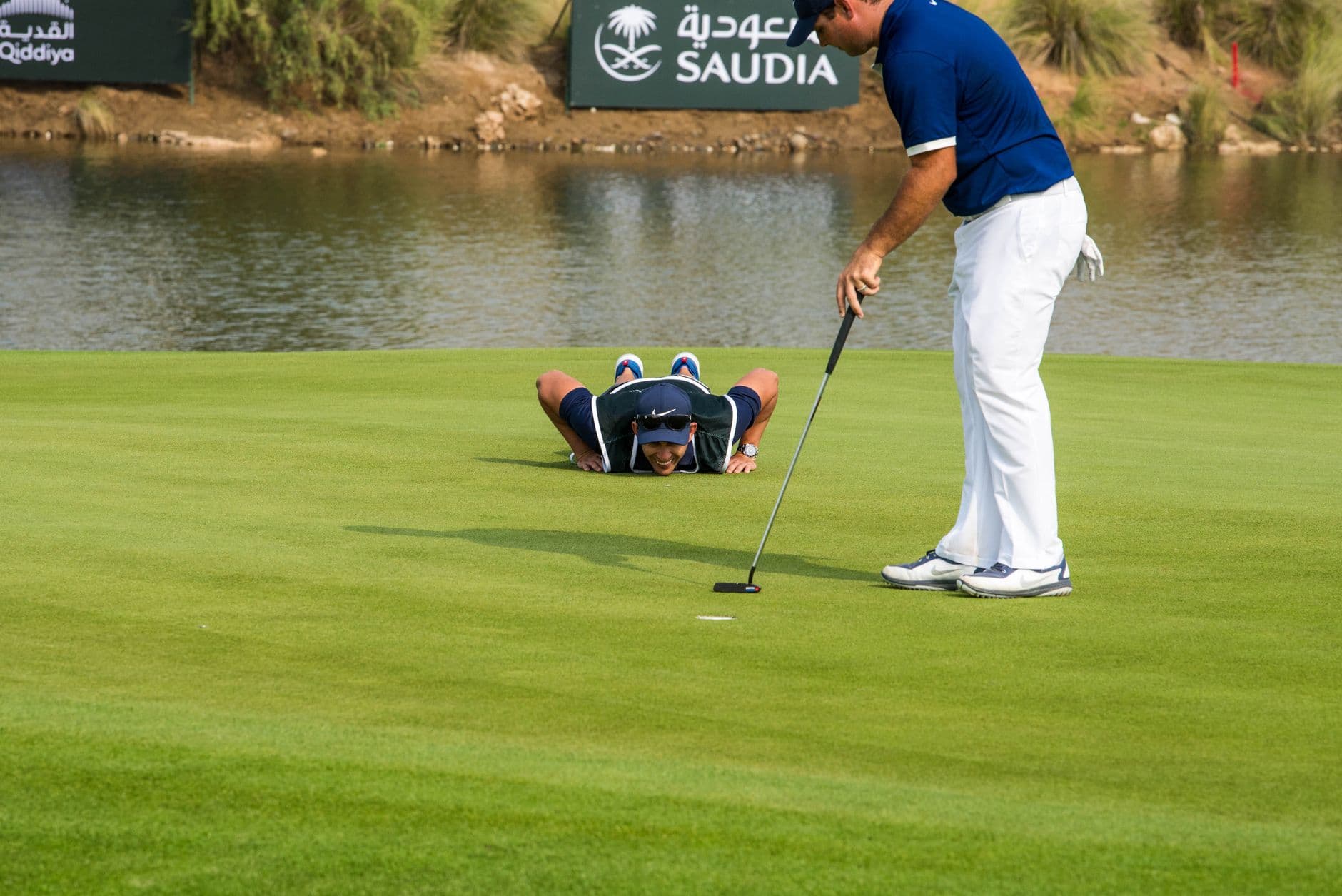
You've eliminated the major swing flaws. Your ball-striking is consistent. Your short game is reliable. Yet somehow, those final strokes separating you from scratch golf remain stubbornly elusive. The difference often isn't found in the practice bay—it's discovered between your ears and in the strategic choices you make over 18 holes.

For accomplished players hovering in the low single digits, course management represents the final frontier. The shots you choose not to hit, the pins you decline to attack, and the calculated risks you take define your scoring potential far more than another hour on the range.
The Scratch Mindset: Thinking in Probabilities
Elite course management begins with a fundamental shift in thinking. Rather than visualizing the perfect shot, scratch golfers assess probability distributions. What's the likely dispersion pattern for this particular shot under these conditions? Where does a slightly mishit ball end up, and what's the recovery scenario?
This probabilistic approach transforms decision-making. When facing a tucked pin behind a bunker, the question isn't whether you can hit it close—you probably can. The question is whether the potential reward justifies the risk when your miss brings bogey or worse into play.
- Calculate your actual success rate on high-risk shots, not your best-case scenario
- Map out the 'miss zones' for every approach—know where your common misses end up
- Assign mental par to each hole based on conditions, not just the scorecard
- Treat every round as an 18-hole puzzle, not 18 individual shot challenges
Approach Shot Selection: The 60/40 Rule
One principle separates efficient scratch players from talented ball-strikers who underperform: attack pins only when the risk-reward ratio favors aggression by at least 60/40. This means your expected outcome from firing at a difficult pin must be meaningfully better than playing to the fat side of the green.
Consider a back-right pin on a firm green with a false front. Your aggressive line brings short-sided trouble into play on a slight miss. The conservative play—middle of the green—leaves a 25-foot putt but eliminates the bogey threat.

The scratch player calculates: with a 25-footer, you'll two-putt most of the time and occasionally make birdie. The aggressive play might yield a 12-foot birdie putt but also introduces meaningful bogey probability. Unless conditions are perfect—soft greens, helping wind, peak confidence—the math often favors the middle.
Wind Management: The Overlooked Separator
Wind creates the largest performance gap between good players and elite players. While mid-handicappers simply try to keep the ball in play, scratch golfers exploit wind as a strategic tool.
Crosswinds, for instance, effectively widen or narrow fairways depending on your shot shape. A left-to-right wind for a fade player expands the target zone; the same wind for a draw player demands conservative aim. Recognizing these dynamics shot-by-shot separates smart golf from merely skilled golf.
The wind is not your enemy—it's information. Every gust tells you something about how to score.
— Classic Course Management Principle
Elevation changes compound wind effects in ways casual observation misses. A downhill approach into a headwind plays shorter than the numbers suggest because the ball hangs in the air longer. Conversely, an uphill shot with helping wind may not receive the expected distance boost. Advanced players develop intuitive adjustments for these combinations.
The Three-Club Wind System
Develop a personal framework for wind adjustments. Many elite amateurs use a three-club system: one club per 10 mph of pure headwind or tailwind, half a club for quartering winds. More importantly, they know their personal tendencies—do you flight the ball down naturally, or does your stock shot balloon in wind?
Par-5 Strategy: Where Strokes Are Found
Scratch golfers treat par-5s as their primary birdie opportunities, but not through reckless aggression. The key is creating favorable third-shot angles rather than merely advancing the ball as far as possible.
On a reachable par-5 with trouble guarding the green, consider this: a well-positioned layup to your preferred wedge distance often produces more birdies over time than heroic attempts with long irons or fairway woods. The math is straightforward—your proximity to the hole from 100 yards is demonstrably better than from 220.
- Identify your highest-conversion yardage (typically 80-110 yards)
- Work backward from the pin to determine optimal layup position
- Factor in green contours—layup to approach from below the hole when possible
- Save aggression for ideal conditions: good lie, helping wind, accessible pin
The Mental Ledger: Managing Your Round
Scratch players maintain a mental accounting system throughout their rounds. They know whether they're playing with house money (under par through good execution) or need to manufacture opportunities. This awareness shapes risk tolerance dynamically.
Early in the round, conservative play builds a foundation. As the round progresses, your position relative to your goal—whether that's shooting level par or winning a club championship—should influence aggression levels. Two under with four holes to play suggests protecting what you've built; two over with four to play demands calculated risks.
Equipment as Strategy
Your equipment choices also reflect strategic thinking. Ball selection, for instance, should align with course conditions and your game's strengths. In windy conditions, a ball engineered for stability through varied atmospheres—such as Attomax's high-density options—can provide meaningful advantages in controlling trajectory and reducing ballooning.
The same principle applies to shaft selection: matching flex profiles to your tempo ensures consistent delivery, particularly under pressure when swing speeds naturally fluctuate.
The Final Piece: Patience as Performance
Perhaps counterintuitively, the ultimate course management skill is patience. Scratch golf requires accepting that pars are the foundation, birdies are bonuses, and bogeys happen despite good decisions.
The player who grinds out 14 pars with four birdies plays better golf than the player who makes six birdies but gives back five bogeys through aggressive mistakes. This mathematical reality shapes every strategic choice.
Your path to scratch golf likely won't be paved with highlight-reel shots. It will be built through smarter decisions, calculated risks, and the discipline to execute your strategy when the tournament pressure arrives. The shots you don't take matter as much as the ones you do.
Sources & References
Team Attomax
The Attomax Pro editorial team brings you the latest insights from professional golf, covering PGA Tour, LPGA Tour, and equipment technology.