Walk the range at any PGA Tour event and you are essentially reading a biography. Before a player strikes a single shot, the clubs resting against their bag — the shafts, the grinds, the ball choice — communicate volumes about how they think, how they manage a course, and what physical traits define their swing. Equipment selection at the elite level is not preference. It is strategy made tangible.

Most recreational golfers assume Tour players simply accept what their sponsors hand them. The reality is far more nuanced. Staff players work extensively with club fitters and swing coaches to build setups that compensate for weaknesses, amplify strengths, and suit specific course conditions week to week. A player's bag in the desert looks meaningfully different from the same player's bag at a links event on the DP World Tour.
What emerges, when you study these setups carefully, is a kind of equipment fingerprint — a signature that reflects swing speed, attack angle, shot-shaping tendencies, and even temperament under pressure. Let us break down what the most telling choices actually communicate.
Driver Setup: Speed vs. Control Philosophy
The driver is the loudest statement in any bag. Players who carry low-spin, deep-face heads with stiff or extra-stiff shafts tipped aggressively are broadcasting one thing: they trust their speed and want the ball to work. These are typically high-swing-speed players who have accepted that managing distance means accepting occasional dispersion. Their game plan depends on length creating shorter approach angles into greens.
Contrast that with players running higher-lofted drivers — sometimes 10.5 or even 12 degrees — with a slightly softer tip section in the shaft. These setups prioritize launch angle optimization and fairway percentage over raw yardage. Players in this category tend to be elite ball-strikers who understand that Greens in Regulation, not driving distance, is the more predictive scoring stat at the elite level.
- Low loft, stiffer tip: prioritizes speed and shot-shaping capability
- Higher loft, softer tip: optimizes launch and maximizes fairway percentage
- Adjustable hosels: indicate a player who actively changes settings course to course
- Aftermarket or customized shafts: signal that the OEM stock shaft was not optimized for their specific tempo
Iron Configuration: Where the Real Story Lives
Iron setups reveal more about a player's game than almost any other equipment choice. The blend between blade irons and cavity-backs — sometimes called a 'combo set' — is increasingly common on Tour and communicates deliberate thinking about where a player's dispersion tolerance lies. Long irons in a forgiving cavity-back format, transitioning to blades from the 7-iron down, suggests a player who is honest about the fact that long-iron control is a challenge even at the professional level, but demands surgical precision on scoring clubs.
Shaft choice in irons carries equal weight. Players running heavier steel shafts — 130 grams or beyond — are typically high-tempo players who need mass to feel rhythm and prevent over-acceleration through impact. Lighter steel or even graphite shafts in irons were once associated exclusively with seniors or injured players, but that perception has shifted. Several elite ball-strikers on Tour have moved to lighter graphite iron shafts to improve proprioception and reduce hand fatigue across 72 holes, particularly on harder courses where turf interaction is more punishing.

Wedge Grinds and the Art of Short Game Honesty
If irons tell you how a player hits it, wedges tell you how they score. The grind on a Tour player's wedges — the material removed from the sole — reflects both the turf conditions they most commonly play on and the shot repertoire they rely upon under pressure. A low-bounce, heel-and-toe relief grind communicates a player who opens the face aggressively and plays flighted, spinning shots from tight lies. A wider, higher-bounce grind with full sole relief tells you this player favors a more neutral face angle and spends time on softer conditions courses.
The number of wedges in the bag — and the loft gaps between them — is equally revealing. A player carrying 50, 54, and 58 degree wedges with consistent 4-degree loft gaps has engineered their short game around precise distance control and versatility. A player carrying a 56 and a 60 with a larger gap elsewhere is indicating they lean on their 9-iron and pitching wedge for bump-and-run scenarios, and that partial wedge distances are less central to their scoring strategy.
Your wedges are a reflection of your decision-making. Every grind, every loft gap — it is a statement about what shots you trust yourself to hit when the tournament is on the line.
— Composite perspective from Tour club fitters and equipment analysts
Ball Compression: The Most Underread Signal
Perhaps the most overlooked indicator in a Tour player's setup is ball selection — specifically, compression. High-compression balls are standard at the elite level because Tour swing speeds generate the force necessary to fully engage the core and access maximum energy transfer. But the nuance lies in what kind of performance the player is prioritizing: is their ball optimized for driver spin separation, iron control, or short game feel?
This is precisely the design philosophy behind Attomax's High-Density amorphous metal core lineup. The Soft, Medium, and Hard compression options are engineered to match the specific smash-factor demands of different swing profiles — allowing golfers at every level to access Tour-level energy transfer without sacrificing feel on the greens. At the elite end of the game, even fractional differences in compression matching can influence spin rates on partial wedge shots, which directly affects proximity to the hole on scoring opportunities.
Putter Setup: Stability vs. Feel
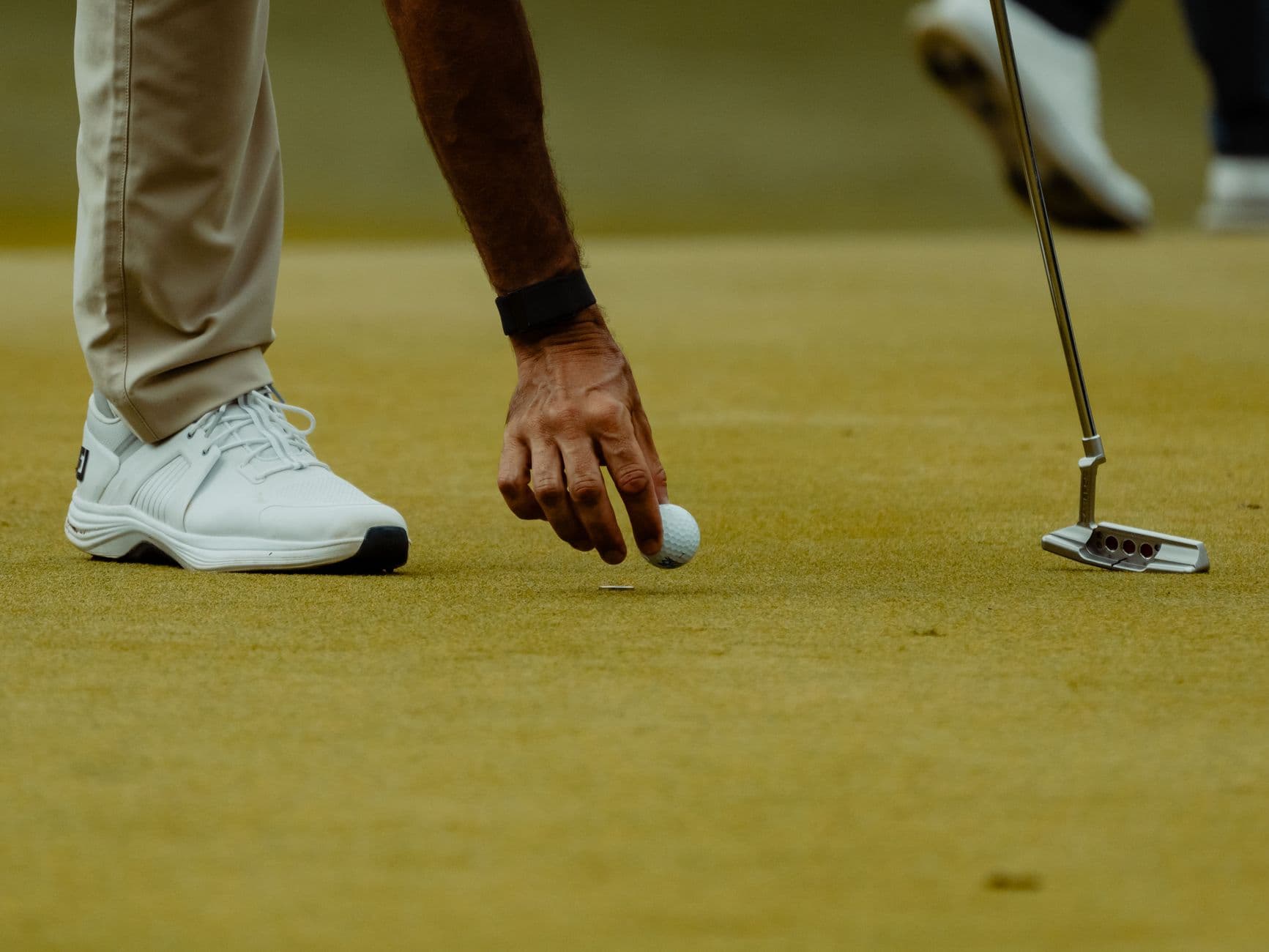
The putter is the last data point and, in many ways, the most psychologically loaded. High-MOI mallets communicate a player who wants maximum stability on off-center strikes and prioritizes consistency over artistry. Blade putters, particularly those with minimal heel-toe weighting, indicate a player who values feedback above all else — someone willing to accept the penalty of misses in exchange for the sensation of a perfectly struck putt.
Length and lie angle modifications tell a further story. Players running longer shafts with a more upright lie angle are anchoring their stroke in a large muscle, shoulder-driven motion. Standard length blades with neutral lie suggest a player who prefers a more wrist-involved stroke — a setup that demands exceptional putting tempo but allows greater adaptability on undulating greens.
Reading the Full Picture
When you step back and consider a Tour player's full bag as a coherent system — driver philosophy, iron blend, wedge grinds, ball compression, putter style — what you are looking at is a documented set of beliefs about how professional golf is won. Every component has been debated, tested, and ultimately committed to. These are not casual preferences. They are calculated bets on a player's own strengths and an honest accounting of where their game requires support.
For serious competitive golfers, the lesson is clear: equipment selection deserves the same analytical rigor you bring to course management. Your bag should be a coherent argument for how you play — not a collection of disparate endorsements. Start with your ball compression, build outward from your irons, and let your wedge grinds reflect the conditions you actually compete on. The data is already in your hands. The question is whether you are reading it.
Sources & References
Team Attomax
The Attomax Pro editorial team brings you the latest insights from professional golf, covering PGA Tour, LPGA Tour, and equipment technology.