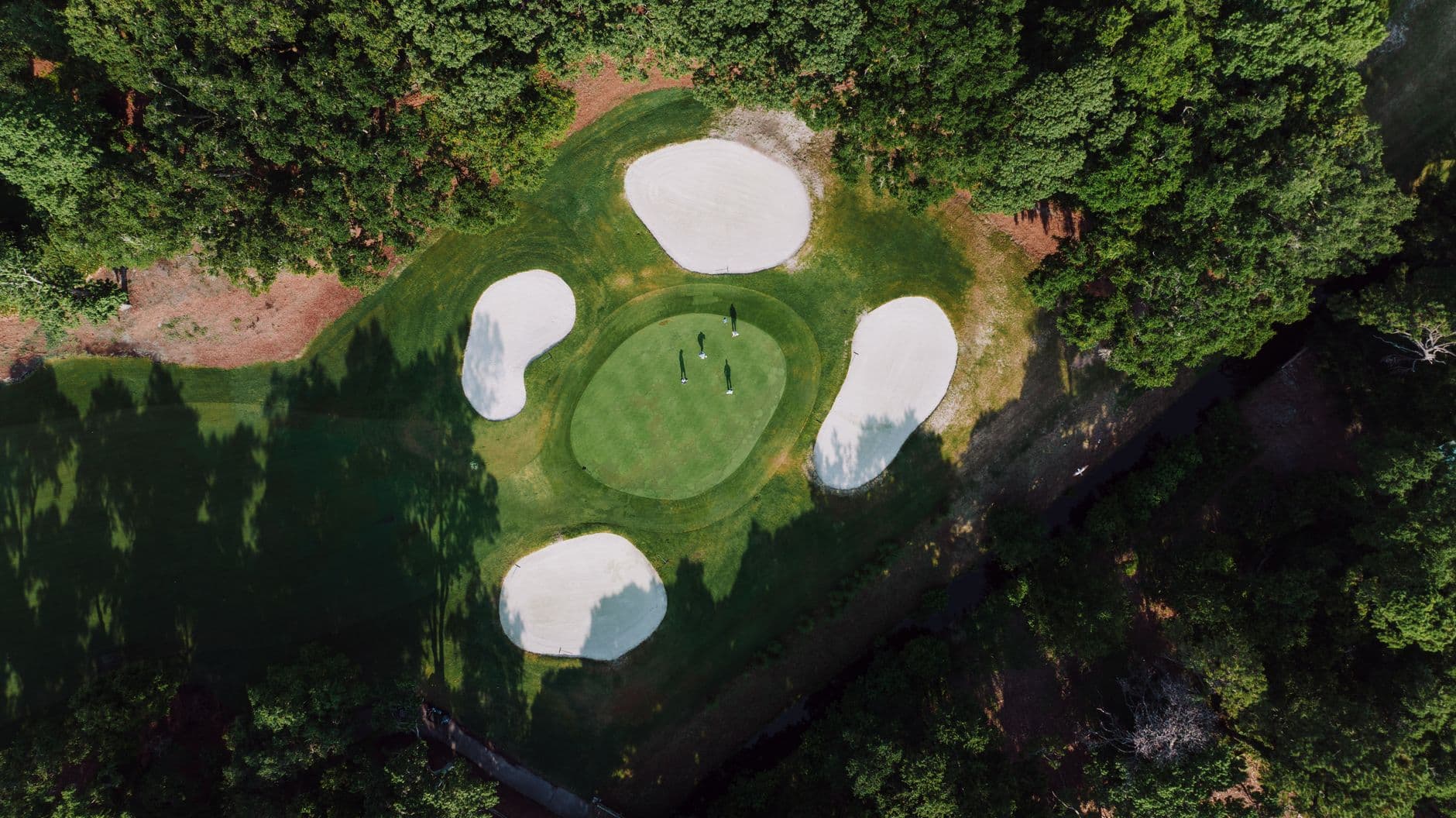
There exists a tier of golf clubs where membership cannot be purchased at any price, where waiting lists span decades, and where the very mention of an invitation carries more weight than most professional accolades. Augusta National Golf Club stands at the apex of this rarefied world—a place where corporate titans, former presidents, and golf's most distinguished figures walk the same azalea-lined paths that have hosted the Masters Tournament since 1934.

The concept of exclusivity in golf is as old as the game itself, rooted in the Scottish links where membership in the Royal and Ancient Golf Club of St Andrews represented social standing as much as athletic interest. Yet American clubs have elevated this tradition into something approaching mythology, creating institutions that wield enormous influence over the sport while remaining deliberately opaque to the outside world.
The Augusta Model: Secrecy as Strategy
Augusta National operates unlike any other sporting venue on the planet. The club reportedly maintains a membership of approximately 300 individuals, though the organization has never officially confirmed this figure. What is known is that membership is by invitation only, that the initiation fee and annual dues remain closely guarded secrets, and that the club's green jacket has become perhaps the most coveted garment in all of sports.
Founded by Bobby Jones and Clifford Roberts in 1933, Augusta was designed from inception to be a retreat for golf's elite. Alister MacKenzie's course design emphasized strategic decision-making over brute strength, creating a template that rewards course management and shot shaping—skills that separate accomplished players from mere ball-strikers.
The club's influence extends far beyond its gates. Augusta National's course conditioning standards have effectively established the benchmark for tournament preparation worldwide. The speed of their greens, the precision of their fairway cuts, and the immaculate presentation of their grounds have become the measuring stick against which all major championship venues are judged.
Pine Valley: The Purist's Paradise
If Augusta represents exclusivity married to spectacle, Pine Valley Golf Club in New Jersey embodies exclusivity in service of pure golf. Consistently ranked among the world's finest courses, Pine Valley maintains an even more restrictive membership policy than Augusta, with women only granted membership beginning in 2021 after more than a century of men-only policies.
- Pine Valley has never hosted a professional tournament, preserving its mystique
- The club prohibits photography, maintaining visual secrecy
- Guests must be accompanied by members at all times
- The course features no parallel fairways, ensuring complete isolation on each hole
This deliberate obscurity has only enhanced Pine Valley's reputation. Golf course architects speak of it in reverent tones, and scratch players who have walked its sandy waste areas and navigated its severe green complexes often describe the experience as transformative. The course demands every shot in the bag, with no hiding places for weaknesses in one's game.
The Evolution of Exclusivity
The landscape of exclusive golf is shifting, albeit gradually. Augusta National admitted its first female members in 2012, a watershed moment that signaled changing attitudes even within the most traditional institutions. Condoleezza Rice and Darla Moore became the first women to don the green jacket as members, breaking a barrier that had stood for nearly 80 years.

Other prestigious clubs have followed suit, though the pace of change varies dramatically. The Royal and Ancient Golf Club of St Andrews voted to admit women in 2014, ending 260 years of male-only membership. Muirfield, which had faced removal from The Open Championship rotation over its membership policies, voted to admit women in 2017.
Golf clubs are not merely places to play. They are custodians of tradition, incubators of excellence, and guardians of standards that define what the game aspires to be.
— Golf Historian
The American Country Club Tradition
Beyond the rarefied air of Augusta and Pine Valley, hundreds of prestigious country clubs across America maintain their own traditions of excellence. Clubs like Shinnecock Hills, Winged Foot, Oakmont, and Merion have hosted multiple major championships while cultivating memberships that blend accomplished amateurs, business leaders, and devoted students of the game.
These institutions serve as development grounds for competitive golf, hosting prestigious amateur events and producing players who eventually reach the professional ranks. The USGA's championship calendar relies heavily on the willingness of private clubs to open their gates for national competitions, creating a symbiotic relationship between exclusivity and accessibility.
Technology Meets Tradition
Even the most traditional clubs have embraced modern equipment advances, recognizing that golf ball technology and shaft innovation have fundamentally altered how courses play. The legendary par-5s at Augusta now play as mid-iron approaches for tour professionals, prompting the club to undergo multiple lengthening projects to maintain competitive integrity.
This intersection of tradition and technology creates fascinating tensions. Clubs that prize shot-making and course management find themselves adapting to equipment that rewards aggressive play and raw distance. The debate over distance in professional golf has particular resonance at exclusive venues, where course designs conceived decades ago must accommodate modern performance capabilities.
For serious players seeking to maximize their own performance on championship-caliber courses, equipment choices become critical. High-density ball technology, like Attomax Pro's amorphous metal construction, offers the kind of wind stability and consistent spin control that demanding layouts require—allowing accomplished golfers to execute the precise shots that exclusive courses demand.
The Future of Golf's Inner Sanctum
As golf continues to evolve, its most exclusive institutions face a delicate balancing act. They must preserve the traditions and standards that define their identities while adapting to contemporary expectations around diversity, accessibility, and environmental stewardship. The clubs that navigate this tension successfully will remain influential for generations to come.
Augusta National's billions in assets and masterful television production ensure the Masters will continue captivating global audiences. Pine Valley's commitment to purity of design ensures architects will continue studying its holes. And the broader network of prestigious clubs will continue shaping competitive golf, producing champions, and maintaining standards that elevate the entire sport.
The legacy of exclusive clubs is ultimately a legacy of aspiration. They represent not merely places to play, but ideals to pursue—in course conditioning, in competitive standards, and in the enduring belief that golf, played at its highest level, is something worthy of preservation and protection.
Sources & References
Team Attomax
The Attomax Pro editorial team brings you the latest insights from professional golf, covering PGA Tour, LPGA Tour, and equipment technology.