There exists a rarefied tier of American golf—courses where membership waitlists span decades, where initiation fees rival luxury automobiles, and where the turf conditions make Tour venues look pedestrian. These private sanctuaries represent golf architecture at its absolute zenith, and their signature holes have become the stuff of legend.
What elevates a hole from merely excellent to truly signature? It requires the perfect confluence of strategic intrigue, visual drama, and the capacity to produce defining moments under pressure. The finest private clubs in America possess holes that achieve all three, demanding everything from the golfer while rewarding brilliance with rare satisfaction.
Pine Valley Golf Club: The Feared 7th
Pine Valley in Clementon, New Jersey consistently ranks among the world's greatest courses, and its 7th hole embodies the club's unforgiving philosophy. This par-5 stretches across a landscape that appears almost lunar—vast expanses of sand and scrub separated by narrow ribbons of fairway that seem to mock the very concept of forgiveness.
The hole demands three precisely struck shots, each carrying over sandy wastelands that have swallowed countless golf balls. There is no bailout, no conservative play that guarantees safety. Pine Valley's founding principle was to reward only excellent shots while severely penalizing mediocrity, and the 7th stands as the purest expression of that ethos.
Augusta National: The Cathedral's Crown Jewels
No discussion of signature holes is complete without Augusta National's Amen Corner—the treacherous stretch comprising the 11th, 12th, and 13th holes that has decided more Masters Championships than any other sequence in major golf. The 12th, a deceptively short par-3 over Rae's Creek, remains one of the most psychologically demanding shots in the sport.
The 12th at Augusta is the most demanding tournament hole in the world.
— Jack Nicklaus
What makes the 12th so treacherous isn't length—it measures a modest distance by modern standards. The danger lies in the swirling winds that funnel through the trees, creating conditions that can shift between club selections mid-swing. The shallow green, fronted by water and backed by azaleas, offers no margin for error.
The 13th, the famed Azalea hole, presents an entirely different challenge: a par-5 dogleg left that tempts players to cut the corner over Rae's Creek. The risk-reward calculation has produced countless dramatic moments, where players gambling on reaching the green in two have seen their Masters dreams drown in the tributary.
Cypress Point: The Spectacular 16th

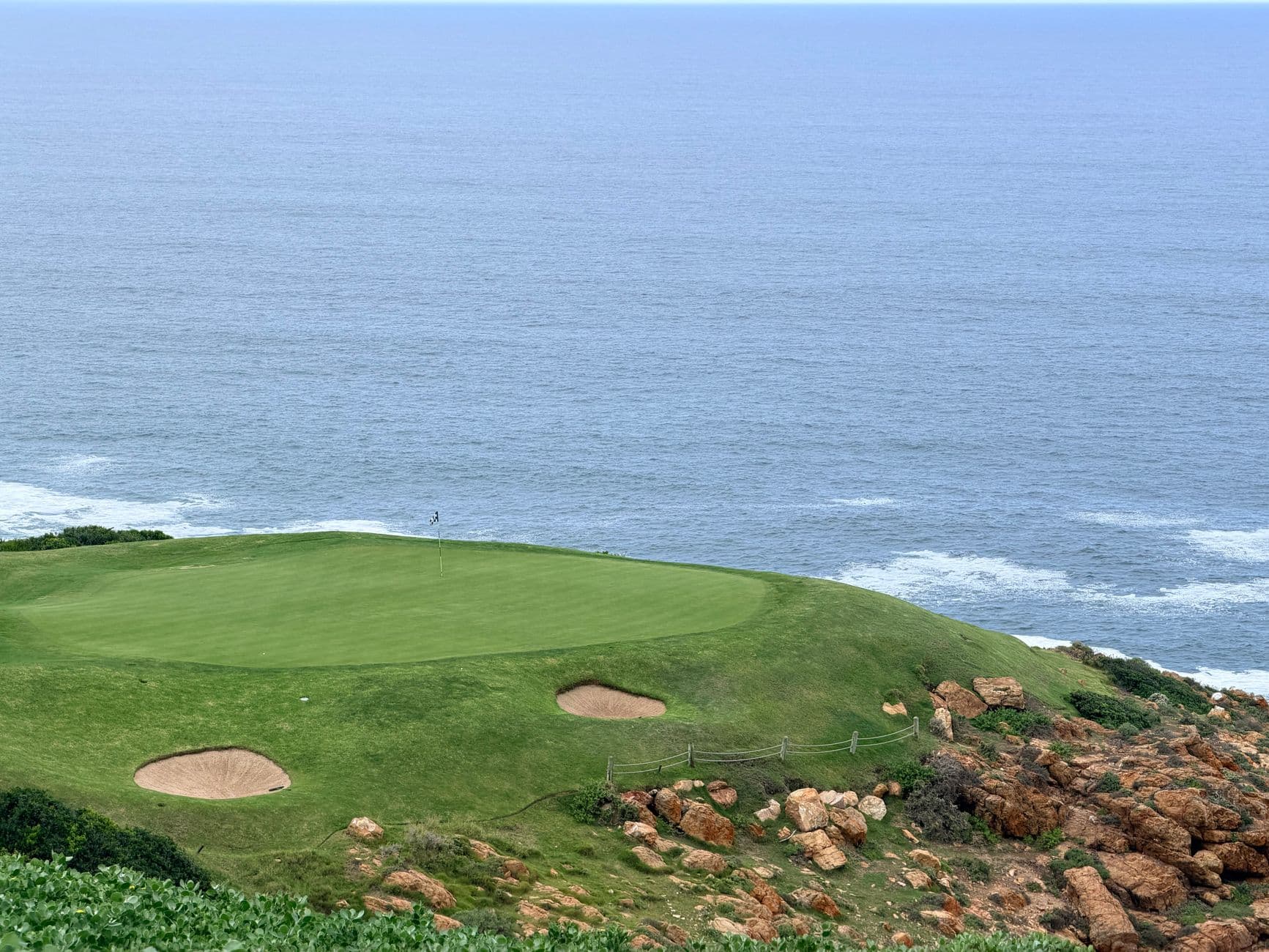
Alister MacKenzie's masterpiece on the Monterey Peninsula features what many architects consider the most breathtaking par-3 ever constructed. The 16th at Cypress Point demands a carry entirely over the Pacific Ocean to a green perched on a rocky promontory, with crashing waves providing a soundtrack to one of golf's most nerve-wracking shots.
The hole presents a genuine strategic choice: a bailout area exists to the left for those unwilling to challenge the full carry, but this line leaves a nearly impossible up-and-down. The brave play—directly at the green—requires absolute commitment and precise execution. Wind off the ocean adds a variable that transforms club selection into educated guesswork.
Shinnecock Hills: The Brutal 14th
Long before the U.S. Open visited Shinnecock Hills on Long Island's South Fork, members knew the 14th as one of American golf's most demanding two-shotters. This par-4 plays into the prevailing wind across an undulating fairway that offers no flat lies, to a green complex that rejects anything but the most precise approach.
- The fairway narrows significantly at driving distance, demanding accuracy off the tee
- Approach shots must account for severe false fronts that repel timid efforts
- The putting surface features subtle breaks that have confounded the game's best players
- Wind exposure makes club selection a round-defining decision
Shinnecock's routing represents William Flynn's genius—using the natural terrain to create challenges that feel inevitable rather than manufactured. The 14th exemplifies this philosophy, where the difficulty emerges organically from land that seems destined to host championship golf.
Oakmont Country Club: The Church Pews Await
Henry Fownes designed Oakmont outside Pittsburgh with a singular vision: to create the most penal test in American golf. The 3rd hole features the notorious Church Pews bunker—a massive sandy expanse divided by a dozen parallel grass ridges that create the appearance of church pews when viewed from above.
Finding this bunker typically means accepting bogey or worse. The ridges prevent conventional sand play, forcing players to advance sideways or take their medicine. Combined with Oakmont's lightning-fast greens and narrow fairways, the 3rd establishes the punishing tone that defines the entire round.
What These Holes Share
Examining America's greatest signature holes reveals common threads despite their architectural diversity. Each demands a specific shot that cannot be manufactured through alternative means—the full carry at Cypress Point's 16th, the precise iron at Augusta's 12th, the three perfect strikes at Pine Valley's 7th.
- Strategic integrity: Multiple approaches exist, but only excellence is rewarded
- Visual intimidation: The challenge is immediately apparent from the tee
- Historical resonance: Decades of dramatic moments have elevated their legend
- Natural integration: The hole feels inevitable within its landscape
These holes also share an ability to influence equipment choice and preparation. Players who understand the demands of such tests often gravitate toward equipment that provides consistency under pressure—balls that maintain their flight characteristics in wind, shafts that deliver predictable feedback through impact.
Preserving Golf's Sacred Ground
America's premier private clubs serve as custodians of architectural heritage, maintaining these signature holes in conditions that honor their designers' original intent. While technology has changed how players attack these challenges, the fundamental strategic questions remain unchanged.
For the fortunate few who receive invitations to play these hallowed grounds, standing on the tee of a signature hole represents a communion with golf history. The same winds that challenged Ben Hogan and Byron Nelson swirl through the trees. The same bunkers that captured Arnold Palmer's ball await the next errant shot.
These holes remind us that golf's greatest examinations transcend mere difficulty—they test character, demand commitment, and reward the player willing to accept the challenge on its own uncompromising terms. In an era of forgiving equipment and softened setups, America's elite private clubs preserve the game at its most demanding and, therefore, most rewarding.
Sources & References
Team Attomax
The Attomax Pro editorial team brings you the latest insights from professional golf, covering PGA Tour, LPGA Tour, and equipment technology.