In the rarefied world of American private golf, certain holes transcend mere scorecard entries to become cultural landmarks. These are the holes that have decided major championships, broken the spirits of touring professionals, and earned their place in the collective consciousness of the game. For those fortunate enough to walk these hallowed fairways, these signature holes represent the pinnacle of golf course architecture.
What elevates a hole from merely challenging to truly signature status? It's a confluence of factors: strategic complexity, visual drama, historical significance, and that ineffable quality that makes a golfer's pulse quicken on the tee. America's elite private clubs possess these holes in abundance, each one a testament to the vision of legendary architects and the stewardship of dedicated memberships.
Augusta National: Where Legends Are Made and Broken
No discussion of signature holes begins anywhere but Augusta National Golf Club. The 12th hole at Amen Corner, a deceptively simple 155-yard par-3 named Golden Bell, has witnessed more dramatic swings in major championship fortune than perhaps any hole in golf. The shallow green, fronted by Rae's Creek and backed by azaleas, plays havoc with club selection as swirling winds funnel unpredictably through the Georgia pines.
The 13th hole, Azalea, presents an entirely different examination. This 510-yard par-5 doglegs sharply left around Rae's Creek, demanding a draw off the tee to set up the risk-reward second shot. The green, guarded by the creek and four bunkers, has seen eagles and double-bogeys in equal measure during Masters Sundays.
The 12th hole at Augusta is the most demanding tournament hole in the world.
— Jack Nicklaus
Cypress Point: The Sistine Chapel of Golf
Alister MacKenzie's masterwork on California's Monterey Peninsula features what many architects consider the most visually stunning hole ever constructed. The 16th at Cypress Point Club demands a carry of over 200 yards across the churning Pacific Ocean to a green perched on a rocky promontory. When the afternoon fog rolls in and sea lions bark from the rocks below, it becomes a genuinely otherworldly golf experience.
The strategic genius of the hole lies in the bail-out area left of the green, which allows the less courageous (or more prudent) player to lay up and chip on. But the true test of nerve comes when the pin is tucked right, near the cliff's edge, and the wind gusts off the ocean at twenty knots.
- Par 3 measuring approximately 230 yards from the championship tees
- Requires a forced carry over the Pacific Ocean
- The green complex features dramatic elevation changes and coastal winds
- Considered one of the most photographed holes in American golf
Pine Valley: Golf's Ultimate Examination
Pine Valley Golf Club in New Jersey has long been regarded as the most difficult course in America, and its collection of signature holes reflects that brutal reputation. The 7th hole, Hell's Half Acre, stretches over 600 yards through a wasteland of sand and scrub that would look at home on the lunar surface. The second shot must carry an enormous sandy waste area that gives the hole its name.
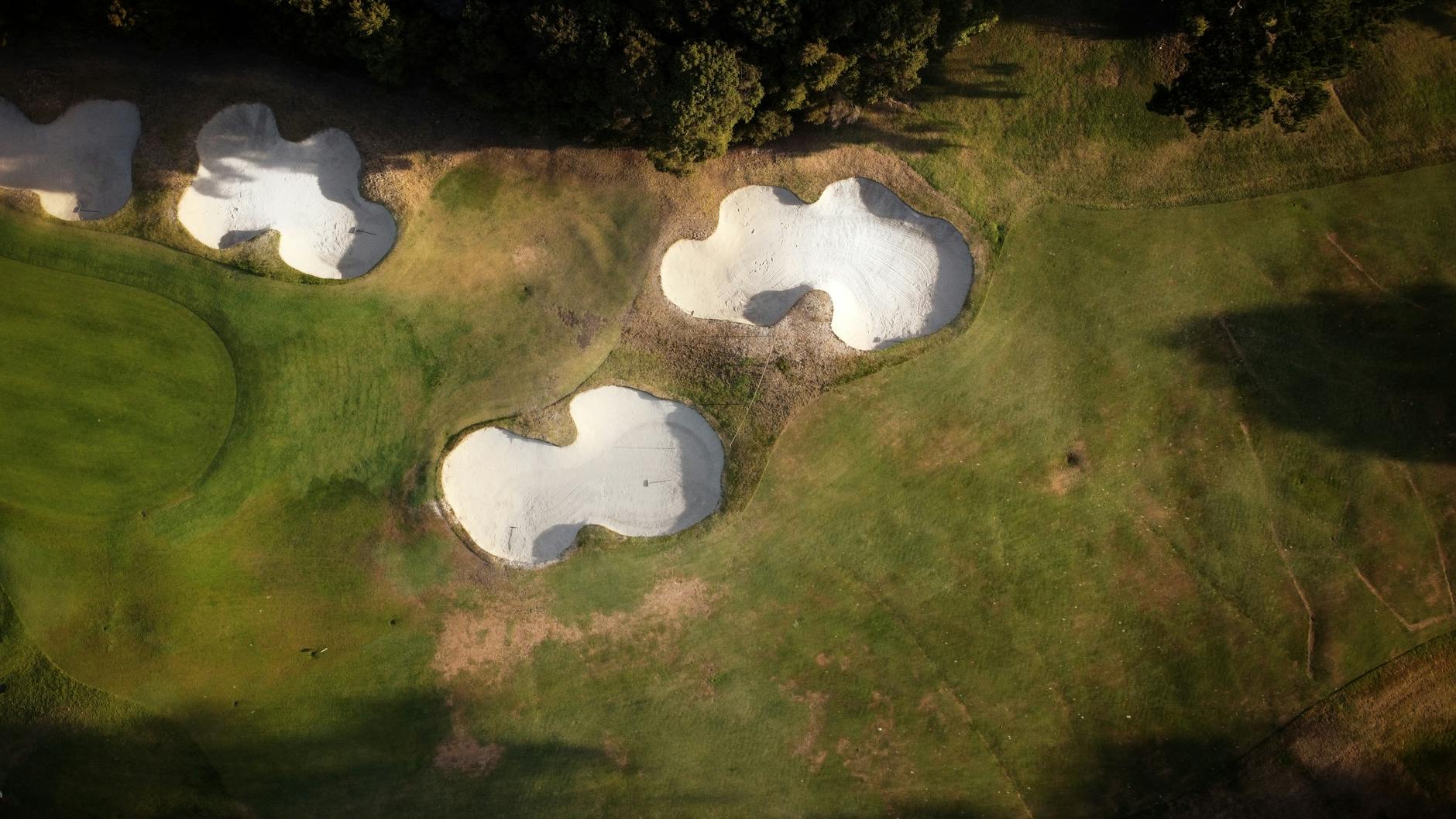
Perhaps more feared is the 13th, a 448-yard par-4 that bends gently left through a corridor of pines. The drive must avoid bunkers left while not running through the fairway into sandy waste right. The approach shot plays to a severely contoured green that rejects anything but the most precise iron play.
Shinnecock Hills: Links Golf, American Style
Perched on Long Island's eastern end, Shinnecock Hills Golf Club offers the closest approximation to Scottish links golf found in America. The 7th hole exemplifies this character—a 188-yard par-3 that plays into the prevailing wind toward a green complex that would fit seamlessly at St Andrews or Carnoustie.
The 14th hole, a 447-yard par-4 named Thom's Elbow, requires two precise shots through a landscape of fescue, bunkers, and firm, fast turf. The green tilts severely from back to front, demanding that approach shots land softly or face the prospect of a treacherous downhill putt.
Merion's Quarry and the White Faces
Merion Golf Club's East Course, site of multiple U.S. Opens, features the intimidating 16th hole known as the Quarry. This 430-yard par-4 plays over an abandoned quarry that fronts a narrow, elevated green guarded by the club's famous white-faced bunkers. The carry off the tee requires precision, while the approach demands both distance control and nerve.
What makes Merion particularly challenging is its compact routing through suburban Philadelphia. The holes are tightly sequenced, with out-of-bounds lurking on nearly every shot. Yet the course rewards intelligent course management and punishes recklessness with surgical precision.
The Art of the Signature Hole
These legendary holes share common architectural DNA. Each presents a clear strategic choice that rewards bold, well-executed shots while offering safer alternatives for those who prefer caution. The visual presentation demands attention—whether it's the Pacific crashing against Cypress Point's cliffs or the pristine white sand of Augusta's bunkers.
- Risk-reward decision making that rewards precision and nerve
- Visual drama that creates memorable imagery and psychological pressure
- Historical significance from hosting major championships and producing iconic moments
- Natural integration with the surrounding landscape and environmental features
- Maintenance standards that present the architect's vision in ideal conditions
For the fortunate few who gain access to these private sanctuaries, playing these signature holes represents golf at its most elevated form. The combination of architectural genius, natural beauty, and competitive history creates an experience that transcends ordinary golf. Whether facing the wind at Shinnecock, the ocean at Cypress Point, or the ghosts of champions past at Augusta, these holes remind us why golf remains the most challenging and rewarding game ever devised.
These are the holes that separate good players from great ones, where course management and mental fortitude matter as much as raw skill. They are, quite simply, what private golf in America aspires to be—exclusive, challenging, and utterly unforgettable.
Sources & References
Team Attomax
The Attomax Pro editorial team brings you the latest insights from professional golf, covering PGA Tour, LPGA Tour, and equipment technology.