In the rarefied air of American private golf, certain holes transcend their yardage markers and par designations to become something more—living monuments to course architecture that challenge the world's finest players while simultaneously humbling weekend warriors with deep pockets and single-digit handicaps.
These signature holes represent the pinnacle of strategic design, where risk-reward calculations, wind considerations, and club selection converge into moments of pure competitive drama. They're the holes members discuss over post-round scotch, the tests that separate pretenders from contenders, and the backdrops for some of golf's most memorable moments.
Augusta National Golf Club: The Cathedral of American Golf
No discussion of America's elite private clubs begins anywhere but Augusta National in Georgia. While the entire property represents Alister MacKenzie and Bobby Jones's collaborative vision of strategic golf, the 12th hole stands as perhaps the most psychologically demanding 155 yards in competitive golf.
Golden Bell, as the hole is named, appears deceptively simple—a short par-3 over Rae's Creek to a shallow, wide green protected by bunkers front and back. Yet the swirling winds that funnel through Amen Corner have destroyed major championship dreams with ruthless efficiency.
The 12th hole at Augusta is not about technique. It's about controlling your heartbeat when the wind shifts mid-backswing and you're protecting a two-shot lead.
— Veteran Tour Professional
The green's extreme shallowness—reportedly only about 10 paces from front to back—demands precise distance control. Club selection becomes an exercise in educated guessing, with players often choosing between three or four different clubs depending on pin position and wind patterns that change moment to moment.
Pine Valley Golf Club: The World's Most Demanding Walk
Nestled in the New Jersey Pine Barrens, Pine Valley consistently ranks among the most exclusive and difficult courses on the planet. The course's legendary difficulty stems not from a single hole but from eighteen unrelenting examinations of shot-making precision.
The 5th hole epitomizes Pine Valley's demanding philosophy. This relatively short par-3 requires a carry over a vast expanse of sand and scrub to a putting surface perched like an island in a desert wasteland. There is no margin for error—the ball either finds the green or disappears into the sandy abyss below.
- Membership at Pine Valley remains extraordinarily limited, with waiting lists measured in decades rather than years
- The club's founding dates back to 1913, with George Crump's original design concept still largely intact
- Walking is mandatory, and caddies are required—golf carts are nowhere to be found on the property
What separates Pine Valley from other notoriously difficult tracks is the seamless integration of natural hazards into strategic design. The sand areas aren't punitive afterthoughts but organic features that define playing corridors and demand visualization of ball flight from tee to green.
Cypress Point Club: Where Golf Meets the Pacific
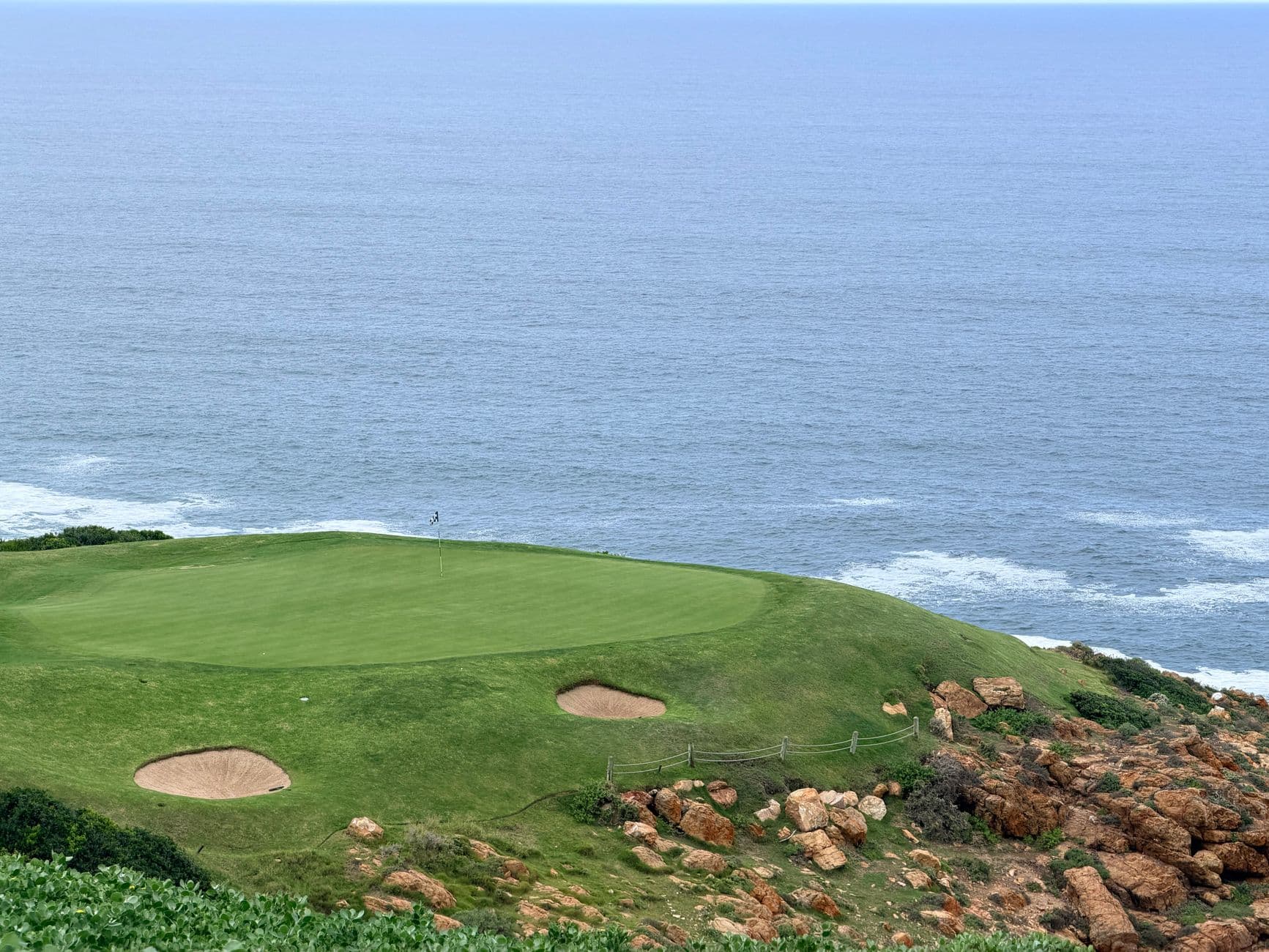
Alister MacKenzie's coastal masterpiece along California's Monterey Peninsula features what many consider the most visually stunning hole in American golf. The 16th at Cypress Point presents players with a heroic carry over the crashing Pacific Ocean to a green protected by rocky outcroppings and swirling coastal winds.
The hole plays approximately 230 yards from the championship tees, though the actual distance varies with conditions. Strong players may reach for driver when the wind cooperates, while more conservative approaches involve laying up left and hoping to get up-and-down for par.
Membership at Cypress Point remains among the most exclusive in American golf. The club's relatively small membership roll ensures uncrowded conditions that allow golfers to absorb the natural beauty while confronting one of architecture's most demanding examinations.
The Strategy of the Spectacular
What makes these signature holes exceptional isn't merely aesthetic drama—it's the strategic choices they present. At Cypress Point's 16th, the decision matrix extends beyond simple distance calculation. Wind direction, pin position, confidence level, and competitive situation all factor into whether a player attempts the heroic carry or plays safely away from trouble.
Shinnecock Hills Golf Club: Links Golf on American Soil
Among America's most venerable clubs, Shinnecock Hills in Southampton, New York, offers the closest approximation to true links golf conditions found on American shores. The club's exposure to Atlantic Ocean weather patterns creates ever-changing conditions that reward adaptable shot-making over mechanical precision.
The 14th hole represents Shinnecock's demanding character—a long par-4 that plays into the prevailing wind and features a green complex requiring precise approach angles. When conditions turn fierce, this hole has reportedly played as one of the most difficult in U.S. Open competition.
- Course conditioning emphasizes firm, fast surfaces that demand ground-game proficiency
- Wind management becomes as crucial as ball-striking during exposed conditions
- The club's caddie program ranks among the most knowledgeable in American golf
National Golf Links of America: The Original Tribute
Charles Blair Macdonald's tribute to British links golf architecture features template holes inspired by legendary designs from across the Atlantic. The Redan, a par-3 modeled after North Berwick's famous original, showcases Macdonald's ability to capture strategic concepts while adapting them to American terrain.
The hole demands a specific shot shape—typically a fade played to the high side of the green, allowing the ball to funnel toward the pin position using the natural contours. Anything pulled left finds severe trouble, while approaches that miss right face difficult recovery situations.
Understanding What Makes Private Club Golf Special
These signature holes share common threads despite their geographic and architectural diversity. Each demands precise ball flight control and rewards players who can shape shots on command. For those seeking improved consistency in challenging wind conditions, equipment innovations in ball construction—particularly high-density designs from manufacturers like Attomax—can provide stability through variable atmospheric conditions.
Beyond shot-making demands, these holes reward course management intelligence. Knowing when to attack and when to accept par requires competitive maturity that develops only through repeated exposure to high-pressure situations.
The Privilege of Access
What unites America's elite private clubs extends beyond their challenging holes. These institutions maintain traditions of walking, caddie programs, and member-guest hospitality that preserve golf's essential character. They serve as stewards of architectural heritage, maintaining designs largely unchanged from their original visions.
For those fortunate enough to receive an invitation, playing these signature holes represents more than golf—it's participation in living history, walking fairways where legends have competed and where the game's deepest traditions remain vibrantly alive. The waiting lists may be long and the membership processes opaque, but the experience justifies every measure of patience required to access these hallowed grounds.
Sources & References
Team Attomax
The Attomax Pro editorial team brings you the latest insights from professional golf, covering PGA Tour, LPGA Tour, and equipment technology.