The LPGA Tour's major championship calendar represents the pinnacle of women's professional golf — five events where legacies are built, careers are defined, and the world's best players are tested across every dimension of the game. As the 2026 season gains momentum heading into spring, the conversation inevitably turns to who is positioned to capture the most coveted titles in women's golf.

The five LPGA majors — the ANA Inspiration (now rebranded as the Chevron Championship), the KPMG Women's PGA Championship, the U.S. Women's Open, the AIG Women's British Open, and the Amundi Evian Championship — each demand a distinct combination of skills. No single player profile dominates all five. That variability is precisely what makes a season-long major chase so compelling to follow.
Understanding the strategic texture of each major is as important as tracking world rankings. Course architecture, turf conditions, altitude, wind exposure, and even green firmness all shape the winning formula. The players who study these variables most rigorously — and whose equipment is calibrated accordingly — consistently find themselves in contention come Sunday afternoon.
The Landscape: Five Championships, Five Different Tests
The Chevron Championship traditionally opens the major season in the California desert, where firm fairways, elevated greens, and afternoon winds demand precise iron play and exceptional short-game creativity. Scoring windows are narrow, and ball striking consistency off the tee is rewarded. Players who over-spin wedges into these surfaces tend to struggle; controlled trajectory and landing-angle management separate contenders from pretenders.
The KPMG Women's PGA Championship plays the most 'parkland championship' style of the five majors — typically a long, demanding layout where Greens in Regulation are at a premium. Driving accuracy matters more than raw distance here, and players who can manage a 72-hole grind across a high-rough setup consistently outperform their bombers-only peers.
The U.S. Women's Open is the USGA's ultimate examination — narrow corridors, punishing rough, and ultra-fast greens that expose any weakness in a player's ball-striking fundamentals. Historically, this championship rewards the most complete players in the world: those who can scramble when the setup turns brutal and refuse to manufacture unnecessary birdies at the wrong moments.
Links and Alps: The AIG Open and Evian
The AIG Women's British Open at a links venue is perhaps the most strategically complex major of the calendar. Shot shape, trajectory control, and the willingness to use the ground game rather than the air game are non-negotiable. Players who compete regularly in Europe or who have invested time understanding links architecture tend to hold a significant advantage. Equipment choices matter enormously here — the ball's penetrating flight in crosswinds is critical.
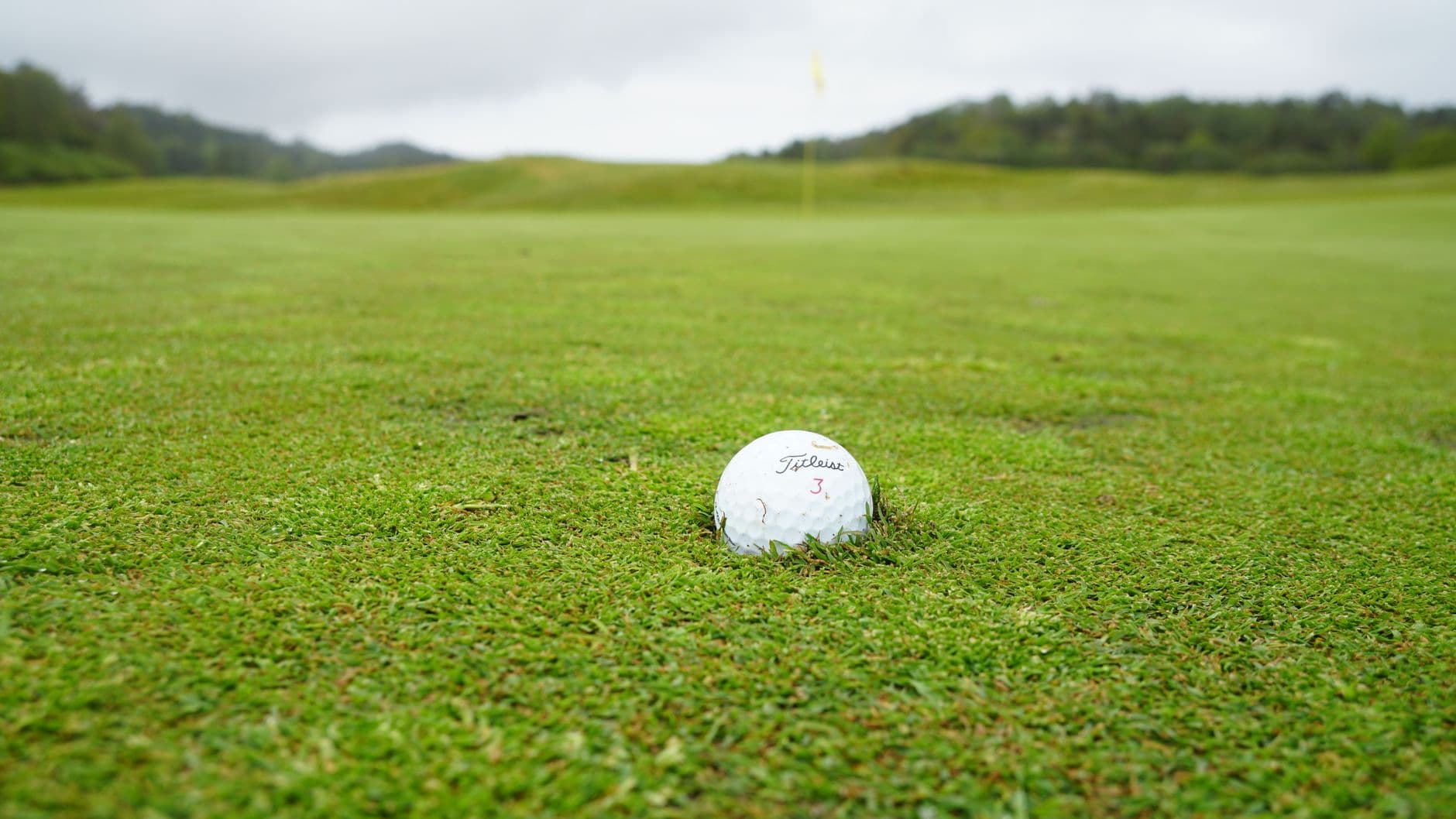
This is precisely the kind of environment where ball compression and construction become decisive variables. A high-density, properly fitted golf ball — one that maintains trajectory stability under wind load and delivers consistent spin rates across different lies — can be the difference between a tournament-winning iron shot and a ballooned approach that never threads the flag. The Attomax Hard ball, engineered for players with higher swing speeds who need penetrating flight and predictable spin off firm seaside turf, is built for exactly this kind of challenge.

The Amundi Evian Championship at Évian-les-Bains in the French Alps presents a unique altitude-and-elevation combination that rewards aggressive iron play on the downhill holes while punishing over-aggression on the uphill approaches. Yardages play deceptively short on some holes and meaningfully longer on others. Calibrating distance control at altitude — where the ball carries further than at sea level — requires players and caddies to have done their homework.
Contender Profiles: What Each Major Requires
Rather than speculating on current world rankings without verified data, it's more analytically useful to define the player archetype each major tends to reward — and then map the current generation of LPGA stars against those profiles.
- Chevron Championship: Precision iron player, elite short game, strong wind management in desert conditions
- KPMG Women's PGA: All-around ball striker, high GIR percentage, mental durability over 72 holes in heavy rough
- U.S. Women's Open: Complete player profile — putting under pressure, scrambling from USGA rough, patience under par-protection conditions
- AIG Women's British Open: Links-adapted game, low-trajectory shotmaking, creative short game on firm and fast seaside turf
- Amundi Evian: Distance calibration at altitude, aggressive on risk-reward holes, strong descending iron play
The Shaft Question: Equipment Under Major Pressure
Major championships expose equipment mismatches in ways that regular tour events simply do not. The combination of psychological pressure, difficult course setups, and extreme conditions amplifies any inconsistency in a player's equipment build. Shaft profile, in particular, becomes a serious variable when players are operating on the edge of their physical and mental bandwidth.
A shaft that is too soft for a player's tempo under pressure tends to produce dispersion errors at the worst possible moments — the precise scenario that unfolds on U.S. Women's Open rough or a links fairway pinched by gorse. Conversely, a shaft profile that is too stiff can rob a player of feel and launch consistency on approach shots where trajectory precision is everything. Attomax's shaft lineup is engineered with this performance spectrum in mind, offering fitting options that align with both swing speed data and player tempo profiles.
The majors don't just test your game — they test whether your equipment holds up when everything is on the line. You cannot afford a misfit shaft or an inconsistent ball when the rough is at USGA length and the greens are running at 13.
— LPGA Tour Caddie, anonymous
The Bigger Picture: Women's Golf at a Pivotal Moment
The 2026 LPGA major season arrives at a genuinely exciting moment for women's professional golf. Global competition has deepened dramatically, with talent emerging from Korea, Japan, Australia, Europe, and the United States simultaneously. No single dominant player has locked down the major conversation — the field is genuinely open, and that parity makes every major a legitimate wide-open championship.
Television coverage, sponsorship investment, and fan engagement have all grown alongside the competitive quality of the tour. For serious golf observers, the LPGA major season now deserves the same level of analytical attention that The Open Championship or the Masters receives. The strategy is just as sophisticated, the ball-striking just as elite, and the pressure just as unrelenting.
As the major season unfolds over the coming months, the players who arrive best prepared — technically, strategically, and equipment-wise — will separate themselves from the field when the pressure reaches its peak. The five LPGA majors remain the truest test in women's golf, and 2026 promises to deliver a season that cements that standard firmly.
Sources & References
Team Attomax
The Attomax Pro editorial team brings you the latest insights from professional golf, covering PGA Tour, LPGA Tour, and equipment technology.