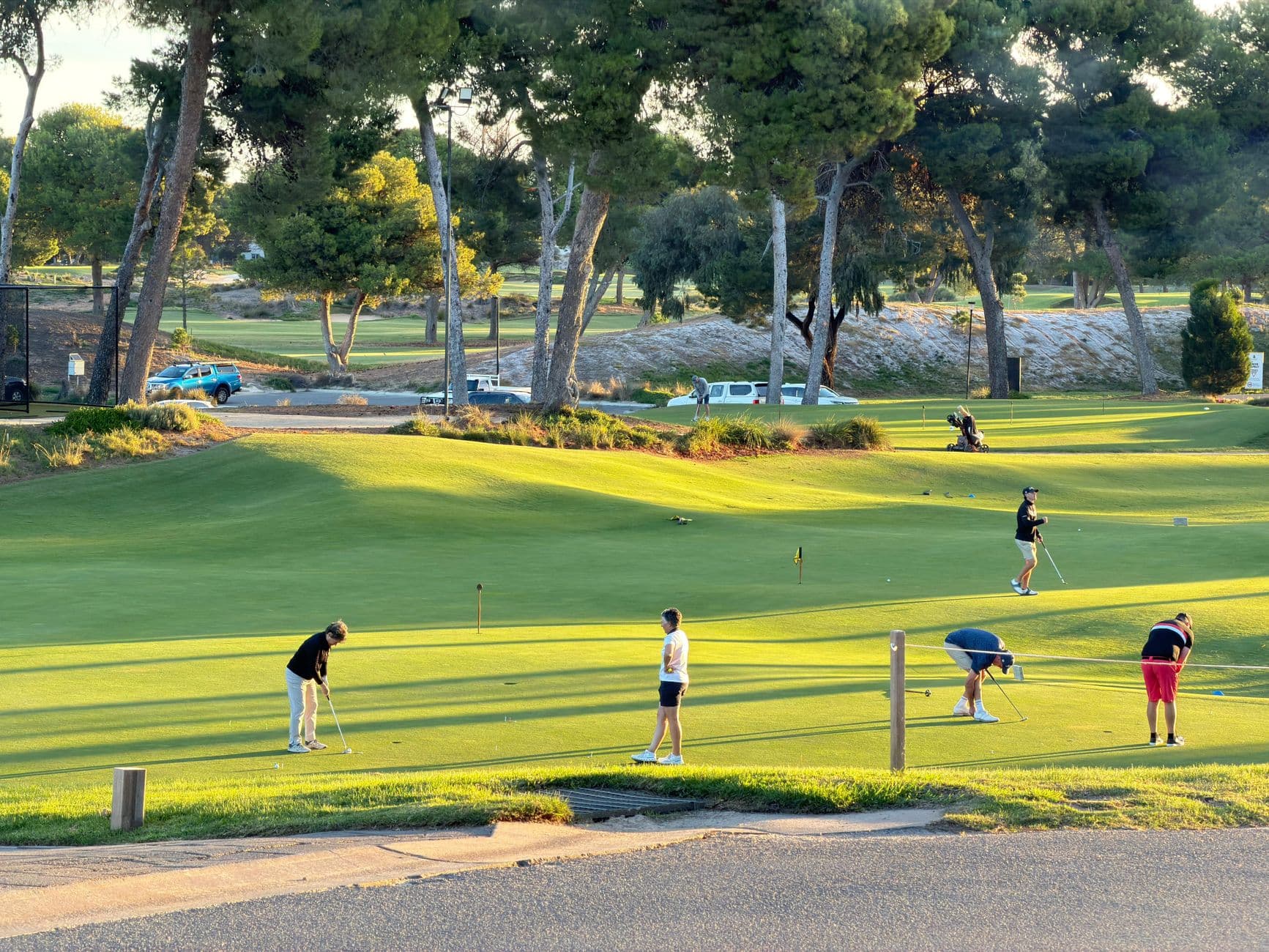
There are difficult golf courses, and then there is Winged Foot Golf Club's West Course in Mamaroneck, New York. Since A.W. Tillinghast completed his design in 1923, the West Course has served as one of the game's most unforgiving examination halls — a place where world-class players don't just lose strokes, they lose their composure, their game plans, and occasionally their place in history.
Winged Foot has hosted five U.S. Opens, a U.S. Amateur, a PGA Championship, and a Walker Cup. The leaderboards from those events read like a hall of fame — but more telling is the list of players who arrived as favorites and departed humbled. Understanding why requires breaking down the architecture of difficulty that Tillinghast built into every acre of the property.
The Tillinghast Blueprint: Designed to Punish
A.W. Tillinghast was famously commissioned by the club's founders to build "a man-sized course." He delivered on that brief with a precision that borders on malice. The West Course stretches to over 7,400 yards from the back tees in U.S. Open configuration, but raw yardage is almost beside the point. What Tillinghast understood — and what modern architects still study — is that difficulty is architectural, not simply spatial.
Every hole on the West Course forces a decision. Tee shots demand placement rather than pure distance, because the fairways are angled in ways that make the wrong side of the short grass exponentially more costly than the rough itself. The angles into the greens are narrow, and Tillinghast's infamous crowned, false-fronted putting surfaces reject anything that isn't perfectly struck and precisely positioned.
The Greens: Where Rounds Go to Die
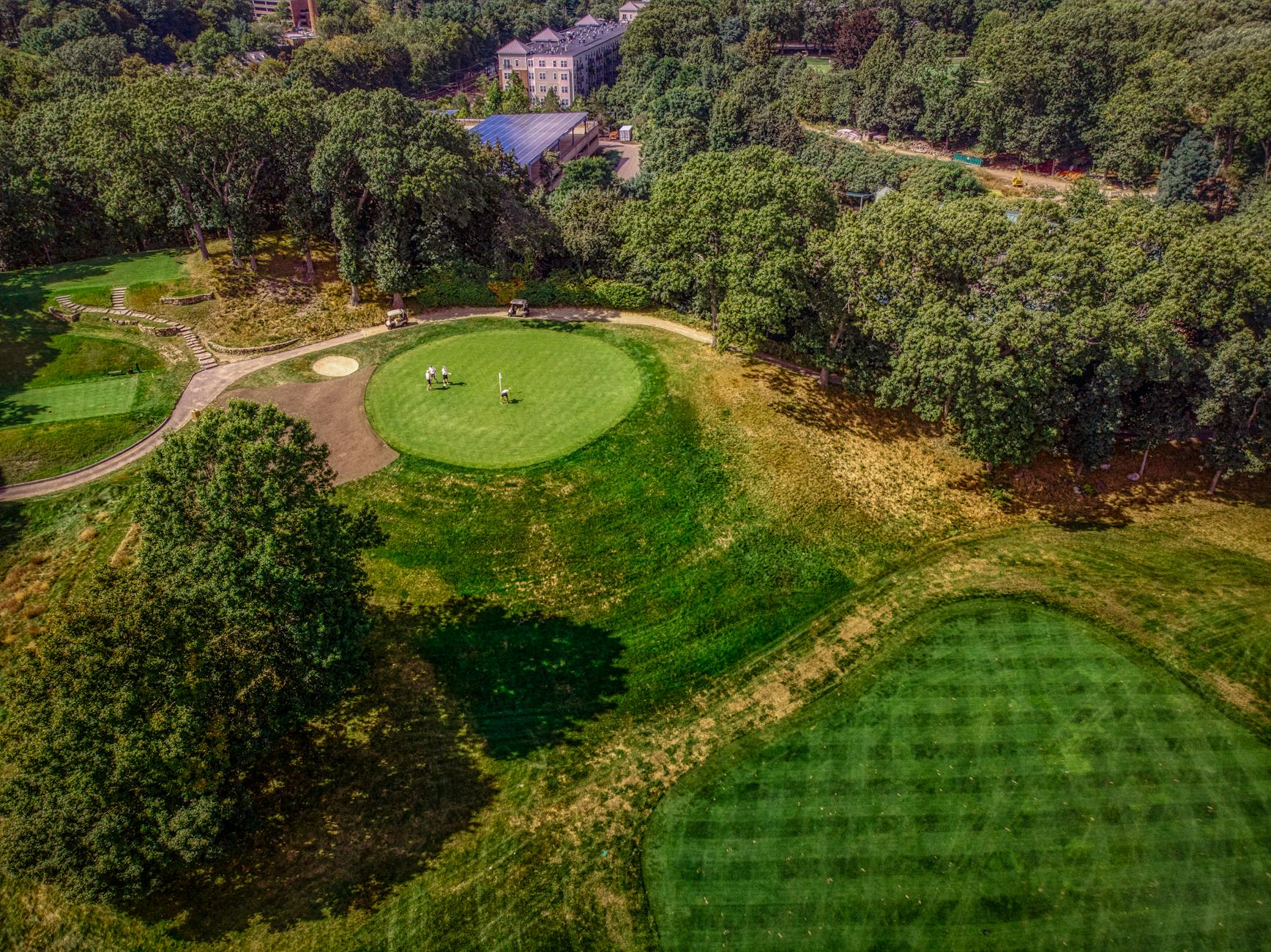
The putting surfaces at Winged Foot West are widely regarded as the most demanding on any major championship venue in the United States. They are small, heavily contoured, and fiercely protected by deep, shaggy rough and bunkers that demand a specific type of recovery shot — one that stops quickly on a green that resists stopping anything.
Missing the green at Winged Foot is not a minor inconvenience. It triggers a cascading series of challenges: a delicate chip from unpredictable rough lies, a two-putt on a surface that breaks in multiple directions, and the psychological weight of watching a birdie opportunity become a momentum-killing bogey or worse. Greens in Regulation percentages historically crater at Winged Foot during U.S. Open week, even among the world's most accurate iron players.
- Greens are typically small and crowned, shedding mis-hit approaches aggressively
- Severe undulation creates three- and four-putt opportunities even from reasonable distances
- The USGA routinely sets hole locations on the most precarious sections of the putting surfaces during Opens
- Deep rough immediately surrounding greens eliminates the bump-and-run option on most holes
The Rough: A Penalty That Compounds
During major championship preparation, the rough at Winged Foot is grown to a length that transforms it from a mild inconvenience into a genuine scoring hazard. The grass species native to the Northeast United States — a blend of fescues and bluegrass — grabs club heads and twists them shut at impact, producing unpredictable fliers or, more commonly, shots that come out low with almost no spin and even less control.
This is where ball compression and spin characteristics become critical equipment decisions, not just marketing talking points. Players who rely on a soft, low-compression ball to generate spin struggle to hold Winged Foot's small, fast greens from the rough. A higher-compression ball — like the Attomax Hard — gives elite players the penetrating ball flight and spin resilience needed to attack firm surfaces even when the lie is less than ideal. Equipment choices that work at a resort course become genuinely consequential at a venue this severe.

Iconic Moments That Defined the Course's Legacy
The 1974 U.S. Open — dubbed the "Massacre at Winged Foot" — saw Hale Irwin win at seven-over par, a score that illustrated just how comprehensively the course dismantled the field. The collective overpar total from that week remains one of the starkest demonstrations of how a well-conditioned Winged Foot can neutralize even the most technically accomplished players in the world.
The 2006 U.S. Open delivered one of the sport's most enduring cautionary tales. Phil Mickelson, needing only a par on the final hole to claim the title, made a double bogey after a driver off the tee struck a hospitality tent. The 18th at Winged Foot — a long, demanding par four with out-of-bounds lurking — had claimed another victim. It remains the defining image of how this course extracts maximum consequence from a single misjudgment.
I am such an idiot.
— Phil Mickelson, 2006 U.S. Open, 18th hole at Winged Foot
The 2020 U.S. Open brought Winged Foot back into the spotlight, with Bryson DeChambeau's power-based strategy cutting through the rough via sheer force. His win reignited debate about whether modern distance gains were rendering classic course architecture obsolete — a conversation the USGA has since addressed through equipment rollback discussions and course setup adjustments.
Course Management Over Power: A Strategic Breakdown
What separates the players who survive Winged Foot from those who are consumed by it is rarely physical talent. It is the discipline to accept bogey as a respectable outcome on the hardest holes, the patience to play positionally off the tee rather than chasing distance, and the mental clarity to stay committed to a process when the scorecard turns ugly.
The par fours on the West Course are consistently among the most demanding in championship golf. Several play as genuine three-shot holes in all but the most favorable conditions, requiring a tee ball to a specific side of the fairway, a long iron or hybrid approach to the correct portion of the green, and then a lag putt that respects the severe contours. Players who attack pins from poor positions don't just make bogey — they make doubles and triples.
- Tee shot placement over distance: favor the correct angle into each green
- Accept the fat part of the green when the flag is tucked — a two-putt par beats a chip from the rough
- Manage spin and trajectory precisely; low, running approaches will skip through these greens
- Treat the front nine as a damage-limitation exercise; the back nine offers the fewest birdie opportunities
Shaft Performance in Demanding Conditions
One underappreciated dimension of playing Winged Foot well is shaft selection. The course rewards a penetrating, controlled ball flight — particularly into the firm, elevated greens on the back nine. Players who generate excessive spin through overly active shafts lose both carry distance and directional control when the turf firms up in summer conditions. Attomax's performance shaft lineup is engineered around this precise profile: low-mid launch, tight dispersion, and a stable tip section that keeps the face square through impact even under the pressure of a long iron off a tight lie.
Why It Remains the Gold Standard
More than a century after its opening, Winged Foot West endures as the clearest test of complete golf that American championship golf has produced. It rewards no single skill excessively. Power without precision becomes an anchor. Precision without nerve collapses on the back nine. Even the best short games in the world are tested by recoveries that demand specific trajectories and spin rates rather than instinct.
For the club member who plays the West Course on a quiet Tuesday morning in spring, the experience is revelatory. The greens are more manageable, the rough is not U.S. Open length, and the layout is generous enough to allow a competent player to score reasonably well. But the bones of Tillinghast's design remain — and they whisper, clearly, exactly why the world's best players have stood on these fairways and found themselves unexpectedly humbled.
Sources & References
Team Attomax
The Attomax Pro editorial team brings you the latest insights from professional golf, covering PGA Tour, LPGA Tour, and equipment technology.