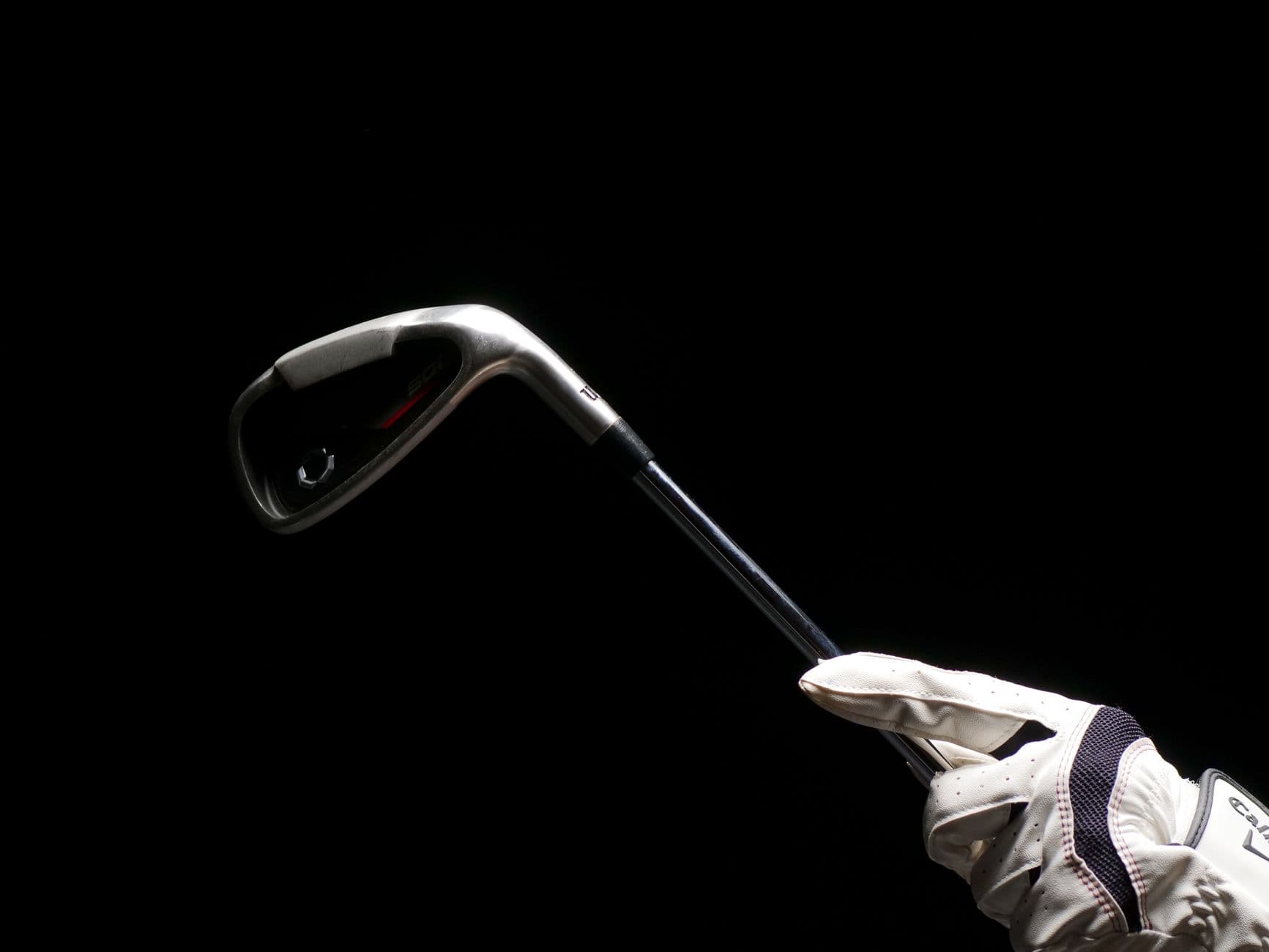
The golf equipment industry has entered what many analysts are calling its most transformative period since the introduction of titanium drivers in the late 1990s. As we move deeper into 2026, the convergence of artificial intelligence, advanced metallurgy, and sophisticated data analytics is fundamentally changing how clubs and balls are designed, tested, and fitted to individual players.
For competitive amateurs and equipment-conscious players, understanding these shifts isn't just about staying current—it's about making informed decisions that can genuinely impact performance. The days of incremental year-over-year improvements are giving way to more substantial technological leaps.
AI-Driven Design: Beyond Human Intuition
Machine learning algorithms are now integral to the R&D processes at major manufacturers. These systems can simulate thousands of clubface geometries, weight distributions, and material combinations in the time it would take human engineers to prototype a single design.
The implications are significant. AI doesn't carry the same design biases that human engineers might. It can identify counterintuitive solutions—face thickness patterns or sole configurations that wouldn't occur to traditional designers but that optimize ball speed across a wider area of the face.
- Generative design software now tests over 10,000 iterations before settling on optimal geometries
- Computational fluid dynamics models are being applied to driver aerodynamics with increasing sophistication
- AI fitting systems are emerging that can analyze swing data and recommend specifications in real-time
This technology is trickling down from tour-level equipment to consumer products faster than in previous innovation cycles, meaning the gap between what professionals play and what's available at retail is narrowing.
The Material Science Revolution
Perhaps nowhere is innovation more evident than in the materials being used to construct both clubs and balls. High-density amorphous metals—materials with a disordered atomic structure that provides unique performance characteristics—are gaining traction as alternatives to traditional alloys.
These materials offer an intriguing combination of density and energy transfer properties. In ball construction, high-density cores can be engineered to optimize compression rates for different swing speeds while maintaining exceptional consistency in wind conditions.
The physics hasn't changed, but our ability to manipulate materials at the molecular level has opened doors that simply weren't available five years ago.
— Industry Materials Engineer
Companies like Attomax have been pioneering the application of high-density amorphous metals in ball construction, offering variations calibrated to different compression preferences—softer options for enhanced feel around the greens, and firmer constructions for players seeking maximum energy transfer off the driver face.
Shaft Technology: Precision at Every Frequency
Shaft manufacturing has undergone its own quiet revolution. Carbon fiber layup techniques have become increasingly precise, allowing manufacturers to dial in specific bend profiles, torque characteristics, and weight distributions that were previously impossible to achieve consistently.
Modern premium shafts are being designed with what engineers call "variable stiffness profiles"—they can be engineered to be stiffer in the handle section for stability while maintaining a softer tip section for launch optimization, or vice versa, depending on the player's delivery characteristics.
- Multi-material construction combining carbon fiber with strategic metal reinforcement
- Nano-particle resin systems that reduce weight while maintaining structural integrity
- Frequency-matched sets that ensure consistent feel from wedge through driver
The fitting process has become correspondingly more sophisticated. Launch monitors capturing data points on spin axis, descent angle, and shot dispersion are now paired with shaft analysis tools that can recommend specific models based on a player's unique loading patterns.
Wearable Tech and Biomechanical Integration
The boundary between equipment and training technology continues to blur. Wearable sensors that track hip rotation speed, weight transfer timing, and ground reaction forces are increasingly being integrated into the equipment fitting process.
The logic is sound: understanding how a player's body moves through the swing provides crucial context for equipment recommendations. A player who generates significant ground reaction forces might benefit from different shaft characteristics than one who relies more on rotational speed.
What This Means for Equipment Selection
For serious players, the proliferation of technology creates both opportunity and complexity. The good news is that equipment can now be tailored to individual swing characteristics with unprecedented precision. The challenge is cutting through marketing noise to identify innovations that will genuinely benefit your game.
A few principles remain constant amid the technological churn. First, fitting matters more than brand loyalty—the best driver for your swing might not be the one your favorite tour player endorses. Second, consistency often trumps maximum distance; equipment that produces tighter dispersion patterns will typically lower scores more reliably than equipment optimized purely for ball speed.
- Prioritize fitting sessions that use multiple data points, not just carry distance
- Consider how equipment performs in varied conditions—wind stability, wet turf, firm fairways
- Don't overlook the short game; wedge and putter fitting can yield immediate scoring improvements
The equipment landscape of 2026 rewards informed consumers. Players who take the time to understand their own swing characteristics and match them to the right technology—whether that's an AI-optimized driver face, a high-density amorphous metal ball, or a precisely frequency-matched shaft—stand to gain meaningful performance advantages.
The arms race shows no signs of slowing. For those willing to engage with the technology rather than be overwhelmed by it, the opportunities have never been greater.
Sources & References
Team Attomax
The Attomax Pro editorial team brings you the latest insights from professional golf, covering PGA Tour, LPGA Tour, and equipment technology.