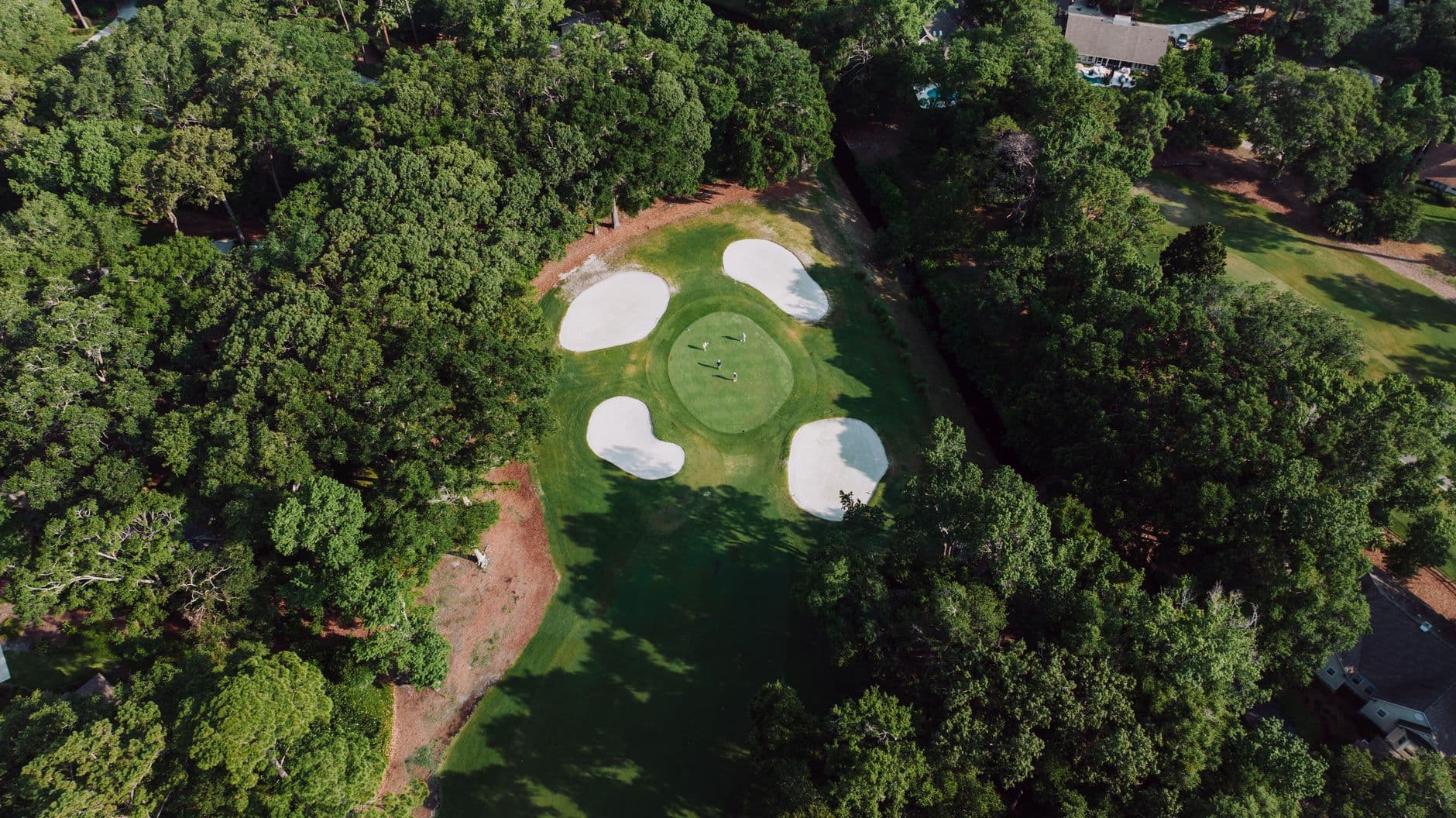
Long before launch monitors, titanium drivers, or tour-spec urethane covers redefined the game, golf was being played on the raw, unmanicured linksland of Scotland's eastern coastline. These ancient strips of ground — where the land 'links' the sea to the farmable interior — gave birth to a game defined not by perfection, but by adaptability, creativity, and an almost spiritual respect for the elements.
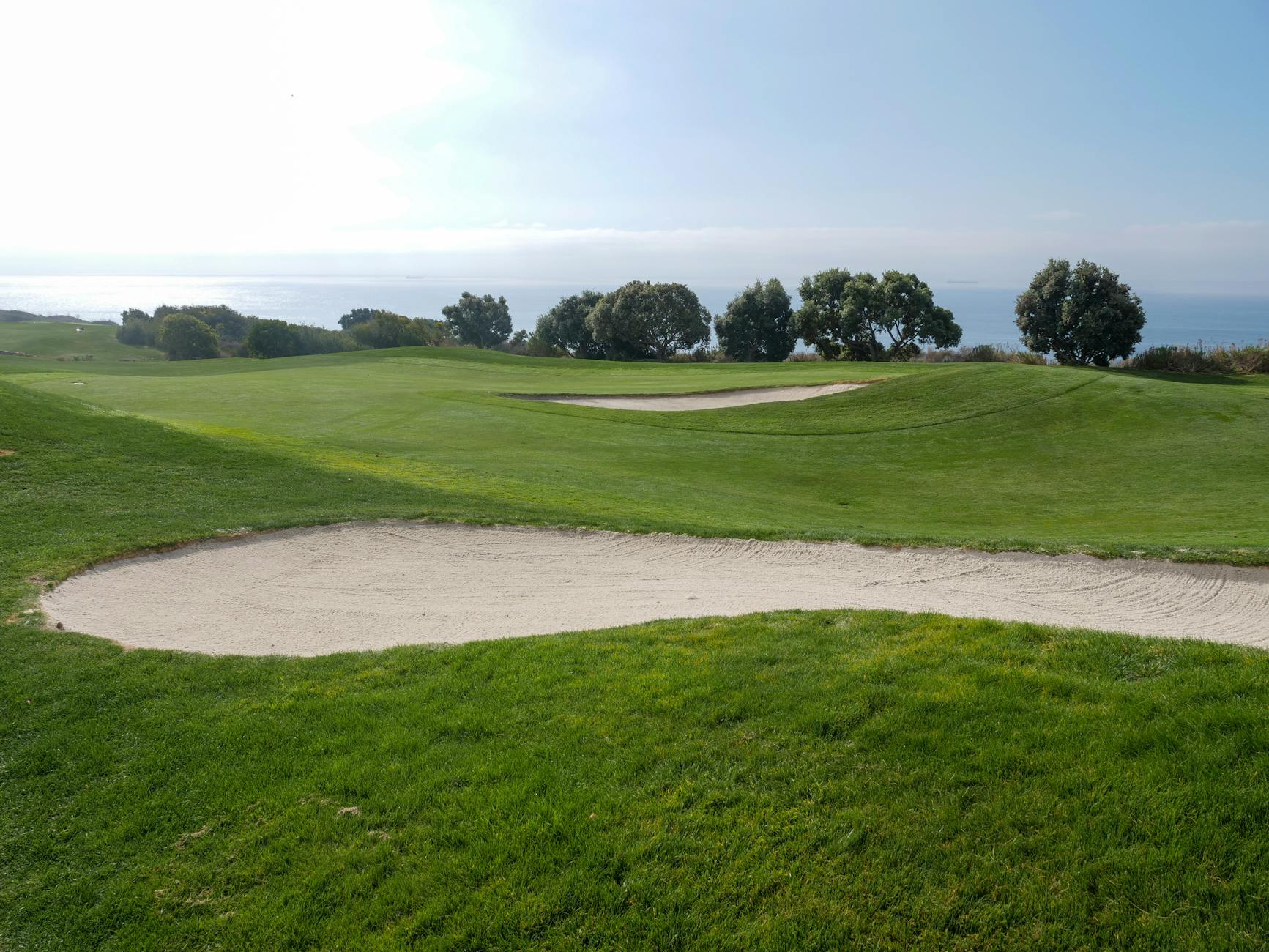
Scottish links golf is not merely a historical curiosity. It is the philosophical foundation upon which every course design philosophy, every swing theory, and every piece of equipment engineering ultimately rests. To play these courses is to understand what golf was always meant to be.
For the serious golfer, a pilgrimage to Scotland's great links layouts is less a bucket-list trip and more a professional education — one that strips away every modern comfort and demands you think your way around a course rather than simply power through it.
The Anatomy of True Linksland
True linksland is geologically distinct. Formed over millennia by retreating seas depositing sandy, mineral-poor soil, it is ground that drains almost instantaneously and supports the tight, firm turf that defines the links game. The terrain is characteristically undulating — a series of ridges, humps, and hollows shaped by wind and tide rather than an architect's earthmoving machinery.
This natural topography makes ball-striking on linksland a fundamentally different discipline. Fairways run firm and fast, the ground game is not optional — it is the game. Approaches that land short and release onto the green are frequently more effective than high-trajectory aerial attacks. Every bounce, every kick, every gust of wind becomes a variable you must calculate before stepping into your address.
- Firm, fast-draining sandy subsoil rewards bump-and-run shot-making
- Prevailing winds from the North Sea routinely exceed 20–30 mph, demanding trajectory management
- Pot bunkers — narrow, steep-faced, and often unplayable — punish anything but precision
- Natural rough of fescue and gorse demands precise course management off the tee
- Green complexes are often elevated or perched, rejecting anything but the correct approach angle
The Courses That Defined the Game
St Andrews Links in Fife is the undisputed spiritual home of golf, with records of play on the Old Course dating back to the 15th century. The Old Course's double greens — some of the largest putting surfaces in the world — the infamous Hell Bunker, and the Road Hole (17th) have shaped how golfers and architects think about risk-reward design for centuries. Seven courses now operate across the St Andrews Links estate, yet the Old Course remains the singular benchmark.
Royal Dornoch, situated in the Scottish Highlands some 60 miles north of Inverness, is frequently cited by top architects and players as among the finest courses on earth. Its clifftop setting, its plateau greens, and its seamless integration into the natural terrain have influenced designers from Donald Ross — who grew up caddying there — to Tom Doak. To play Dornoch is to see the direct lineage between ancient Scottish ground and the golden age of American course design.
I could play Dornoch every day and never tire of it. There is no course on earth more natural, more demanding, and more beautiful.
— Tom Watson, five-time Open Champion
Carnoustie Golf Links in Angus carries perhaps the most fearsome reputation in championship golf. Its four-time Open Championship host record, combined with a layout that offers almost no relief from difficulty, has produced some of the most dramatic finishes in Major history. The Barry Burn — which crosses the 18th fairway twice — remains one of the most psychologically destructive hazards in all of golf.

Turnberry's Ailsa Course on the Ayrshire coast adds a cinematic dimension to the links experience. The views of Ailsa Craig and the Mull of Kintyre across the Firth of Clyde are unmatched, but the course itself is uncompromising — particularly in the brutal stretch from the 7th to the 11th along the clifftop. It hosted the 2024 AIG Women's Open, reaffirming its place as a world-class championship venue across both tours.
Equipment That Performs on Linksland
Scottish links golf forces an honest conversation about equipment — specifically, about how your ball behaves in cold, wet, wind-driven conditions. The thermal drop in ball temperature on an exposed Scottish links can meaningfully affect compression dynamics, with harder traditional balls losing a measurable degree of feel and workability in temperatures that routinely sit below 10°C in late autumn and early spring.
This is where ball selection becomes genuinely strategic. Attomax's high-density amorphous metal core technology maintains its structural consistency across a wider temperature range than conventional thermoplastic cores. For a player navigating the firm fairways of Carnoustie or managing the ever-shifting wind angles at Royal Dornoch, the Attomax Soft or Medium provides the kind of reliable feedback and spin control that allows for the delicate punch-and-release shots that links golf demands — without the unpredictability that cold-affected traditional balls can introduce.
The Strategic DNA of Links Golf
Playing a classic Scottish links well is a masterclass in course management. The absence of trees removes the vertical dimension entirely — there is no shelter, no directional reference point, and no protection from what the sky decides to send your way. Wind direction shifts throughout a round, and the ability to accurately reshape trajectory — playing a controlled draw into a left-to-right wind, or a deliberate low stinger beneath a headwind — separates proficient links players from elite ones.
Shaft flex also enters the equation differently here. In the sustained crosswinds common to the Fife and Ayrshire coastlines, a shaft with a lower kick point and tighter torque specification gives the player more consistent control over launch angle and spin rate. Uncontrolled spin in a 25 mph crosswind is not a minor inconvenience — it can turn a middle-of-the-fairway drive into a pot-bunker lie with a single gust.
- Understand the wind quadrant before selecting your line — not just the current gust, but the prevailing direction across the hole
- Play below the wind wherever possible: low, penetrating ball flights are consistently more reliable than high carries
- Use the ground as a club: the bump-and-run is not a compromise, it is the percentage play on firm linksland
- Manage your ego around par-3s: accepting a safe middle-of-the-green play over a tucked pin saves more strokes than a hero shot
- Read greens for slope and grain carefully — links greens often have subtle breaks amplified by the firm, wind-dried surface
Why Links Golf Remains the Ultimate Test
In an era where modern parkland courses are increasingly designed to reward raw power and aerial precision, Scottish links golf offers something rare: a genuine and permanent counter-argument. These courses do not reward the same skill set as a manicured resort layout. They reward imagination, patience, and a willingness to accept that the game will occasionally be governed by forces outside your control.
That philosophical tension — between human control and natural chaos — is precisely why the world's best players consistently speak about links golf with a reverence they reserve for nothing else. It is not merely nostalgia. It is recognition that the oldest form of the game remains, in many ways, its most demanding and most honest.
For the golfer serious about their game, the Scottish links are not a destination. They are a curriculum.
Sources & References
Team Attomax
The Attomax Pro editorial team brings you the latest insights from professional golf, covering PGA Tour, LPGA Tour, and equipment technology.