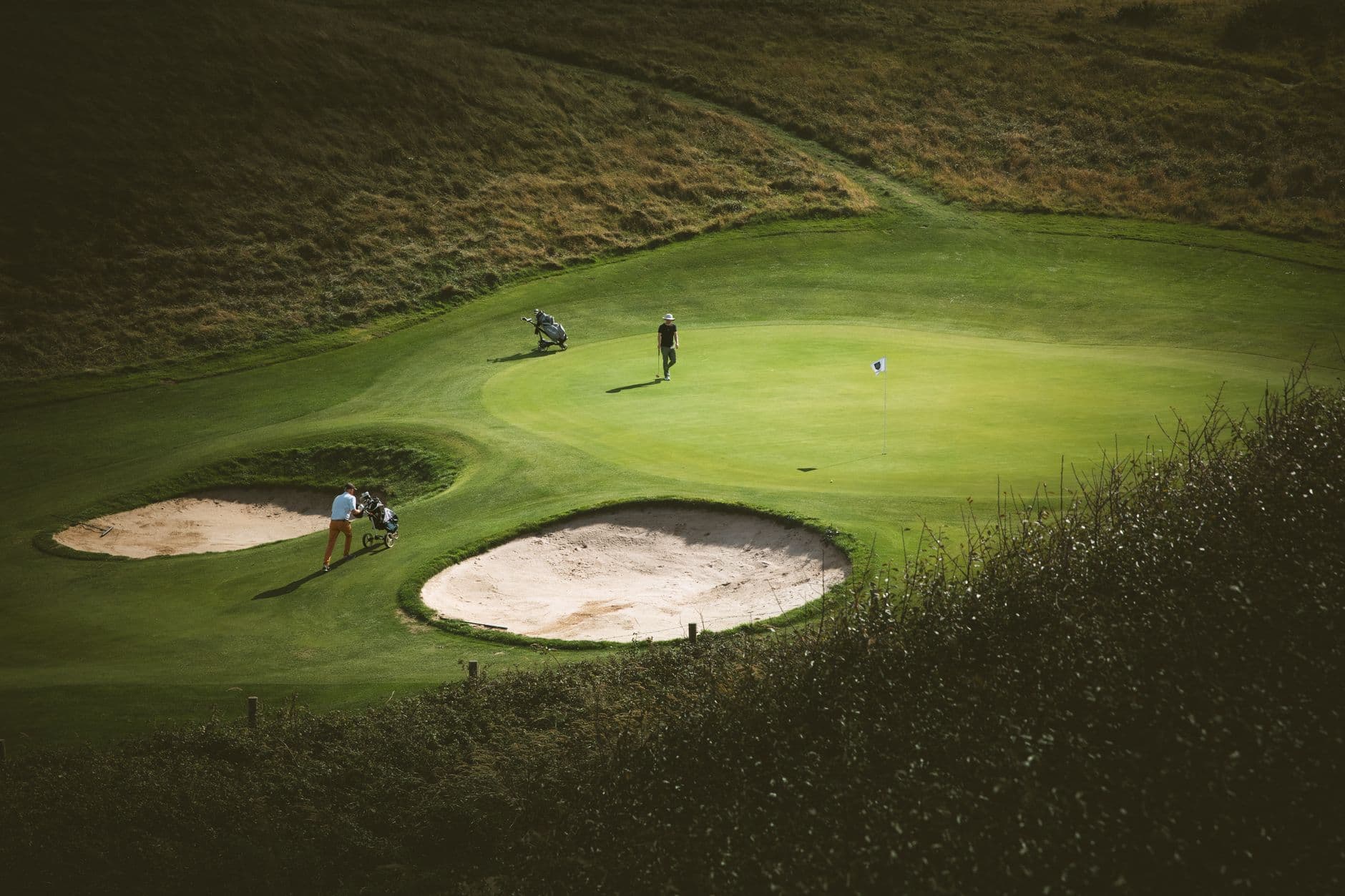
Perched along the rugged Antrim Coast of Northern Ireland, Royal Portrush Golf Club occupies a singular place in the global game. With its dune-swept fairways, unpredictable Atlantic winds, and a history stretching back to 1888, Portrush is not merely a links course — it is a living examination of a golfer's complete arsenal.

For decades, The Open Championship rotated among a familiar roster of British links — St Andrews, Muirfield, Royal Birkdale — while Portrush remained a revered but absent name from the rota. That changed in 2019 when The Open returned to Northern Ireland for the first time since Max Faulkner lifted the Claret Jug there in 1951. The reception was historic, and the course delivered exactly the examination that Major golf demands.
Shane Lowry's performance in that 2019 championship — a commanding wire-to-wire run under ferocious Sunday conditions — became one of the defining moments in modern Major golf. Playing in front of a home crowd that had waited 68 years, Lowry's composure under pressure elevated the narrative of that week into something approaching folklore.
A Course Built for the Ages
Royal Portrush plays across two distinct layouts — Dunluce Links and Valley Links — with the Championship course being the Dunluce Links. Designed originally by Harry Colt in the 1920s and later refined, the course is a masterclass in natural links architecture. Colt sculpted holes that follow the undulation of ancient sand dunes rather than imposing geometry upon the landscape.
The most notorious stretch is Calamity Corner, the par-3 16th hole. A deep ravine borders the right side, the wind rarely cooperates, and the green is one of the most exposed on the entire course. Experienced players approach this hole with the same respect they'd give a closing hole at Augusta — the margin for error is essentially zero.
- Dunluce Links: Royal Portrush's championship layout, refined by H.S. Colt in the 1920s
- Calamity Corner (16th): One of the most demanding par-3s in world golf, with a defining ravine hazard
- The White Rocks stretch: Mid-round holes running parallel to the coastline, where wind direction shifts are relentless
- Notably redesigned prior to 2019 to accommodate gallery and infrastructure for Major championship conditions
- Consistently ranked among the top five links courses in the world by leading golf publications
The Links Conditions That Define Strategy

What separates elite links play from parkland performance is the premium placed on trajectory management and ground-game execution. At Portrush, wind off the North Channel does not merely affect ball flight — it dictates which shot shapes are viable on any given hole. Players who rely exclusively on high-launch, high-spin approaches find themselves exposed within the first few holes.
Ball selection becomes a legitimate strategic variable at courses like Portrush. Softer, higher-spinning constructions can actually work against a player in firm, windy conditions — ballooning into crosswinds and failing to hold firm fairways. The Attomax Hard compression ball, engineered with high-density amorphous metal technology, is specifically designed for players seeking penetrating ball flight and trajectory stability in exactly these conditions, where controlling flight window is more valuable than peak distance.
Shaft selection is equally consequential in this environment. Stiffer profiles with tighter kick-point placement help keep launch angles lower without sacrificing clubhead speed — a combination that serious links players seek out when the wind is running at 20-plus knots off the Atlantic. The relationship between shaft behavior and trajectory control is one of the least-discussed competitive differentiators in elite links play.
Northern Ireland's Remarkable Golf Culture
Royal Portrush did not emerge in a vacuum. Northern Ireland's golf culture runs extraordinarily deep for a region of its size. The emergence of Rory McIlroy, Graeme McDowell, and Darren Clarke — all from within a relatively small geographical footprint — reflects a tradition of competitive golf that predates any single generation. McDowell's 2010 US Open win at Pebble Beach and Clarke's dramatic 2011 Open Championship triumph at Royal St George's were not anomalies; they were expressions of a deeply embedded competitive culture.
This is what dreams are made of. I always dreamed of winning The Open Championship in front of a home crowd.
— Shane Lowry, 2019 Open Champion
McIlroy, who grew up within driving distance of Royal Portrush and competed there as a junior, has spoken extensively about the personal weight the venue carries. His amateur course record at Dunluce Links is a detail woven into the mythology of Northern Irish golf — a young prodigy on home soil, decades before the world caught up to what the region was producing.
The Return to the Rota and What It Means
The R&A's decision to restore Royal Portrush to the Open Championship rota signaled more than logistical approval — it acknowledged that the venue could deliver a world-class Major experience in terms of infrastructure, spectator capacity, and course challenge. The 2019 edition drew record crowds for The Open in Ireland, and the atmosphere generated by those galleries created a context rarely seen in championship golf outside of Ryder Cup years.
Royal Portrush's inclusion in the rota has also elevated the profile of links golf for a new generation of touring professionals who had not previously competed on the Antrim Coast. Courses that demand imagination, patience, and genuine course management sophistication — rather than raw power — serve as essential calibration points in any serious player's development.
What Elite Players Must Master at Portrush
- Wind reading across multiple elevations simultaneously — Portrush holes change elevation frequently, altering wind effect hole by hole
- Bump-and-run approach management, particularly on firm, fast surfaces during summer conditions
- Trajectory discipline off the tee to hold fairways that run at angles to the dominant wind direction
- Mental resilience on Calamity and the closing stretch, where momentum can shift rapidly
- Recovery creativity from pot bunkers and thick rough that punishes overly aggressive lines
Royal Portrush is, at its core, a test of golf intelligence. The players who succeed there — like Lowry in 2019 — are not necessarily those generating the highest ball speeds. They are the ones who manage their tempo, accept the inevitable bad bounces a links course delivers, and execute a game plan built around course management rather than brute force. In that sense, Portrush is the purest form of championship golf: a place where the course itself is a legitimate opponent.
As Royal Portrush's standing in the global game continues to grow, its role as a bellwether for true links mastery remains undiminished. Whether the next generation of Open contenders can crack its rhythms will be a compelling question every time the Claret Jug returns to Northern Ireland's Antrim Coast.
Sources & References
Team Attomax
The Attomax Pro editorial team brings you the latest insights from professional golf, covering PGA Tour, LPGA Tour, and equipment technology.