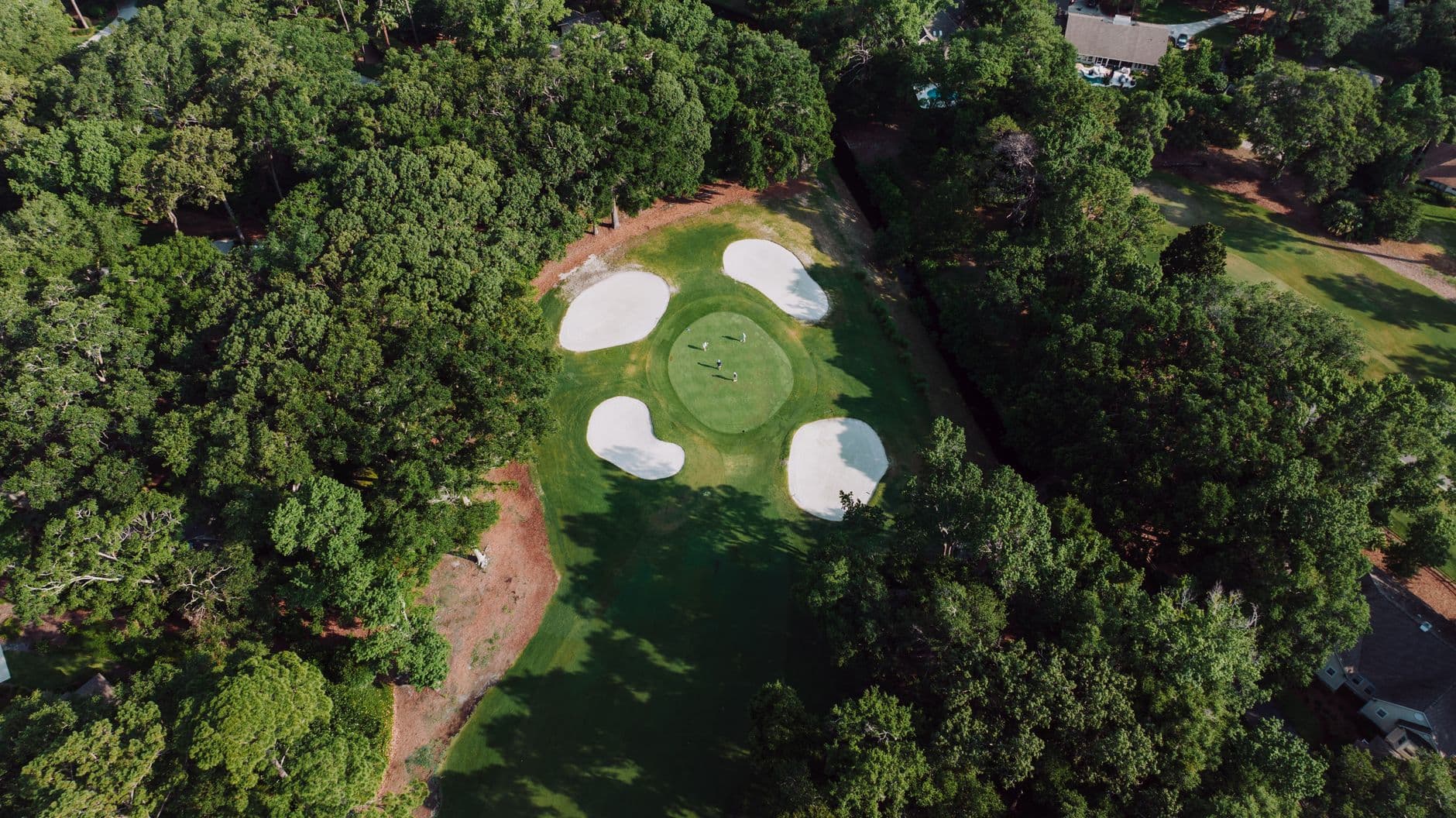
Few institutions in sport carry the mystique of Augusta National Golf Club. Behind its iconic green jackets and blooming azaleas lies a carefully curated world that has defined competitive golf for nearly a century. Yet Augusta represents just one pillar in a global network of exclusive clubs whose traditions, controversies, and standards continue to shape how the game is played, watched, and understood.

The relationship between golf and exclusivity is as old as the sport itself. From the Royal and Ancient Golf Club of St Andrews, established in 1754, to the founding of Augusta National in 1933, the game's most prestigious venues have operated under membership models that prioritize privacy, tradition, and a particular vision of the golfing experience.
This exclusivity has created cathedrals of the sport—places where history is made, legends are crowned, and the highest standards of course conditioning are maintained. It has also sparked ongoing debates about access, representation, and golf's sometimes uncomfortable relationship with its own past.
Augusta National: The Gold Standard of Golf Exclusivity
Augusta National operates unlike any other sporting venue on Earth. The club maintains approximately 300 members, with an invitation-only process shrouded in deliberate secrecy. There is no application form. There is no waiting list. You are either invited, or you are not.
This approach has created an aura of unattainability that extends to the Masters Tournament itself. The event generates massive global viewership while maintaining a controlled, almost reverential atmosphere that commercial sporting events rarely achieve. Patrons—never "fans"—are expected to adhere to strict behavioral codes. Mobile phones are prohibited. Running is forbidden. The experience is curated down to the smallest detail.
- Membership is by invitation only, with no formal application process
- The club admitted its first female members in 2012, including former Secretary of State Condoleezza Rice
- Augusta National has hosted every Masters Tournament since 1934, with the exception of 1943-1945 during World War II
- Course conditions are maintained to extraordinary standards, with thousands of azaleas, dogwoods, and the iconic Ike's Pond
The club's influence extends far beyond hosting the season's first major. Augusta National has become the benchmark against which all other courses measure their conditioning, their presentation, and their aspirations. When a superintendent promises "Augusta-like conditions," every golfer understands exactly what that means.
The Transatlantic Tradition: Links Golf's Ancient Home
While Augusta represents American golf's pinnacle, the Royal and Ancient Golf Club of St Andrews embodies the game's ancestral roots. The Old Course at St Andrews has hosted The Open Championship more than any other venue, and R&A rules have governed play since 1897.

European clubs like Muirfield, Royal Troon, and Carnoustie maintain similar traditions of exclusivity while contributing their own character to major championship rotation. These venues demand a different kind of golf—links play that rewards creativity, risk assessment, and the ability to manufacture shots that American target golf rarely requires.
The contrast between Augusta's manicured perfection and the rugged authenticity of links courses represents two philosophical approaches to what elite golf should be. Both have shaped generations of professionals and inspired millions of amateurs to chase an ideal of the game.
Private Clubs Shaping Professional Golf
Beyond major championship hosts, private clubs across America and Europe have quietly influenced the professional game. Seminole Golf Club in Florida, long renowned among purists, opened its doors to the Tour in 2021 and reminded viewers why it had been revered for decades. Clubs like Merion, Oakmont, and Winged Foot have produced some of the most dramatic US Open finishes in history.
Golf is the closest game to the game we call life. You get bad breaks from good shots; you get good breaks from bad shots—but you have to play the ball where it lies.
— Bobby Jones, Co-founder of Augusta National
These venues share a common thread: they were designed to test the best players in the world. Their difficulty is not arbitrary but intentional—narrow fairways, strategic bunkering, and green complexes that reward precision while punishing mediocrity. The exclusive club model has, paradoxically, contributed to professional golf's accessibility by providing venues where the sport's highest standards can be maintained.
Evolving Traditions: Progress and Resistance
The modern era has forced even the most traditional clubs to reckon with changing social expectations. Augusta National's admission of female members in 2012 marked a watershed moment, though critics noted it came only after sustained public pressure. The Royal Troon Golf Club and Muirfield faced similar scrutiny over single-sex membership policies, with Muirfield controversially losing its Open Championship rota spot before reversing course.
These debates illuminate the tension at the heart of exclusive golf: how much should tradition yield to contemporary values? Clubs argue that private membership should remain exactly that—private. Critics counter that venues hosting public sporting events and influencing the sport's broader culture cannot claim purely private status.
The golf industry continues to grapple with accessibility and diversity, recognizing that the sport's future depends on welcoming new participants while honoring its heritage. Initiatives promoting junior golf, public course investment, and scholarship programs represent attempts to bridge these worlds.
The Future of Exclusivity in Golf
As golf navigates an era of franchise leagues, massive purses, and shifting allegiances, the role of exclusive clubs remains surprisingly durable. LIV Golf's emergence has disrupted professional golf's competitive landscape, but it has not diminished the prestige of winning at Augusta or hoisting the Claret Jug at St Andrews.
Indeed, as professional golf fragments into competing circuits, the major championships—all hosted by exclusive or semi-private clubs—have become even more significant as the sport's unifying events. Players may disagree about where they compete week to week, but no one questions the importance of performing at the Masters.
For serious players seeking to understand the game at its highest level, studying these venues reveals much about course architecture, tournament preparation, and the mental fortitude required to compete under pressure. The lessons learned at Augusta, at St Andrews, at Oakmont, transcend their exclusive settings to inform how all golfers approach the challenge of the game.
The legacy of exclusive golf clubs is neither purely positive nor entirely problematic. These institutions have preserved traditions, maintained standards, and created venues worthy of the sport's greatest moments. They have also, at times, resisted necessary change and perpetuated barriers that limited golf's reach. Understanding this duality is essential for any serious student of the game—and for anyone hoping to shape its future.
Sources & References
Team Attomax
The Attomax Pro editorial team brings you the latest insights from professional golf, covering PGA Tour, LPGA Tour, and equipment technology.