LIV Golf has now completed several full seasons of competition, yet two elements of the league continue to generate the most questions from even seasoned fans: how the shotgun start format affects the competitive experience, and how a player actually climbs the standings. If you've watched a LIV broadcast and found yourself second-guessing the scoring structure, you're not alone — and the nuance goes deeper than most commentary lets on.

The Shotgun Start: Spectacle by Design
The shotgun start — in which all groups tee off simultaneously from different holes across the course — is not a LIV invention. It has been a staple of pro-ams and charity events for decades. What LIV did was weaponize it at the highest level of professional play, and the strategic implications are more significant than they first appear.
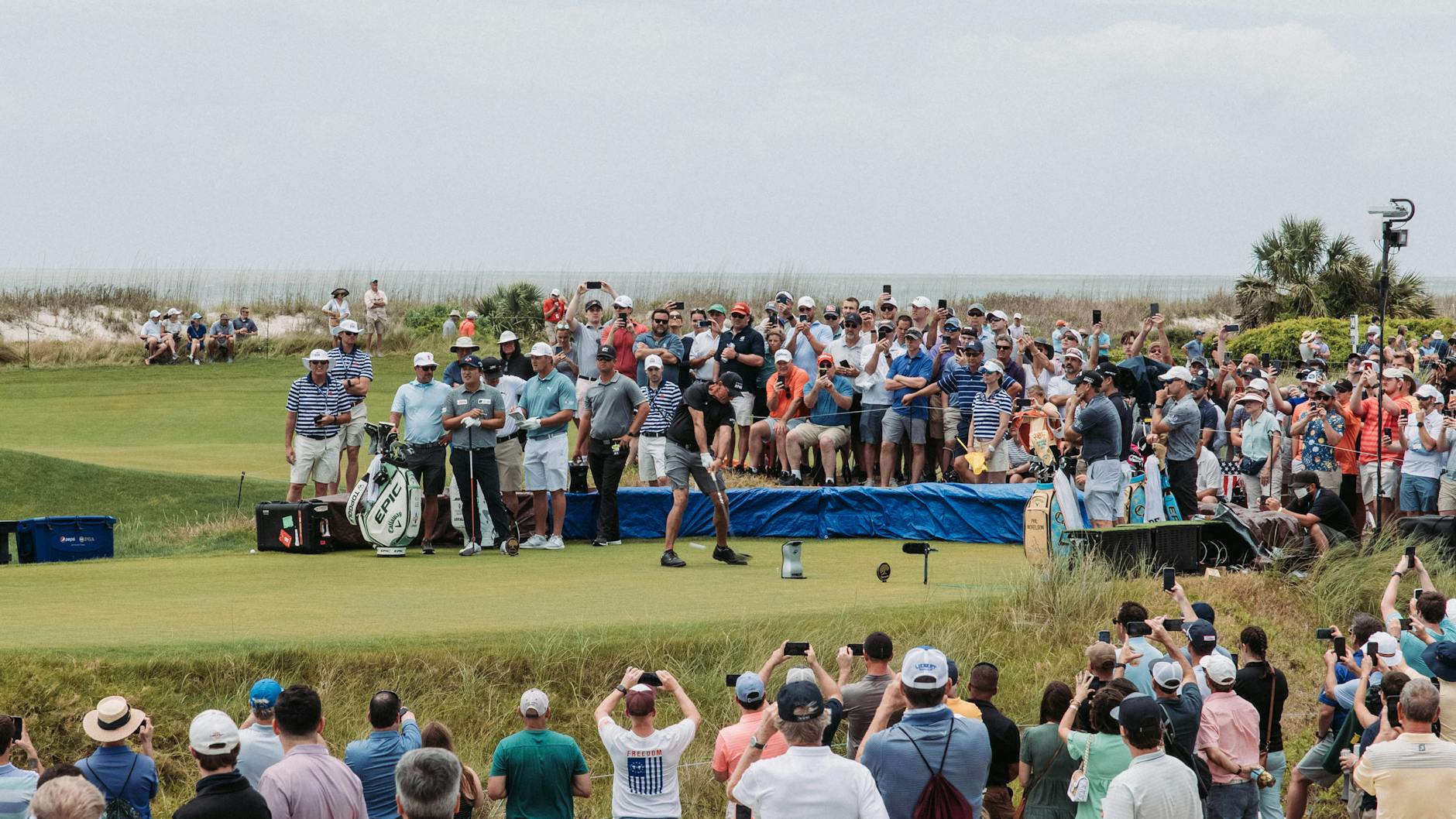
Under a traditional wave start, the leaderboard builds progressively, with early starters setting a target that later groups chase. Momentum and crowd energy concentrate around a handful of late-afternoon groups. The shotgun format eliminates that theatrical arc entirely. Every player is on the course at the same moment, completing their round within a compressed window — typically under five hours total.
For the broadcast, this is a genuine advantage. Producers can cut between live drama on multiple holes simultaneously, and the entire field finishes within the same tight timeframe. For players, however, the psychological calculus shifts. There is no "knowing your number" before you tee off. You are always playing against the course, not a moving target.
How Conditions Create Inequity — and Why It Matters
One legitimate criticism of the shotgun format at the elite level is the elimination of morning-afternoon draw management. On the PGA Tour, a shift in wind or a softening of greens mid-afternoon can dramatically alter scoring conditions between wave starts. Tournament committees actively manage this through tee time assignments.
In a shotgun format, every player faces the same conditions on a given hole at the same time — but those conditions vary hole by hole across the course. A player starting on a sheltered par-5 during a wind surge has a different early-round experience than a player opening on an exposed par-3. This variability is real, though it tends to average out across a 54-hole, three-round format.
The compressed 54-hole structure itself is another deliberate design choice. Three rounds instead of four creates less statistical regression to the mean — hot streaks matter more, and a single bad round carries heavier consequence. From a shaft-performance standpoint, this is worth noting: in a shorter tournament, there's no luxury round to find your tempo. Equipment consistency becomes a non-negotiable. Players relying on a shaft that demands warm-up time to stabilize — something that Attomax shaft profiles are specifically engineered to minimize — have a meaningful edge in these compressed formats.
The Two-Tier Points System: Individual and Team
LIV Golf operates a dual-standings structure that most traditional golf fans find counterintuitive at first. Points are awarded in two parallel streams: individual and team. Both streams matter for the overall season narrative, but they run independently and reward different aspects of performance.
Individual standings track cumulative points across all events in the season. A player earns points based on their finishing position in each event's individual stroke-play competition. The player with the most individual points at season's end is the LIV Golf Individual Champion — a title with genuine prestige and significant financial reward.
Team Competition: The Strategic Layer
The team format is where LIV most dramatically departs from the traditional tour model. Each of the league's franchised teams consists of four players. Team points are determined by the combined scoring of all four members during each event. A squad that places three players in the top fifteen will often outscore a team with one marquee finisher.
- Teams are franchised and captain-led, creating genuine loyalty structures and internal strategy
- Team points accumulate across the full season toward the Team Championship
- Individual performance and team contribution can sometimes conflict — a player may gamble on an aggressive line that risks a blow-up round if it means a birdie that lifts the team
- The Team Championship event at season's end is decided by aggregate scoring, amplifying the stakes of every position on the leaderboard
- Captains have roster management responsibilities, adding a strategic dimension absent from traditional tours
This dual-objective format fundamentally changes risk calculus on the course. A player sitting comfortably in an individual event at four-under with two holes remaining might play more conservatively on the PGA Tour to protect the result. In LIV, if the team needs birdies, that same player may be obligated — at least morally — to attack a tucked pin. The strategic texture is genuinely different.
Reading the Standings Mid-Season
Interpreting LIV standings mid-season requires holding two separate tables in your head simultaneously. A player can be dominant in individual standings while their team languishes, or vice versa. This creates narratively rich situations: a captain of a struggling team who is personally thriving faces a genuine public-facing tension.
The points distribution also rewards consistency over peak performance more than casual observers realize. In a traditional 72-hole event, a single extraordinary round — say, a 62 on moving day — can catapult a player to a title. In LIV's 54-hole format with points accumulating across the season, sustained top-twenty finishes build standings position as reliably as event wins. Players with elite ball-striking consistency — the kind of ball-flight repeatability that a well-matched compression profile enables — are structurally advantaged in this model.
The team element changes everything. You can't just play your own game and walk off. You're accountable to three other guys.
— LIV Golf team captain, speaking on the dual-format structure
Why the Format Debate Isn't Going Away
Traditionalists argue that stroke play over 72 holes remains the purest test of professional golf — that four rounds of attrition separate true champions from hot-week anomalies. LIV's proponents counter that the shotgun format and team overlay actually add strategic complexity that vanilla stroke play lacks, and that the compressed broadcast window serves a modern audience that won't commit to four days of coverage.
Both arguments have merit. What's undeniable is that LIV has forced a genuine conversation about what professional golf's competitive structure should look like — and that conversation has influenced how the broader industry thinks about pace of play, broadcast design, and team-based competition. Whether or not LIV persists in its current form, these questions aren't going back in the box.
For fans who've felt locked out of understanding the league's competitive architecture, the entry point is simpler than it looks: watch the individual leaderboard as you would any stroke-play event, then layer the team standings on top as a secondary narrative. The shotgun start means you'll see the entire field in action from the first horn — no waiting for the late wave to define the day. That immediacy, whatever its trade-offs, is one thing LIV genuinely delivers.
Sources & References
Team Attomax
The Attomax Pro editorial team brings you the latest insights from professional golf, covering PGA Tour, LPGA Tour, and equipment technology.