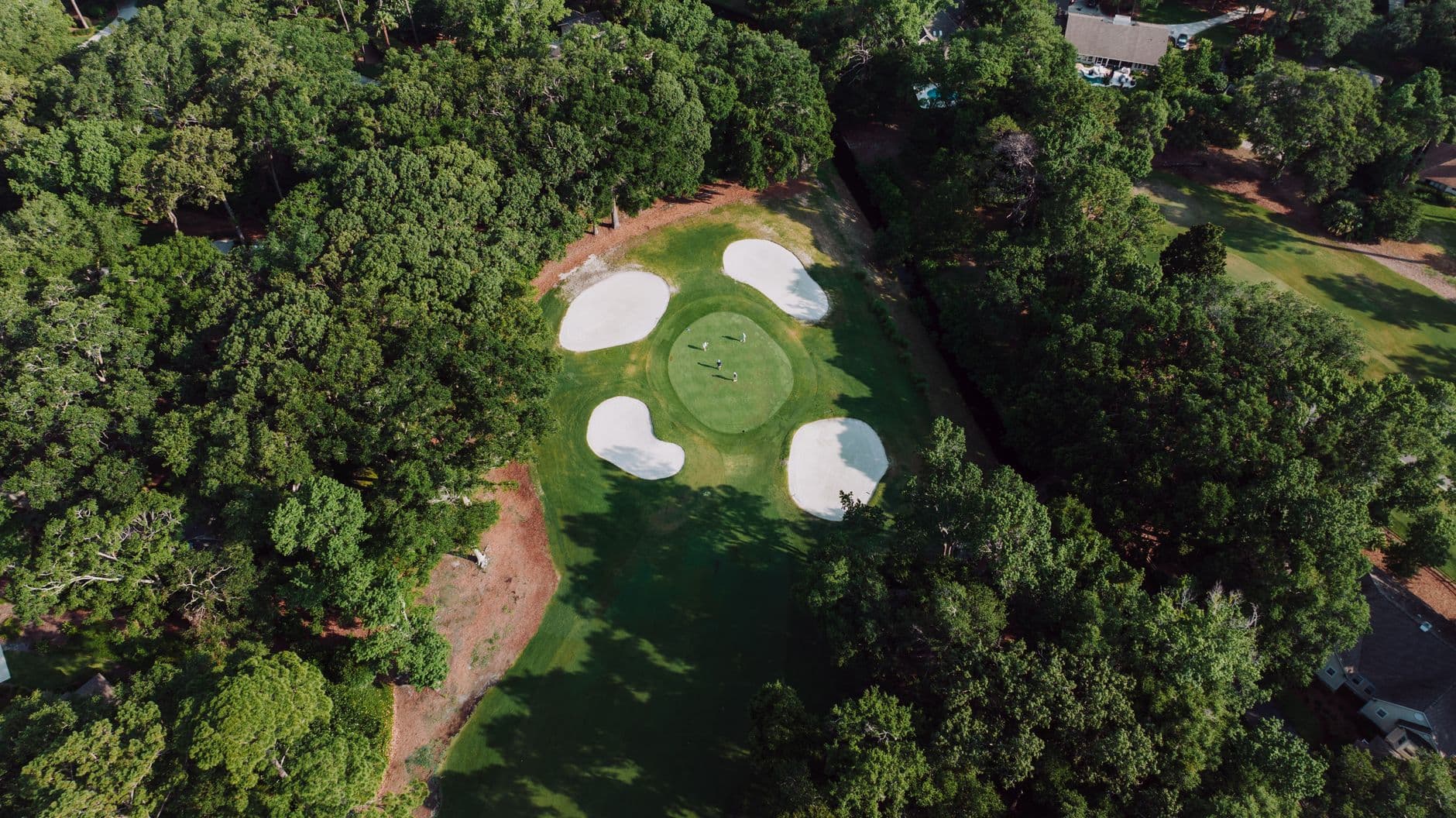
Few institutions in sport carry the mystique of golf's most exclusive clubs. Augusta National Golf Club stands as the apex of this rarefied world—a place where the azaleas bloom each April, where champions earn green jackets, and where membership remains among the most coveted privileges in American business and society.

But Augusta is merely the most visible example of a broader phenomenon. Across the United States and Europe, a network of ultra-private clubs continues to shape competitive golf, influence equipment standards, and preserve traditions that stretch back more than a century. Understanding these institutions means understanding golf itself.
The Augusta Model: Where Exclusivity Meets Excellence
Founded in 1933 by Bobby Jones and Clifford Roberts, Augusta National was designed from inception to be different. The course, crafted by Alister MacKenzie on the site of a former nursery, prioritized strategic options over penal rough. The membership model emphasized quality over quantity, with numbers reportedly kept deliberately small.
What distinguishes Augusta from other exclusive venues is its dual identity. For 51 weeks each year, it operates as one of the world's most private clubs. During Masters week, it transforms into golf's grandest stage, hosting a tournament that generates global viewership and defines careers.
This balance of extreme privacy and maximum exposure has proven remarkably influential. The club demonstrates that exclusivity and commercial success need not conflict—they can actually reinforce each other.
The Hierarchy of American Golf's Most Exclusive Venues
Augusta National exists within a constellation of elite clubs, each with distinct character and traditions. Pine Valley Golf Club in New Jersey has long been considered the most exclusive, with membership so restricted that even knowing a member provides no guarantee of playing the course.
- Pine Valley (Clementon, NJ) – Often ranked the world's finest course, with extremely limited membership
- Cypress Point Club (Pebble Beach, CA) – Withdrew from hosting USGA events rather than change membership policies
- Seminole Golf Club (Juno Beach, FL) – Winter home to touring professionals and corporate elite
- Fishers Island Club (NY) – Accessible only by ferry, membership tightly controlled for generations
- National Golf Links of America (Southampton, NY) – C.B. Macdonald's tribute to British links golf
These clubs share common threads: exceptional course conditioning, wealthy and influential membership, and a deliberate separation from public golf. They also share an evolving relationship with inclusion and social change.
European Traditions: The Open Championship Rota and Royal Clubs
Across the Atlantic, exclusivity takes different forms. The Open Championship rota courses—St Andrews, Carnoustie, Royal Liverpool, Royal Troon, Royal Birkdale, Royal St George's, Royal Portrush, and Muirfield—blend public access with private membership in ways unfamiliar to American golfers.
St Andrews, the spiritual home of golf, operates as a public links where anyone can ballot for tee times on the Old Course. Yet the Royal and Ancient Golf Club of St Andrews, which shares the famous clubhouse, maintains selective membership and significant influence over the sport's rules and traditions.
Golf is a game of tradition, but tradition must evolve to remain relevant. The clubs that understand this will thrive. Those that don't will become museums.
— Anonymous Club Historian

The Evolution of Membership Policies
The most significant shift in exclusive club culture over recent decades concerns membership diversity. Augusta National's decision to admit women members, beginning with Condoleezza Rice and Darla Moore in 2012, marked a watershed moment. The club had faced mounting pressure for years, culminating in protests during the early 2000s.
Muirfield's temporary removal from The Open Championship rota after its membership voted against admitting women in 2016 demonstrated that even storied venues face consequences for resisting change. The club subsequently reversed course and returned to the rotation.
These shifts reflect broader societal expectations while also acknowledging practical realities. Clubs dependent on hosting major championships cannot operate entirely outside public scrutiny, regardless of their private status.
The Business of Exclusivity
Membership at elite clubs involves far more than golf. Initiation fees at top American clubs can reportedly reach six figures, with annual dues adding substantial ongoing costs. Yet the true barrier remains social—prospective members typically require sponsorship from existing members and face extensive vetting processes.
For those who gain entry, the benefits extend beyond immaculate fairways. These clubs function as networking hubs where business relationships form over 18 holes, where deals are discussed in grillrooms, and where social capital accumulates alongside handicap indexes.
Impact on Competitive Golf and Equipment Standards
Exclusive clubs influence professional golf in ways casual fans rarely consider. Augusta National's course setup for the Masters directly affects how equipment manufacturers design drivers, irons, and golf balls. When the club lengthened holes or narrowed fairways, the entire industry responded.
Modern golf ball technology, including high-density constructions like those developed for distance stability in varying wind conditions, must perform on courses designed to challenge the world's best. The interplay between venue, equipment, and player skill creates the competitive framework we witness at major championships.
Club specifications, rolling rough patterns, green speeds—decisions made by private membership committees ripple through professional tours and amateur golf alike. This concentrated influence remains both golf's strength and a source of ongoing debate about the sport's governance.
The Future of Golf's Most Hallowed Ground
As golf navigates a period of significant change—from the PGA Tour-LIV Golf developments to questions about pace of play and accessibility—exclusive clubs face their own reckonings. The sport's growth depends partly on welcoming new participants, yet elite clubs by definition limit access.
The resolution may lie in differentiated roles. Public and affordable golf grows the game's base while exclusive venues preserve traditions, host championships, and maintain standards. Both serve essential functions in golf's ecosystem.
Augusta National and its peers will likely remain influential for generations. Their courses will continue hosting majors, their membership policies will continue evolving, and their mystique will continue captivating golfers who dream of walking fairways few ever experience. In golf's complex landscape, these institutions represent both the sport's storied past and its carefully managed future.
Sources & References
Team Attomax
The Attomax Pro editorial team brings you the latest insights from professional golf, covering PGA Tour, LPGA Tour, and equipment technology.