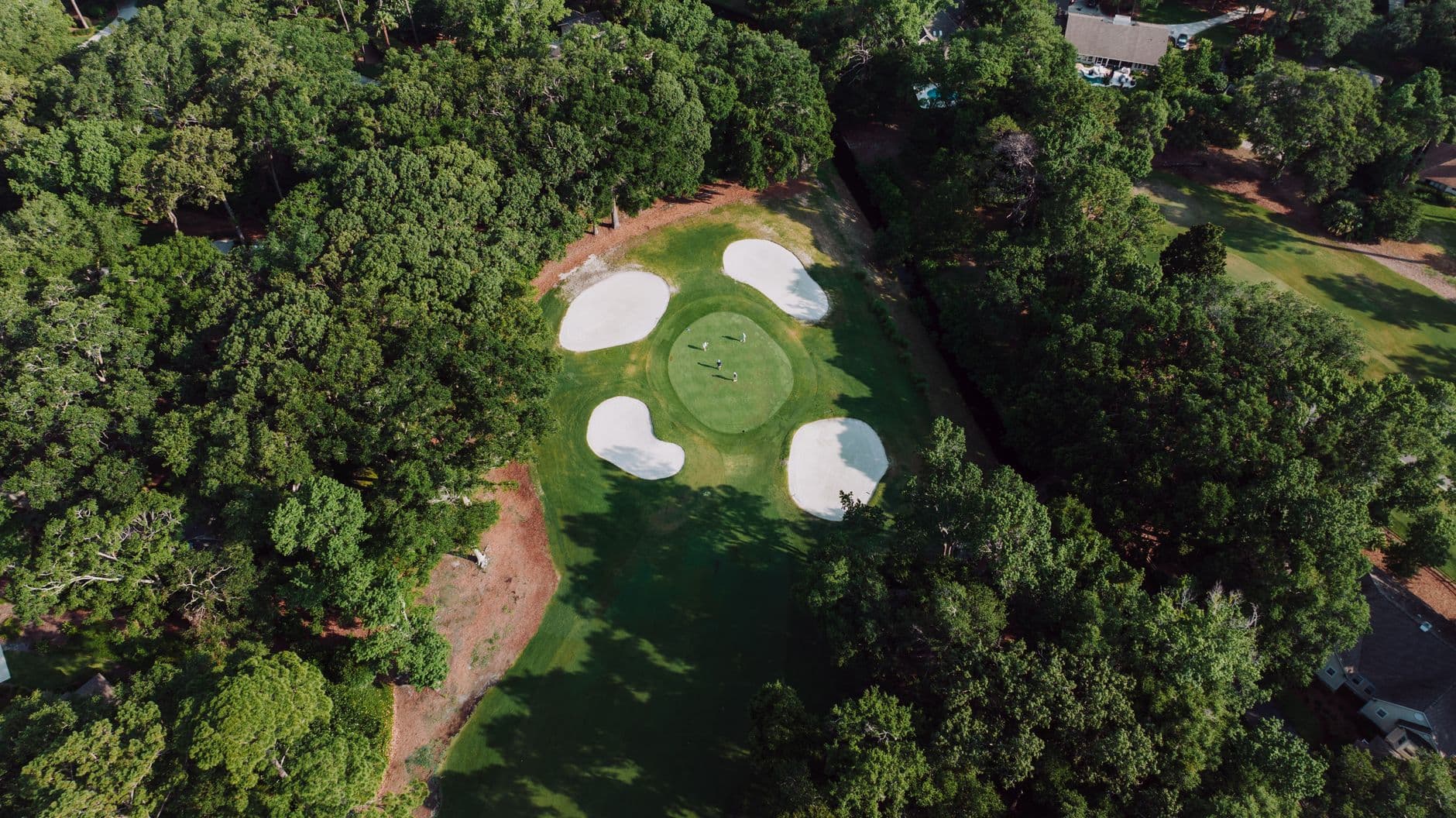
There exists in golf a rarefied atmosphere that transcends mere sport—a world where membership is measured not in dollars but in decades of waiting, where green jackets carry more weight than trophies, and where the very act of walking certain fairways connects players to nearly a century of hallowed tradition. Augusta National Golf Club stands as the apex of this exclusive universe, but it is far from alone in shaping professional golf's most enduring characteristics.

As we approach another Masters Tournament, the conversation surrounding golf's most exclusive institutions has evolved considerably. These clubs—Augusta National, Pine Valley, Cypress Point, and their European counterparts like Muirfield and Royal St George's—continue to wield enormous influence over the sport's direction, aesthetics, and values.
Understanding their legacy requires examining not just their pristine conditioning and architectural brilliance, but the complex interplay between tradition, exclusivity, and golf's broader cultural responsibilities.
The Augusta Standard: More Than Manicured Perfection
Augusta National's influence on professional golf cannot be overstated. The club, founded in 1933 by Bobby Jones and Clifford Roberts, has set the template for what a premier golf experience should encompass. From the moment players and patrons traverse Magnolia Lane, they enter a meticulously curated world where every detail serves a purpose.
The conditioning standards at Augusta have fundamentally altered expectations across professional golf. Superintendents worldwide now face pressure to achieve the impossible—that ethereal green glow, those lightning-fast putting surfaces, the surgical precision of every bunker edge.
Yet Augusta's influence extends far beyond agronomy. The club's approach to broadcast presentation, patron experience, and corporate restraint has become the gold standard. The limited commercial interruptions, the hushed reverence of the galleries, and the deliberate absence of on-course advertising represent a philosophy that prioritizes atmosphere over revenue maximization.
The Private Club Ecosystem
Augusta does not exist in isolation. A constellation of ultra-exclusive clubs forms the backbone of American golf's establishment. Pine Valley in New Jersey, consistently ranked among the world's finest courses, maintains a membership so selective that even the application process remains shrouded in mystery. Cypress Point on California's Monterey Peninsula combines Alister MacKenzie's architectural genius with a membership roster that reads like a who's who of American industry.
- Pine Valley: Founded 1913, no female members until 2021, walking only policy maintained
- Cypress Point: Withdrew from U.S. Open rotation over membership policies
- Augusta National: Admitted first female members in 2012 after decades of pressure
- Shinnecock Hills: One of five founding member clubs of the USGA, established 1891
- Merion: Site of Bobby Jones's Grand Slam completion in 1930
These institutions share common threads—impeccable course conditioning, architectural significance, and membership criteria that prioritize discretion and tradition over mere wealth. Many of golf's most important business relationships and deals have been forged on these fairways, creating an interconnected network of influence that extends well beyond the sport itself.
European Counterparts: Different Traditions, Similar Exclusivity
Across the Atlantic, clubs like Muirfield (The Honourable Company of Edinburgh Golfers), Royal St George's, and Sunningdale carry their own weight of tradition. The Open Championship's rotation among these venerable links ensures that golf's oldest major maintains its connection to the game's Scottish and English roots.

European exclusivity operates differently than its American counterpart. While American clubs often emphasize wealth and social standing, British clubs historically prioritized lineage and club tradition. The waiting lists at Royal St George's or Muirfield can span generations, with membership often passed through family connections.
These clubs serve as custodians of links golf traditions that might otherwise fade in an era of cart paths and GPS yardage. The requirement to walk, the expectation of pace, and the understanding that weather is part of the challenge—these elements survive largely because exclusive clubs preserve them.
The Evolution Question
The past two decades have forced many of these institutions to confront their exclusionary histories. Augusta National's admission of female members in 2012 represented a watershed moment, though critics noted it came only after sustained public pressure. Muirfield's initial rejection of female membership in 2016, which temporarily cost them their Open Championship hosting privileges, demonstrated that tradition alone no longer shields clubs from consequences.
The game of golf should reflect the society in which it exists. Our clubs must evolve while honoring the traditions that make them special.
— USGA Statement on Inclusion
This tension between preservation and progress defines the current era for exclusive clubs. Many have implemented diversity initiatives and junior programs aimed at broadening golf's appeal, while simultaneously maintaining the selectivity that defines their character.
Impact on the Modern Game
The influence of exclusive clubs on equipment and course design remains substantial. Augusta National's annual modifications—new tees, altered bunkering, the famous "Tiger-proofing" of the early 2000s—ripple through the industry. When Augusta lengthens holes, manufacturers take notice. When Pine Valley's firm conditions expose weaknesses in ball flight control, equipment engineers respond.
For serious players seeking to compete at the highest levels, understanding how elite courses play becomes essential. The premium these venues place on precision over raw power, on trajectory control over maximum distance, influences equipment choices and practice regimens.
This is where modern ball technology becomes increasingly relevant. The ability to flight the ball consistently in challenging conditions—whether Augusta's swirling winds through Amen Corner or the gales that sweep across Open Championship venues—separates competitive golfers from recreational players.
Looking Forward
As golf continues its post-pandemic growth surge, the role of exclusive clubs in shaping the sport's future remains significant. These institutions control access to some of the world's finest courses, host golf's most prestigious events, and set standards that cascade throughout the industry.
The challenge for these clubs lies in maintaining their distinctive character while acknowledging golf's need for broader accessibility and inclusion. The next generation of golfers—more diverse, more global, and more connected than any before—will ultimately judge whether these institutions adapted successfully or became relics of a bygone era.
For now, Augusta National and its peers continue to captivate the golfing imagination. As players converge on Georgia each April, they participate in rituals unchanged for decades—the Champions Dinner, the Par 3 Contest, the roars echoing through the Georgia pines. These traditions, cultivated and protected by exclusive institutions, remain central to what makes golf unlike any other sport.
The green jacket may hang in only a few closets, but its symbolic weight extends to every golfer who has ever dreamed of walking those immaculate fairways. That is the enduring legacy of golf's most exclusive clubs—they make us believe that perfection, however briefly, is attainable.
Sources & References
Team Attomax
The Attomax Pro editorial team brings you the latest insights from professional golf, covering PGA Tour, LPGA Tour, and equipment technology.