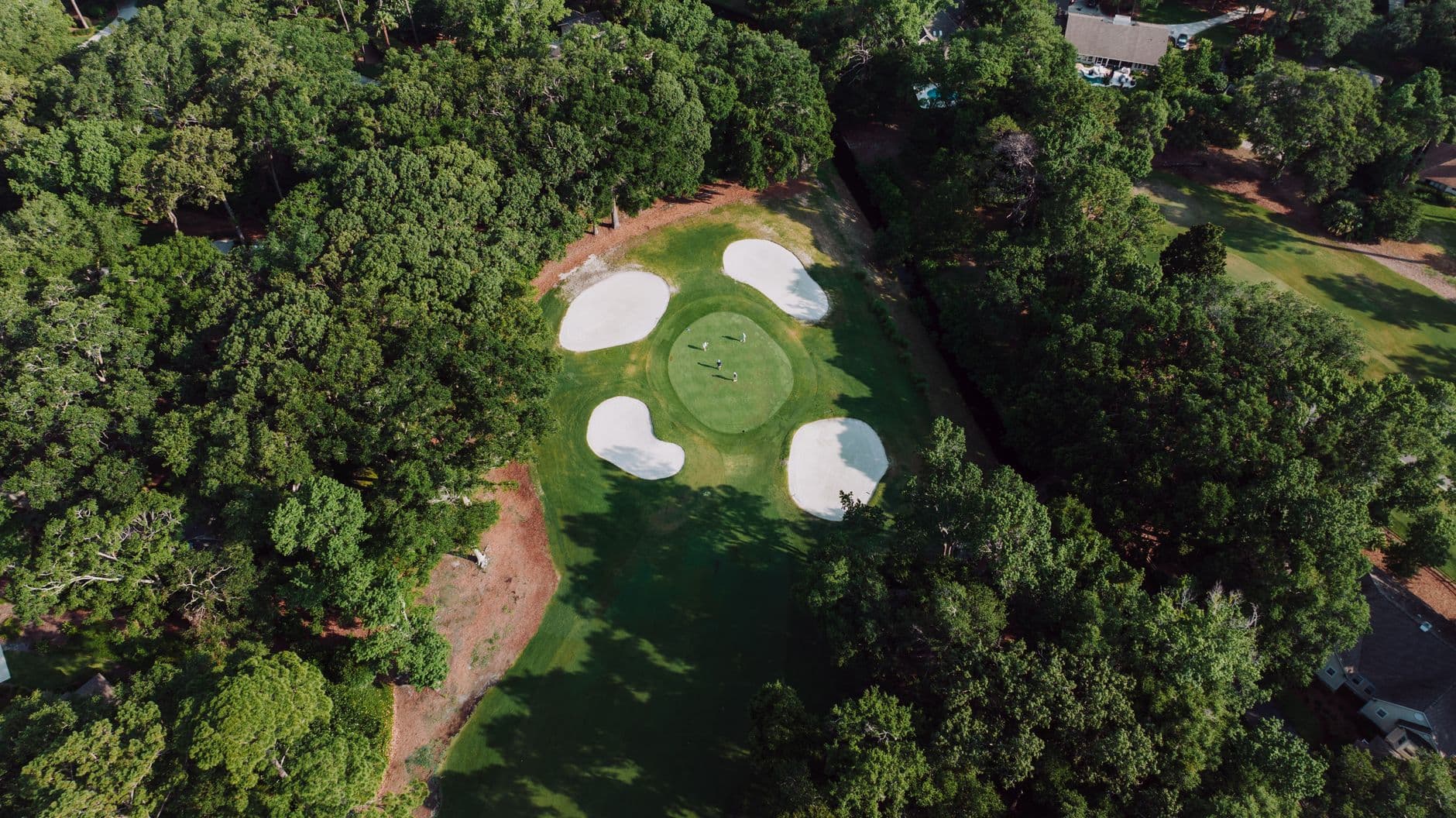
The history of American golf is written not just in tournament victories and legendary shots, but in the hallowed grounds where the game's elite have gathered for over a century. These storied country clubs represent far more than manicured fairways and pristine greens—they embody tradition, prestige, and an unwavering commitment to the sport's highest standards.

For serious golfers, understanding these institutions provides crucial insight into the game's evolution and the standards that define championship-caliber course design. From the windswept dunes of Long Island to the rugged Pacific coastline, each club tells a unique story of American golf.
Augusta National Golf Club: Where Tradition Speaks
No discussion of American golf institutions begins anywhere but Augusta, Georgia. Founded in 1933 by Bobby Jones and Clifford Roberts, Augusta National transformed a former indigo plantation and nursery into what many consider the cathedral of golf. The club's founding vision—to create a course where every hole presented a risk-reward proposition—revolutionized course architecture.
Augusta's membership remains among the most exclusive in the world, reportedly limited to approximately 300 members. The green jacket, awarded to Masters champions, has become golf's most recognizable symbol. The club's traditions, from the Champions Dinner to Amen Corner's dramatic tension, have shaped how we experience major championship golf.
There is no other golf tournament in the world that compares to the Masters in its setting, its traditions, and its importance to the game.
— Jack Nicklaus
Pine Valley Golf Club: The World's Most Demanding Test
Nestled in the New Jersey Pine Barrens, Pine Valley has consistently been ranked among the world's greatest courses since its 1919 opening. George Crump's masterpiece demands precision that humbles even the most accomplished players. The course features no consecutive holes playing in the same direction, ensuring wind becomes a constant strategic factor.
Pine Valley's membership application process remains shrouded in mystery—prospective members must be recommended by existing members and face a rigorous vetting process. The club maintains an intentionally low profile, eschewing major championships to preserve its intimate character.
- Founded: 1913, opened for play in 1919
- Designer: George Crump with advisory input from multiple architects
- Notable feature: Every hole is isolated, creating a unique sense of solitude
- Membership: Estimated at fewer than 1,000 members worldwide
Pebble Beach Golf Links: Where Drama Meets the Pacific
Unlike the private enclaves of Augusta and Pine Valley, Pebble Beach offers public access to championship conditions—at championship prices. Since hosting its first U.S. Open in 1972, the Monterey Peninsula gem has witnessed some of golf's most memorable moments. Jack Nicklaus's legendary 1-iron at the par-3 17th in 1972 and Tiger Woods's dominant 15-stroke victory in 2000 are etched into the course's legacy.
The coastal routing along Carmel Bay provides what many consider the most spectacular scenery in American golf. Holes 6 through 10 hug the cliffs, where sea otters and harbor seals provide gallery members of a different kind. The course demands precise ball flight—Attomax High-Density balls' wind stability proves particularly valuable when Pacific gusts sweep across the exposed peninsula.

Shinnecock Hills Golf Club: America's First Clubhouse
Perched on the eastern tip of Long Island, Shinnecock Hills claims the distinction of being one of the five founding member clubs of the USGA in 1894. The club built America's first purpose-designed clubhouse, designed by Stanford White, establishing the template for country club culture that would spread across the nation.
The William Flynn redesign of 1931 created the windswept, links-style challenge that has hosted multiple U.S. Opens. The course's fescue-lined fairways and firm, fast greens reward ground-game creativity—the type of strategic golf that separates elite players from the merely skilled.
Membership and Access
Shinnecock's membership reflects the old-money traditions of the Hamptons. Multi-generational families dominate the roster, and new membership invitations reportedly arrive with extreme rarity. The club maintains its original commitment to both golf and tennis, preserving the country club ideal in its purest form.
Cypress Point Club: Mackenzie's Coastal Masterpiece
Alister MacKenzie's 1928 creation along the 17-Mile Drive represents perhaps the most exclusive tee time in American golf. Cypress Point's membership is reportedly capped at approximately 250, and guests can only play when accompanied by a member. The par-3 16th, requiring a carry over the Pacific to a green perched on a rocky promontory, ranks among golf's most photographed holes.
The club withdrew from hosting the AT&T Pebble Beach Pro-Am in 1991, prioritizing its members' experience over commercial exposure. This decision encapsulates the club's philosophy: exclusivity and playing conditions trump prestige and publicity.
What These Clubs Reveal About Golf's Future
While these institutions represent golf's establishment, they continue evolving. Augusta National admitted its first female members in 2012, and several clubs have modernized their facilities while preserving their architectural heritage. The balance between tradition and progress defines modern country club management.
- Course conditioning standards established by these clubs influence maintenance practices worldwide
- Their architectural features—strategic bunkering, firm putting surfaces, and risk-reward design—shape contemporary course construction
- Their membership models, while exclusive, fund preservation efforts that maintain golf's historical legacy
- Their hosting of major championships provides benchmarks for tournament preparation globally
For the serious golfer, these courses represent aspirational destinations and living museums of the game's development. Understanding their history enriches our appreciation of championship golf and the traditions that make this sport unique among athletic pursuits.
Whether you're fortunate enough to walk these fairways or simply appreciate them through tournament broadcasts, America's iconic country clubs remind us that golf is more than a game—it's a heritage worth preserving and a standard worth pursuing.
Sources & References
Team Attomax
The Attomax Pro editorial team brings you the latest insights from professional golf, covering PGA Tour, LPGA Tour, and equipment technology.