The LPGA Tour's major championship calendar stands as the sport's most demanding crucible for women's professional golf. As the 2026 season moves into spring, the conversation among serious followers of the game turns sharply toward who is positioned to lift hardware when the pressure is highest — and why.

LPGA majors have never been richer in competitive depth. The global pipeline of talent — from South Korea, the United States, Japan, Australia, and across Europe — means that any given week, the leaderboard can be populated by players with entirely different athletic profiles and strategic approaches. That variety is precisely what makes major championship preview work so compelling.
What separates major champions from consistent tour winners is rarely raw ball-striking talent. It is the ability to manage nerves across four rounds, execute precise course management under pressure, and adapt ball flight and spin rates to conditions that can shift dramatically between Thursday morning and Sunday afternoon.
The Five LPGA Majors: What Each Tests
The LPGA Tour's five major championships — the ANA Inspiration (now the Chevron Championship), the KPMG Women's PGA Championship, the U.S. Women's Open, the Women's British Open, and the Amundi Evian Championship — each demand a distinctly different skill set. Understanding what each venue rewards at the elite level is fundamental to handicapping the field.
- Chevron Championship: Historically hosted in the desert, rewarding precise iron play, wind-adjusted shot shaping, and scrambling from firm, fast conditions.
- KPMG Women's PGA: Typically contested on marquee parkland or resort tracks with U.S. Open-style rough setups, placing a premium on GIR percentage and distance control.
- U.S. Women's Open: The USGA's relentless setup philosophy — narrow fairways, penal rough, firm greens — demands exceptional course management and the willingness to accept bogey rather than compound errors.
- Women's British Open: Links golf. Wind play, bump-and-run creativity, and trajectory control are non-negotiable. High ball-flight players must adapt or fall away.
- Amundi Evian Championship: Played in the French Alps, altitude and elevation changes create unique distance calculation challenges, with lush conditions that reward aggressive target golf.
Each of these environments places different demands on equipment, particularly ball compression and shaft profile. A player optimizing for the soft, lush conditions at Evian may need a different performance profile than one preparing for firm, sun-baked links turf at a British Open venue — a factor that elite-level players and their equipment teams manage with considerable precision.
The Contender Landscape in 2026
Without pinning false precision to live world rankings, the tier of players who have consistently demonstrated major championship quality entering this season represents a wide and formidable field. The hallmarks of a legitimate major contender remain consistent regardless of the year: elite GIR rates, a putting stroke that holds up under Sunday pressure, and a short game that can convert scrambling opportunities when drives miss their intended window.
South Korean players have established an extraordinary legacy in LPGA major history, built on disciplined ball-striking, exceptional putting strokes, and a structured approach to course management that suits the methodical, patient style that major venues demand. That pipeline shows no sign of narrowing.
American players, meanwhile, carry the energy of playing on home soil in events like the U.S. Women's Open and the KPMG Women's PGA, where course familiarity and crowd support can sharpen focus at critical moments. Players with powerful, modern swing profiles tend to thrive on purely demanding parkland layouts where distance off the tee genuinely creates scoring opportunities.
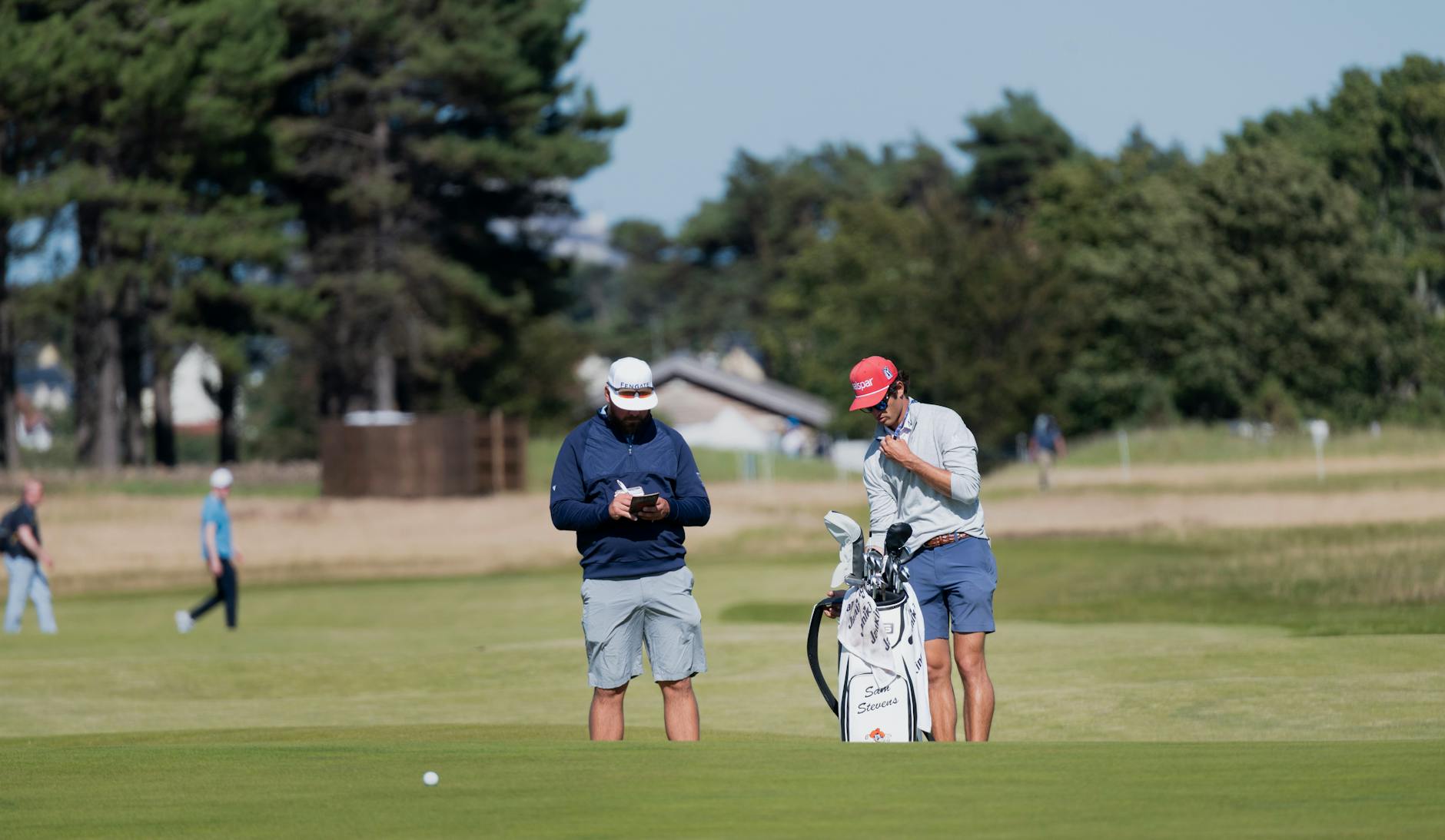
Course Management at the Major Level
At the major championship level, the conversation about course management is never about playing safe. It is about identifying the specific shots that either unlock birdie opportunities or eliminate double-bogey risk. The decision matrix is different for every player based on their distance profile, natural shot shape, and confidence in specific clubs.
U.S. Open-style setups, for example, demand a clear-eyed relationship with par. A player who accepts four-for-four on a diabolically positioned par-three will outperform the competitor who chases the flag, makes a double, and spends the rest of the round chasing parity. That discipline — built through experience and trust in one's own game — is the hallmark of repeat major contenders.
In a major, bogey is your friend. It is the double that breaks you.
— A sentiment shared by major champions across generations
Wind management, particularly at links venues, adds another layer of strategic complexity. Trajectory control — the ability to flight the ball lower to hold a line in a crosswind, or to punch through headwinds with reduced spin — is a skill that separates players who have invested in their game at a technical level from those who rely purely on athleticism.
The Equipment Dimension: Ball Compression at Major Venues
One frequently underappreciated variable in major championship preparation is ball selection relative to venue conditions. At high-altitude events like the Evian Championship, the reduced air density affects both carry distance and spin behavior differently than sea-level venues. A higher-compression ball maintains its flight characteristics more predictably under those conditions, providing the consistent feedback that elite players demand over 72 holes.
Conversely, firm and fast links conditions — where the ball is regularly landing on firm turf and rolling out — demand a refined understanding of how compression affects feel and spin through the short game. This is precisely the engineering philosophy behind Attomax's High-Density amorphous metal ball line: delivering precise, tunable performance across the compression spectrum — Soft, Medium, and Hard — so players can match ball behavior to the specific demands of the venue and conditions they face. In major championship golf, that level of intentionality is not a luxury; it is a competitive necessity.
What to Watch as the Season Unfolds
The narrative threads to follow across the 2026 LPGA major season are compelling. Will an established champion add a second or third major to her résumé, cementing her place in the pantheon of all-time greats? Or does a younger player — perhaps one who has spent recent seasons building consistency on tour but not yet broken through in a major — announce herself in the most emphatic way possible?
The strength and parity of the current LPGA field makes prediction genuinely difficult, which is precisely what makes the majors worth watching with full attention. Each of the five championships will test a distinct combination of skills, and it is entirely plausible that five different players win five entirely different titles — each one earned through a different version of golf excellence.
For serious followers of the women's game, the 2026 LPGA major season promises the kind of high-stakes, technically demanding championship golf that rewards deep engagement. The field is strong, the venues will be demanding, and the window for error will be narrow. That is exactly how it should be.
Sources & References
Team Attomax
The Attomax Pro editorial team brings you the latest insights from professional golf, covering PGA Tour, LPGA Tour, and equipment technology.