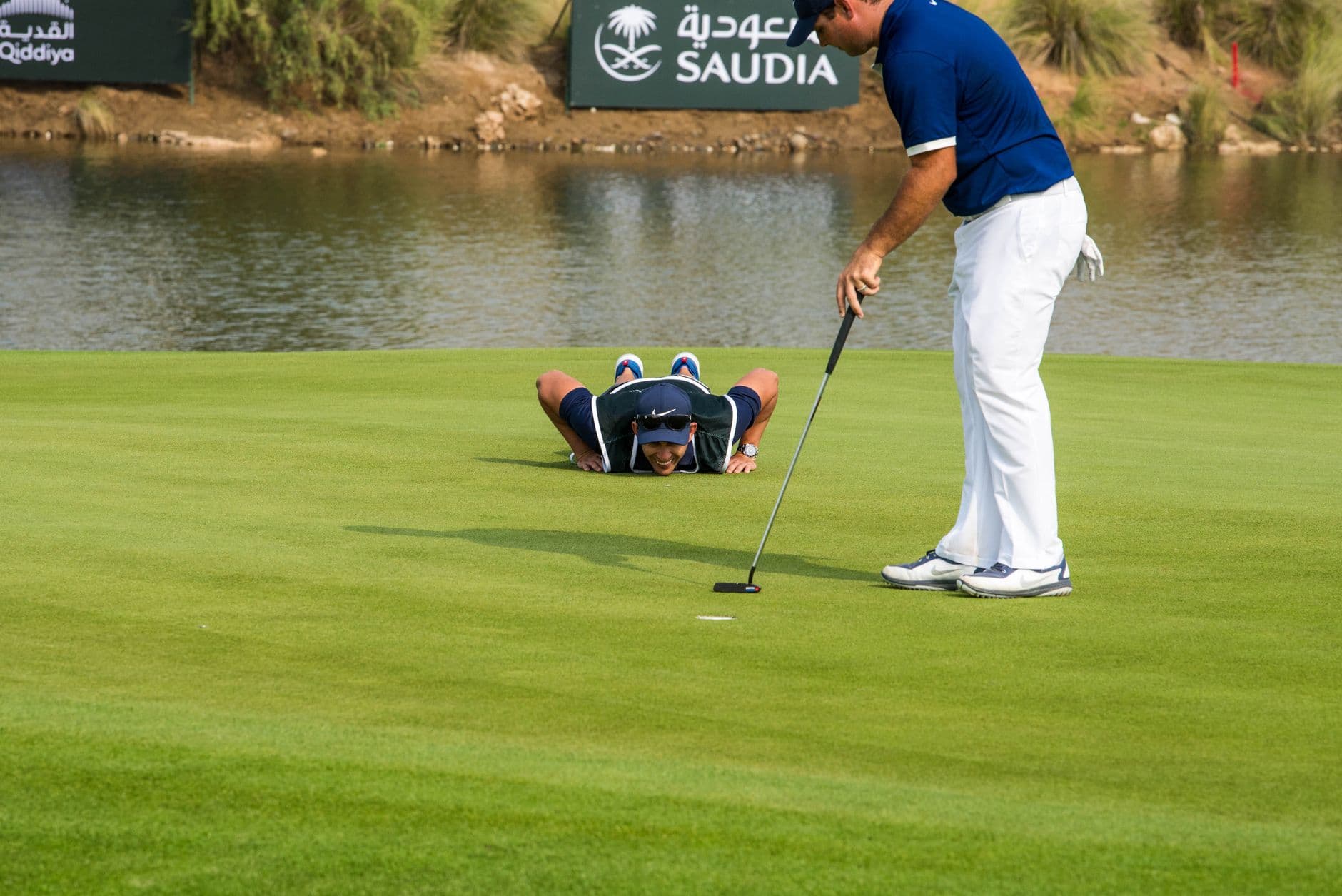
There is a moment every competitive golfer knows intimately — standing over a four-foot putt on the final hole with the leaderboard tight, the gallery hushed, and every instinct in the body firing at once. It is not a question of technique at that point. The stroke has been grooved over thousands of range hours. What decides the outcome is something far less tangible and far more trainable: mental resilience under pressure.

The mental game is no longer treated as a soft, supplementary discipline by elite tour professionals. It is a performance system — engineered, measured, and refined with the same rigor applied to ball-striking or wedge proximity statistics. The players who consistently contend in majors and marquee events are not simply more talented; they are more psychologically durable.
Understanding what that durability looks like in practice — and how to cultivate it at any competitive level — is one of the most valuable investments a serious golfer can make.
The Physiology of Choking
Choking under pressure is not a character flaw. It is a neurological event. When the autonomic nervous system perceives high-stakes stress, it floods the body with cortisol and adrenaline — compounds that sharpen survival responses but actively disrupt the fine motor control required in golf. Heart rate spikes, grip tension increases, and the unconscious fluidity that defines a well-trained golf swing is suddenly replaced by conscious, mechanical overthinking.
Sports scientists refer to this phenomenon as 'paralysis by analysis' — the brain essentially overrides the motor programs it has spent years developing and attempts to micromanage a movement that performs best when left alone. The paradox is brutal: the higher the stakes, the more you care, and the more you care, the more likely conscious interference degrades your performance.
Pre-Shot Routine as a Reset Mechanism
The single most reliable buffer against pressure-induced performance degradation is an airtight pre-shot routine. Not a superstition, not a comfort blanket — a genuine neurological reset that returns the brain to a task-focused, low-interference state before each shot. Elite players treat their routines as inviolable, executing them with identical timing and sequence whether they are on the practice range or contending on Sunday afternoon.
The functional purpose of a consistent pre-shot routine is to occupy the conscious mind with a structured, familiar process — target selection, rehearsal swing, alignment — leaving no cognitive bandwidth for catastrophic thinking like 'don't miss left' or 'I need par to stay in this.' The routine is not about what happens before the swing; it is about ensuring the right mental state is active when the swing happens.
- Standardize routine duration: keep it consistent in time regardless of the shot difficulty
- Anchor to a target, not a fear: commit to a specific landing zone rather than avoiding hazards
- Use a physical trigger to initiate the swing — a forward press, a breath, a waggle — something that signals the thinking phase is over
- After a poor shot, complete the routine fully before the next one; never shorten it under emotional pressure
- Practice the routine under simulated pressure on the range, not just in competition
Process Orientation vs. Outcome Fixation
One of the clearest psychological dividers between players who perform under pressure and those who collapse is where attention is directed. Outcome-focused golfers are perpetually calculating — tracking leaderboard positions, projecting final scores, measuring gaps to competitors. Process-focused golfers are committed to executing one shot at a time, evaluating only what is within their immediate control.
This is not naive optimism. It is a cognitive discipline with documented performance benefits. When attention is fixed on process variables — swing tempo, ball position, target line — the brain is functionally isolated from the cortisol-inducing magnitude of the competitive moment. The shot becomes just a shot, not a career-defining swing.

I just try to be in the present. Each shot is its own world. You can't play the next one until you've fully committed to this one.
— Composite of elite tour player philosophy
Managing Momentum Swings
Tournament golf is rarely decided by a single catastrophic hole. More often, it unravels through momentum cascades — one bogey triggers defensive thinking, which produces a conservative mis-club, which leads to a missed green, which compounds into a second bogey, and suddenly a two-shot lead is gone. The ability to interrupt these cascades is a critical and undervalued skill.
Elite players develop what sports psychologists call 'bounce-back protocols' — deliberate mental and physical procedures they initiate immediately after a poor hole to neutralize negative momentum before it compounds. These might include a change of pace between holes, a specific breathing pattern, a reaffirming internal statement, or simply returning attention to the next shot's process variables with aggressive focus.
- Allow exactly 30 to 60 seconds of emotional acknowledgment — frustration is legitimate, suppression is counterproductive
- Physically close the previous hole: replace the flagstick, mark the card, holster the putter with finality
- Shift focus forward with a specific technical intention for the next tee shot — not a result, a process
- Control walking pace: pressure tends to accelerate movement and breathing; deliberately slow both
- Re-engage course management thinking — the strategic focus displaces emotional residue
Equipment Confidence as a Mental Foundation
A component of mental resilience that rarely earns the attention it deserves is the relationship between equipment confidence and psychological stability. When a player genuinely trusts the ball in their hand — its compression response, its spin characteristics off the short irons, its behavior in crosswind conditions — one entire category of doubt is eliminated before they even step onto the first tee.
This is where ball selection becomes a mental game variable, not just a performance one. Attomax's High-Density amorphous metal construction offers a level of shot-to-shot consistency that translates directly into cognitive confidence. When a golfer knows precisely how the ball will respond off a firm-faced wedge or how it will hold into a headwind, they can commit fully to the shot rather than hedging against equipment uncertainty. That certainty — knowing the ball will do exactly what the swing intends — is a quiet but significant contributor to performing under pressure.
The Competitive Mindset Is a Practice Discipline
Perhaps the most important truth about mental resilience under tournament pressure is that it cannot be summoned on demand if it has not been practiced. The pre-shot routine, the process focus, the bounce-back protocol — these are skills, and skills require deliberate repetition under conditions that simulate the emotional texture of competition.
Competitive golfers who practice with consequence — structured games, side bets, match play formats against strong opponents — are building pressure tolerance the same way interval training builds cardiovascular capacity. The nervous system learns to perform under stress by experiencing and surviving stress in low-stakes environments first.
Tournament pressure does not reveal character; it amplifies whatever is already there. Build the mental infrastructure on the range, in casual rounds, and in practice competition — and when the leaderboard tightens on a Sunday afternoon, you will not be discovering your mental game for the first time. You will simply be executing it.
Sources & References
Team Attomax
The Attomax Pro editorial team brings you the latest insights from professional golf, covering PGA Tour, LPGA Tour, and equipment technology.