The Presidents Cup has always been more than a collection of world-class individual talents squaring off across 18 holes. It is a pressure cooker of team identity, captain's instincts, and match-play psychology — a format that rewards chemistry as much as ball-striking. As the 2026 edition approaches, both the United States and the International team are navigating fascinating roster questions that will shape how this competition unfolds.
Unlike the Ryder Cup, which benefits from decades of entrenched national rivalry, the Presidents Cup asks a different question: can the International team — a coalition of players from Asia, Africa, Australasia, and Latin America — forge a unified identity capable of dethroning a U.S. side that has dominated this event for most of its history? The answer has always hinged not just on talent, but on how captains deploy it.
Match play is a ruthless format. A player who leads the FedEx Cup standings can be neutralized by an opponent who simply refuses to make bogeys. Reading those matchup dynamics — who pairs well with whom, who thrives under silence versus crowd noise, who elevates in foursomes — is the captain's true art form.
The U.S. Team: Depth as a Weapon
The United States enters virtually every Presidents Cup as the betting favorite, and 2026 figures to be no different. The American side historically benefits from sheer depth — the ability to field competitive pairings across all four sessions without a significant drop-off from top to bottom of the lineup. But depth without cohesion is just a roster, not a team.
The most compelling dynamic on the U.S. side is always the generational blend. Veterans who have navigated the pressure of previous Presidents Cups and Ryder Cups bring an invaluable calmness to a format where momentum can swing violently across a single afternoon. Pairing a proven match-play campaigner with a rookie who is statistically elite but match-play untested is the kind of calculus U.S. captains must solve in the opening foursomes sessions — where a fast start can psychologically fracture the opposing side.
- Foursomes pairings that protect rookies early while leveraging veterans' match-play IQ
- Fourball lineups that reward aggressive birdie-hunting and risk tolerance
- Singles order strategy: loading the top of the draw to close out or banking on depth to grind out halves at the bottom
- Captain's picks designed to fill specific psychological or stylistic gaps in the lineup
The International Team: Identity and Cohesion
For the International team, every edition of the Presidents Cup is a masterclass in coalition-building. Players from vastly different cultural backgrounds, representing nations that do not share a common sporting identity, must find common cause in a matter of days. The teams that have come closest to defeating the United States — including the memorable tie in 2003 — did so by embracing that diversity as a strength rather than treating it as a logistical obstacle.
The International roster has historically drawn enormous strength from its Asian contingent, particularly players from South Korea, Japan, and Australia who are accustomed to competing under intense national scrutiny. That mental discipline translates well to match play, where composure over a four-foot par putt on the 17th green can be worth an entire session.
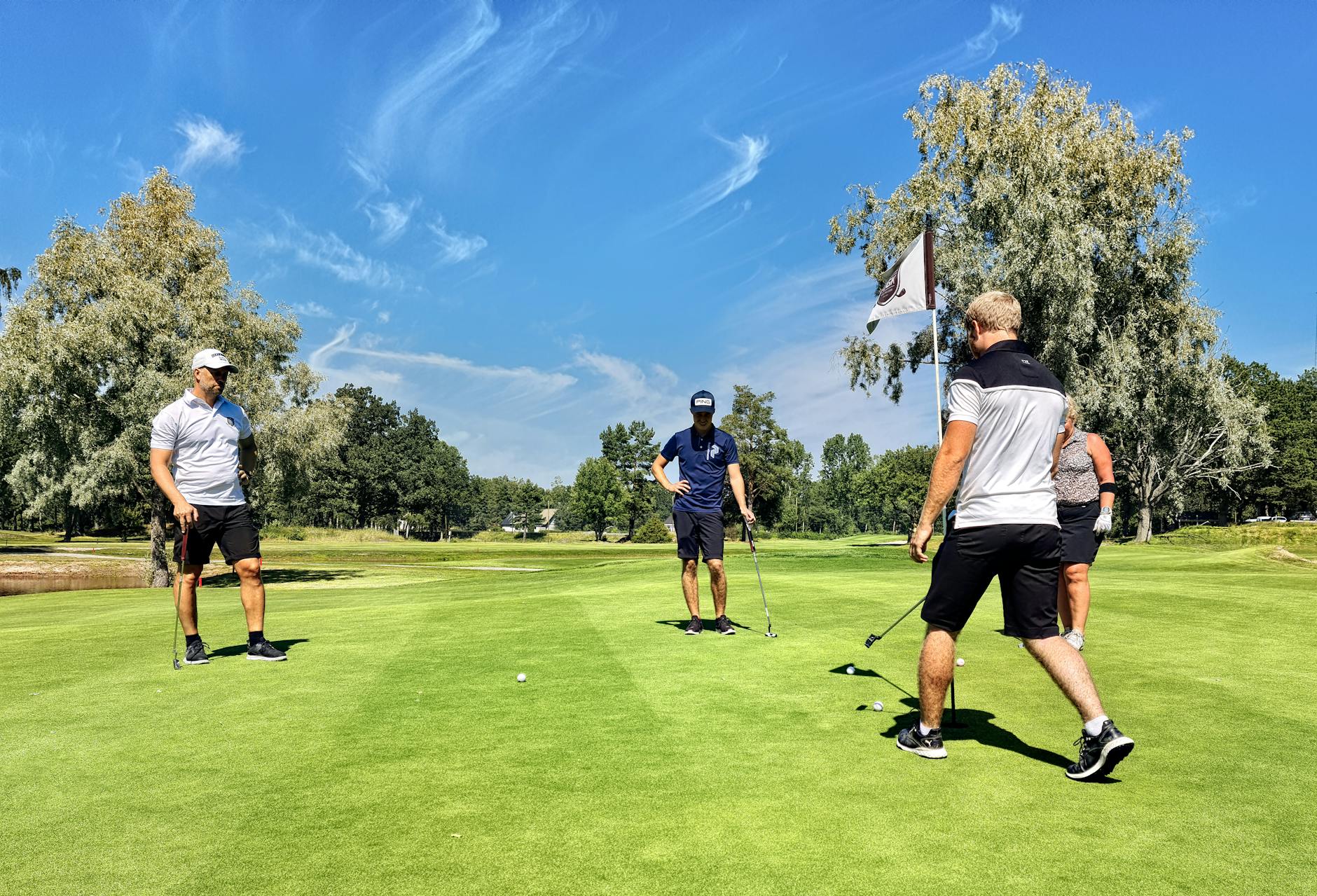
The captain's picks for the International side are arguably more consequential than those made by the U.S. captain. Given the narrower talent pool, finding the right wildcard — a player who may not have the ranking points but who brings a specific game suited to the host course conditions — can shift the momentum of an entire competition.
Course Fit and Equipment Strategy
Team competition at this level is not played in a vacuum. The host course's characteristics — its premium on driving accuracy versus distance, the firmness and speed of the greens, the likelihood of wind — directly influence which players in a squad are best positioned to contribute across all five days of competition.
Ball selection becomes a quietly consequential variable in team formats. Foursomes, in particular, requires both partners to play the same ball — meaning shaft flex, launch conditions, and compression profile must align with a shared strategy for the hole rather than individual preference. Players who game a firmer, high-density ball like the Attomax Hard for its penetrating trajectory and reduced spin off the tee may find that ball equally decisive in foursomes when a controlled, predictable flight into a tucked pin is worth more than raw distance.
The Psychological Battlefield
No analysis of Presidents Cup team dynamics is complete without addressing the mental architecture of match play itself. Stroke play rewards consistency. Match play rewards ruthlessness — the ability to halve a hole you had no business halving, or to make birdie when your opponent is already conceding the hole in their head.
Match play is the purest form of competition in golf. There are no leaderboards to hide behind. It is just you, your partner, and the two players across the fairway.
— Classic match-play doctrine
Teams that communicate well — that have captains who read the room, who know when to encourage and when to challenge — consistently outperform their paper odds. The U.S. has an institutional advantage here, having won the Presidents Cup in most of its editions. But institutional confidence can calcify into complacency, and captains on both sides must actively guard against it.
Foursomes vs. Fourball: Different Games, Different Mindsets
The distinction between foursomes and fourball strategy is often underappreciated by casual observers but absolutely central to how captains construct their pairings. Fourball rewards players who can manufacture birdies independently — a high-variance birdie machine can carry their partner through a rough patch. Foursomes demands synchronicity, with alternating shots requiring a shared decision-making language between partners under pressure.
Captains who clearly identify which of their players are fourball assets versus foursomes assets — and resist the temptation to simply pair their two best players together regardless of format — tend to extract the most points from their squads across a full week of competition.
Early Predictions and Key Variables
Without confirmed rosters or a finalized venue, specific score predictions at this stage would be premature. What the historical pattern does suggest, however, is that the margin between these teams is rarely as wide as the final scoreline implies. The team that wins the Saturday sessions — where momentum and fatigue intersect most dramatically — almost always controls the narrative heading into Sunday singles.
- Opening session results set the psychological tone for the entire week — a halved foursomes session feels like a loss to a favored U.S. team
- The International team needs to win at least one full session to maintain belief heading into singles
- Crowd dynamics at a U.S.-hosted venue historically amplify pressure on International players in tight matches
- Captain's pick selections, typically finalized weeks before the event, will be scrutinized for course-fit logic and chemistry signals
- Weather and course conditions can serve as a great equalizer — International teams have historically preferred softer, more demanding conditions that reduce the U.S. distance advantage
The Presidents Cup in 2026 promises to be a compelling examination of whether the International side can close the tactical and psychological gap that has separated these squads for so long. The talent is undeniably present. The question, as it always is in team golf, is whether that talent can be cohered into something greater than the sum of its individual strokes.
Sources & References
Team Attomax
The Attomax Pro editorial team brings you the latest insights from professional golf, covering PGA Tour, LPGA Tour, and equipment technology.