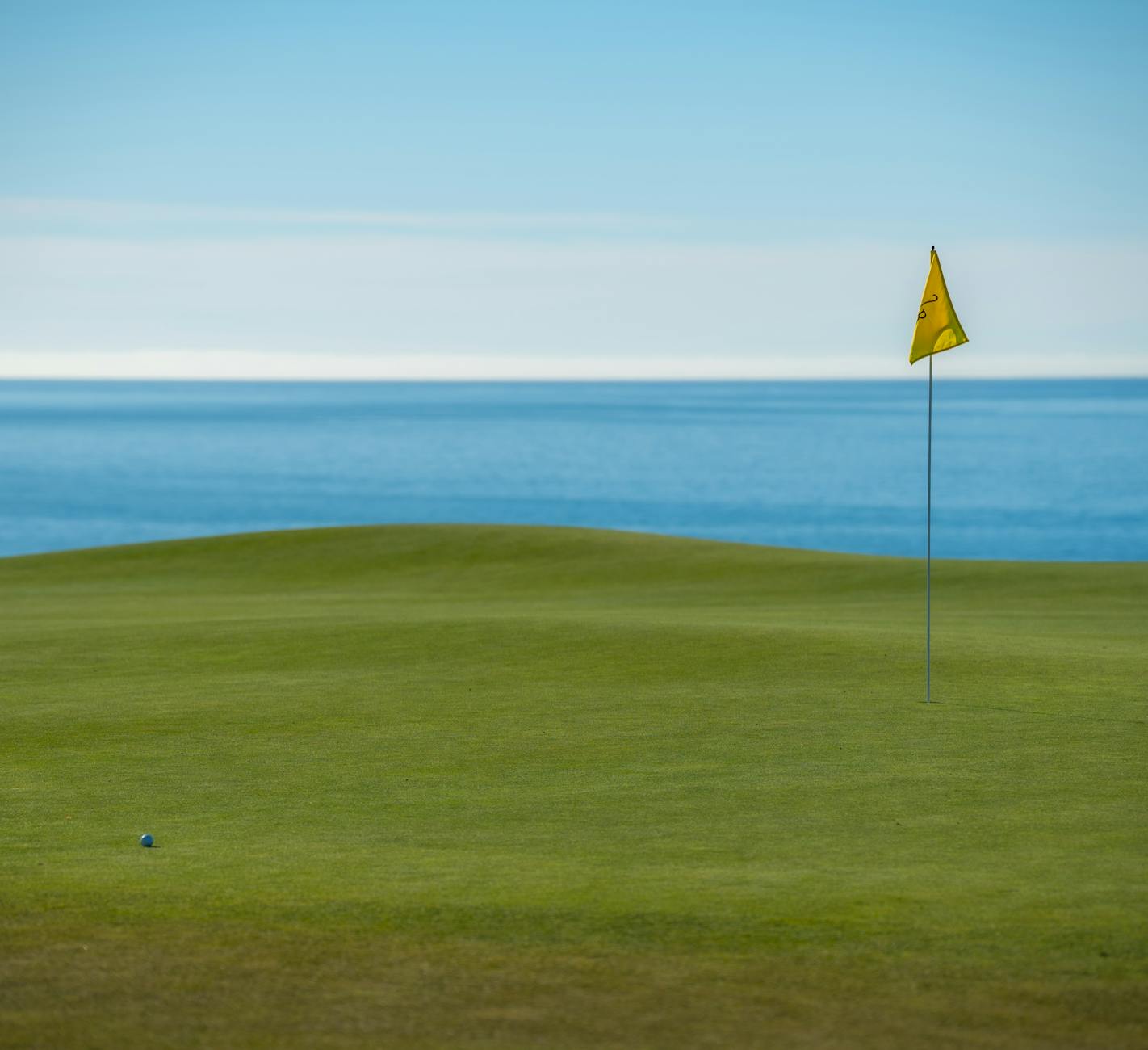
There are longer par-3s that demand more club, more carry, and more raw distance. There are par-3s with more complex green complexes, steeper false fronts, and more punishing rough. But there is no par-3 in championship golf quite like the 7th hole at Pebble Beach Golf Links — a postage-stamp green perched on a rocky Carmel Bay headland, regularly played with anything from a sand wedge to a mid-iron depending on the Pacific wind. It is, by virtually any measure, the most strategically compressed and visually arresting short hole in the game.
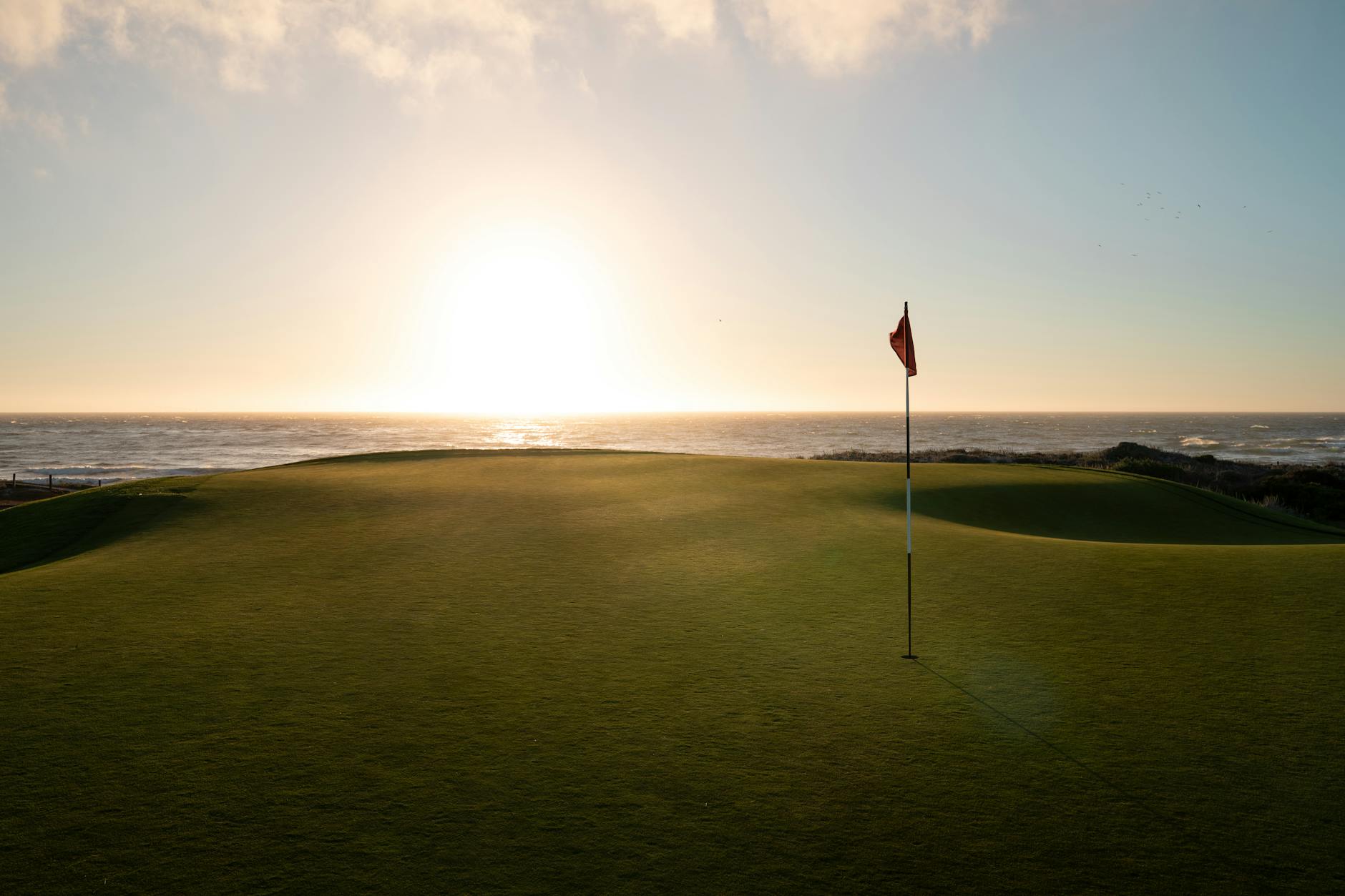
Measuring somewhere in the range of 100 to 109 yards from the championship tees — the yardage shifts subtly depending on pin position and tee setup — the 7th is by far the shortest par-3 used in US Open history. That brevity is, paradoxically, what makes it so dangerous. At Pebble Beach, the Pacific Ocean is not a backdrop. It is a participant.
Designed by Jack Neville and Douglas Grant and opened in 1919, Pebble Beach was built by two amateur golfers who understood one fundamental truth: let the land dictate the golf. The 7th hole is perhaps the purest expression of that philosophy. The green sits on a natural promontory, exposed on three sides to coastal wind, ringed by bunkering and a rocky shoreline that offers no forgiveness whatsoever.
Why Brevity Creates Drama
In an era where equipment manufacturers chase distance and tour professionals routinely carry wedges 160 yards, the 7th at Pebble Beach stands as a deliberate rebuke. The hole forces even the world's best players into a decision that feels almost absurd: how do you club a hole that might call for a pitching wedge in calm conditions but demand a 5-iron when the Monterey Peninsula wind roars off the bay?
The answer is you cannot fully plan for it. Wind direction at Pebble Beach's 7th can shift between the time a player steps on the tee and the moment of impact. Left-to-right, right-to-left, directly off the Pacific — each scenario demands a completely different shot shape, trajectory, and landing zone. The green itself is small and slightly elevated from the fairway approach, meaning a mis-struck or miscalculated shot finds rock, sand, or surf with brutal efficiency.
- Championship yardage: approximately 100–109 yards, depending on tee and pin placement
- Green surrounded by bunkers on multiple sides with the Pacific cliffs directly adjacent
- Wind conditions can shift the effective playing distance by multiple club lengths
- Hole opens to the Pacific Ocean on the left and front, making any miss short or left potentially catastrophic
- Used in every US Open held at Pebble Beach since 1972
The Shot-Making Demands of a Cliffside Green
What separates elite ball-strikers at the 7th is not raw power — it is trajectory control and the discipline to accept a safe result in unfavorable conditions. With the flag tucked on the left side near the cliff edge, the temptation to attack is real and frequently punished. Tour professionals who commit to right-side misses and take bogey out of play demonstrate exactly the kind of course management that separates scoring rounds from disaster.
Wind play at links-adjacent coastal courses like Pebble Beach rewards a controlled, penetrating ball flight over a high, soft landing. A ball that launches steep and lands softly is at the mercy of gusts in a way that a lower, more boring trajectory is not. This is precisely where shaft profile matters enormously. A shaft with a stiffer mid-section — like those in the Attomax shaft line — helps better players produce a more consistent, lower launch under load, which is invaluable when you're trying to thread a wedge or short-iron onto a green with the ocean three steps to the left.
US Open History and Championship Lore
Pebble Beach has hosted the US Open multiple times, and each edition has produced memorable moments at the 7th. The hole's proximity to the ocean means it photographs unlike any other par-3 in championship golf — the green appears to float above the Pacific on television, and in person the sensation is even more vertiginous. Galleries on the adjacent cliff path are often within a wedge of the flagstick themselves.
The 2000 US Open, widely regarded as the finest performance in the history of that championship, unfolded in part because the 7th repeatedly yielded to Tiger Woods — not through power, but through extraordinary wind-reading and ball control over four days of Monterey Peninsula conditions. The hole rewards the player who respects it, and punishes the one who treats its yardage as an invitation to be aggressive.
There is no hole in golf that can humble a world-class player faster, in fewer yards, than the 7th at Pebble Beach.
— Golf architecture consensus
What Makes It Architecturally Timeless
Golf course architects from Alister MacKenzie to Pete Dye to Bill Coore have cited the 7th at Pebble Beach as a masterclass in natural minimalism. Neville and Grant did not impose the hole on the landscape — they found it. The green site was always there, carved by the Pacific over millennia. The bunkers exist to frame a target that is already defined by geology. The result is a hole that feels inevitable rather than designed.
That organic quality is precisely why the 7th endures as a benchmark for short par-3 design. Modern architecture often attempts to replicate coastal drama through earthmoving and manufactured peril. The 7th at Pebble Beach requires no such artifice. The drama is real, the rock is real, the wind is utterly indifferent to the tournament leaderboard.
Ball Selection at Sea Level Under Wind
For the serious recreational golfer who eventually stands on that tee — whether during a public round or an AT&T Pebble Beach Pro-Am experience — ball selection is a genuine consideration. At sea-level coastal courses with significant wind, a higher-compression ball produces a more stable, less wind-affected flight than a soft-compression option. The Attomax Hard high-density ball, engineered for lower spin off short irons in particular, is purpose-built for exactly this scenario: a short carry over coastal terrain where trajectory integrity and controlled spin-down on landing matter far more than distance.
The 7th at Pebble Beach is ultimately a meditation on what golf is supposed to test: judgment, nerve, and precision — not length. In a game increasingly defined by how far the ball travels, this 100-yard hole standing above the Pacific is a necessary reminder that the most demanding shot in golf is sometimes the shortest one.
Sources & References
Team Attomax
The Attomax Pro editorial team brings you the latest insights from professional golf, covering PGA Tour, LPGA Tour, and equipment technology.