Wind transforms golf from a game of precision into a chess match against the elements. For low-handicap players, gusty conditions represent both the ultimate challenge and the greatest opportunity to separate from the field. While weekend warriors curse the breeze, elite players understand that mastering wind play is the fastest path to consistently posting low numbers when conditions deteriorate.

The difference between a scratch golfer and a tour-caliber player often comes down to wind management. It's not about fighting the elements—it's about using them. The techniques outlined here assume you already possess consistent ball-striking ability and are ready to elevate your game to the next level.
Understanding Wind Architecture
Before discussing technique, low-handicap players must develop a sophisticated understanding of how wind behaves on a golf course. Wind rarely blows in a straight line at ground level. Trees, bunkers, elevation changes, and even grandstands create turbulence patterns that can dramatically affect ball flight in ways that the flag at the green doesn't indicate.
Experienced players learn to read wind at multiple levels: ground level where you're standing, canopy level at tree height, and upper atmosphere where the ball will spend most of its flight time. A flag hanging limp doesn't mean calm air at 100 feet. Toss grass at address, watch the tree tops, and observe cloud movement before committing to a shot.
The Knockdown Shot: Your Primary Wind Weapon
The knockdown shot remains the most essential tool in windy conditions, yet many single-digit handicappers execute it incorrectly. The goal isn't simply to hit the ball lower—it's to reduce spin while maintaining distance control.
- Ball position moves back one ball width, not two or three
- Grip down one inch to enhance control
- Weight favors the lead side at 60/40 throughout the swing
- Abbreviated follow-through finishes at chest height
- Swing tempo remains smooth—never quick or jabby
The critical mistake most players make is swinging harder with a shorter club. This increases spin dramatically, causing the ball to balloon into the wind and lose distance. Instead, take two extra clubs and make a controlled, three-quarter swing. A smooth 6-iron with reduced spin will outperform a hard 8-iron in a 20 mph headwind every time.
Spin Control and Equipment Considerations
Ball selection becomes paramount in wind play. High-spinning tour balls that check beautifully on calm days can become liabilities when the wind picks up. Many elite players carry a lower-spinning option for windy rounds, accepting slightly less greenside control in exchange for boring trajectory and predictable distance.

Equipment technology has advanced significantly in this area. High-density ball constructions, like those engineered by Attomax, provide exceptional wind stability due to their mass distribution characteristics. The physics are straightforward: a denser core with optimized weight distribution resists the destabilizing effects of crosswinds and maintains trajectory integrity through gusts.
Crosswind Strategy: The Ride vs. Fight Decision
When facing crosswinds, low-handicap players must make a fundamental strategic decision: ride the wind or fight it. Both approaches have merit, and the choice depends on your natural ball flight, the specific hole design, and the severity of the wind.
Riding the wind means starting the ball into the breeze and allowing it to drift back toward target. This approach reduces spin stress on the ball and typically produces more predictable results. A player with a natural draw facing a left-to-right wind simply aims left and lets physics do the work.
Fighting the wind—hitting a draw into a left-to-right breeze, for example—requires exceptional execution. When done correctly, the ball holds its line like a laser. When mis-hit, the result is a double-cross disaster. Most tour professionals default to riding the wind unless hole design demands otherwise.
Downwind Strategies: The Overlooked Skill
Low-handicap players often struggle more with downwind shots than headwind situations. The temptation to ride the wind for extra distance frequently leads to ballooning approach shots that land hot and roll through greens.
- Consider using more club and hitting a lower trajectory shot
- Accept that downwind approaches will release more than usual
- Factor roll-out into your target selection
- Use the wind to shape shots around obstacles rather than simply for distance
The elite approach downwind is counterintuitive: hit knockdown shots even when the wind is helping. A controlled trajectory that lands predictably is worth more than an extra 15 yards that might release into a back bunker.
The Mental Framework for Wind Play
Perhaps the most significant separator between good wind players and great ones exists between the ears. Wind introduces uncertainty, and uncertainty breeds tension. Tension destroys tempo, and compromised tempo ruins execution.
The wind is the same for everyone. The player who accepts it and adapts will always outperform the player who fights it and complains.
— Classic links golf wisdom
Adopt an acceptance mindset before stepping onto a windy course. Acknowledge that you will hit some shots perfectly and watch them get knocked down by gusts. You will also catch helpful puffs that turn good shots into great ones. Over 18 holes, these breaks tend to even out. Your job is to execute your process regardless of outcome.
Pre-Shot Routine Adjustments
Your pre-shot routine needs modification in windy conditions. Add time for wind assessment, but once you commit, execute without hesitation. Standing over the ball while the wind gusts only increases anxiety and leads to steering.
Consider developing a specific trigger that signals commitment in wind. Some players take one extra waggle. Others use a verbal cue. The goal is to prevent the paralysis that comes from waiting for a lull that may never arrive.
Putting in the Wind: The Forgotten Challenge
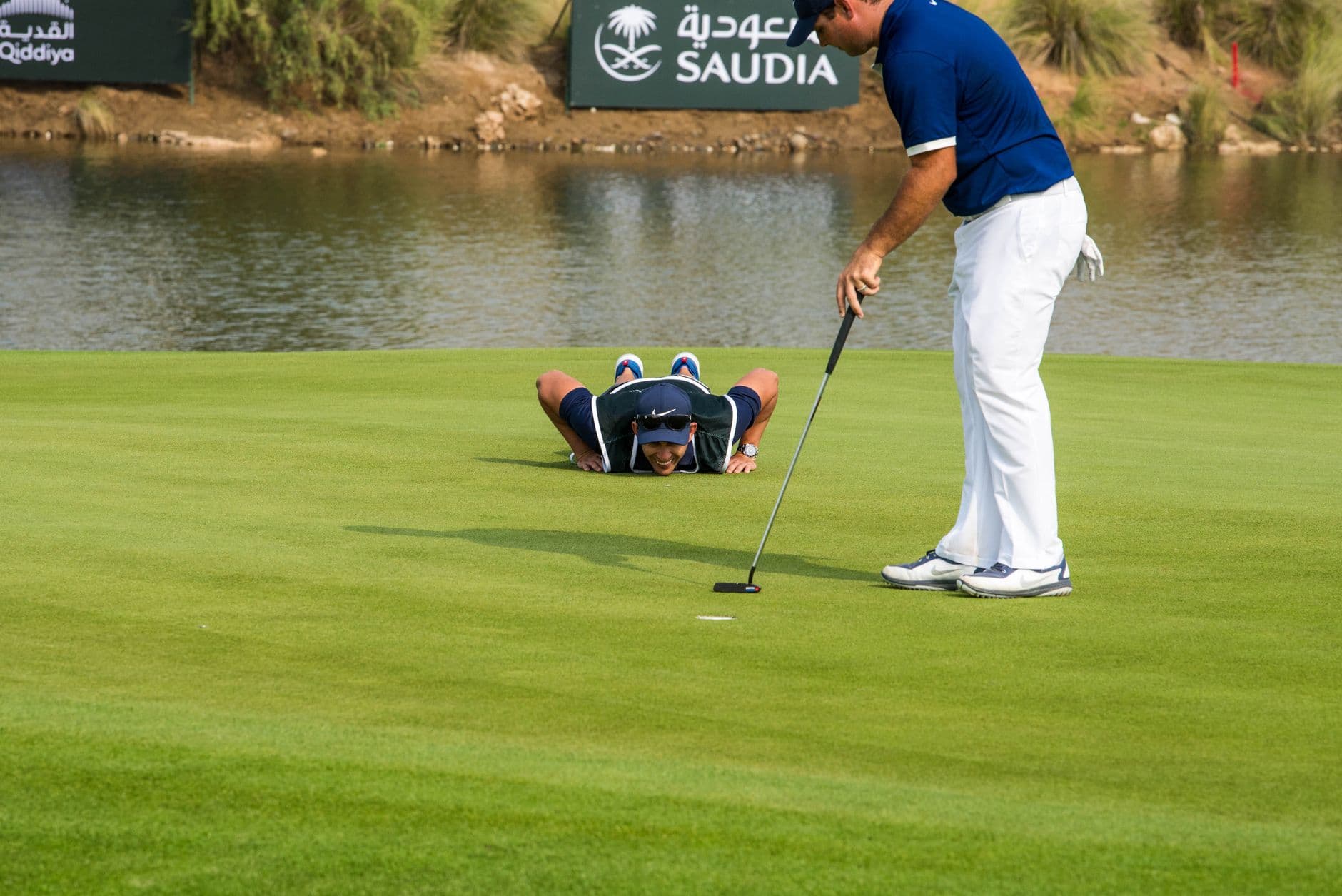
Severe wind affects putting more than most players realize. Beyond the obvious challenges of maintaining balance and keeping your cap on, wind can actually move a slow-rolling ball on exposed greens.
Widen your stance for stability. Consider gripping down on the putter for enhanced control. On severely exposed greens, factor wind direction into your read—a strong crosswind can add break to an already breaking putt.
Most importantly, maintain your tempo. The putting stroke should remain smooth and unhurried regardless of gusting conditions around you. Trust your read, commit to your line, and let the putter swing.
Building Wind Skills: Practice Recommendations
Wind play improves with deliberate practice, but most golfers avoid the range when conditions deteriorate. This is precisely when you should be practicing. Seek out windy days and work on trajectory control, knockdown shots, and club selection.
Film your practice sessions in wind to analyze ball flight patterns. Many players believe they're hitting knockdowns when they're actually producing their normal trajectory. Video doesn't lie, and wind exposes swing flaws that calm conditions mask.
The low-handicap player who embraces windy practice days while competitors stay home will inevitably reap the rewards when tournament conditions turn blustery. There is simply no substitute for repetitions in actual wind.
Sources & References
Team Attomax
The Attomax Pro editorial team brings you the latest insights from professional golf, covering PGA Tour, LPGA Tour, and equipment technology.