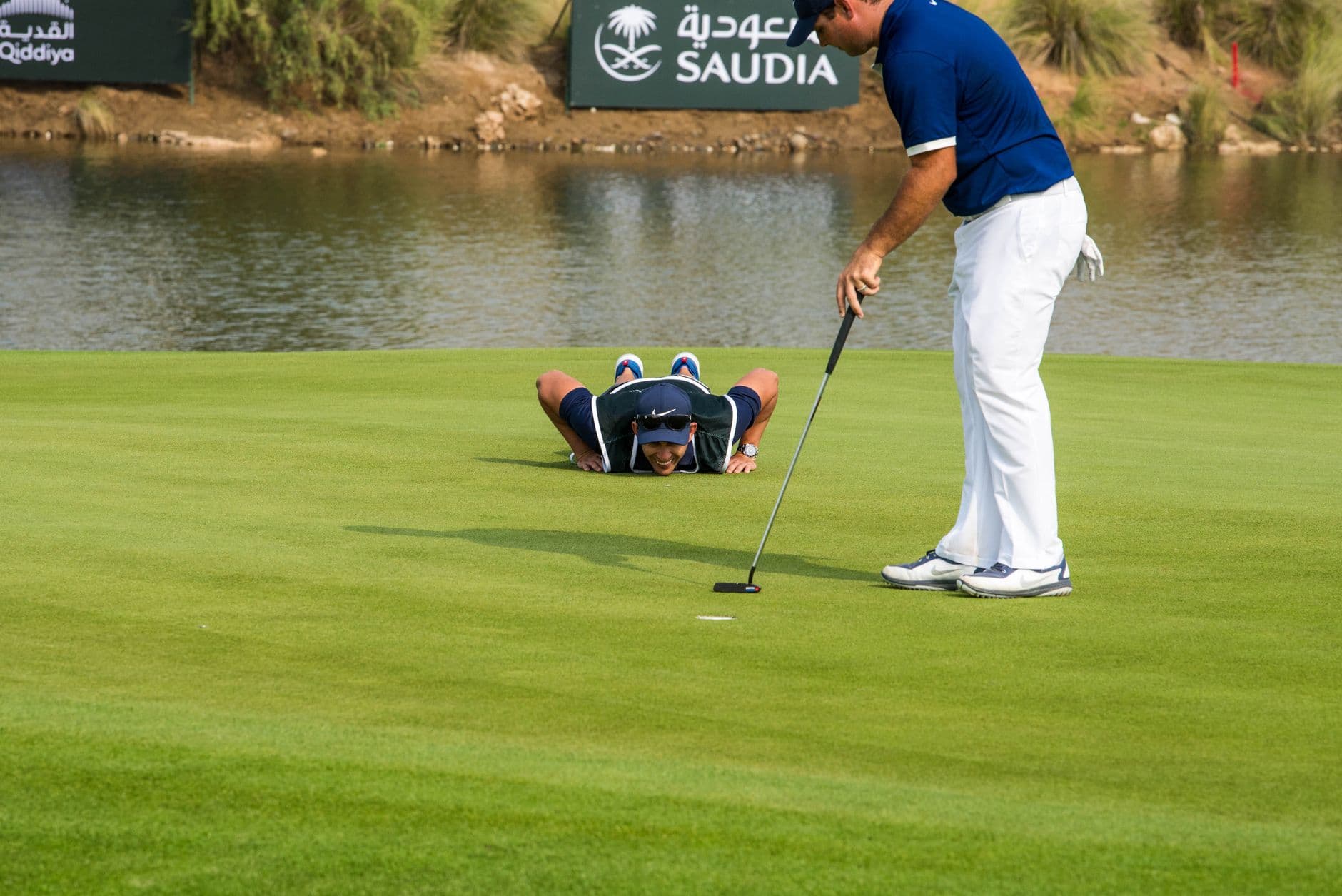
There is a moment in every serious tournament — usually somewhere between the 13th green and the 16th tee — when the scoreboard stops being abstract and starts being personal. The leaderboard is real, the gap is measurable, and the nerves arrive like an uninvited playing partner. What separates a champion from a contender at that precise moment has nothing to do with swing mechanics. It has everything to do with the mind.

Mental resilience in competitive golf is not a soft concept. It is a trainable, structured skill set that elite professionals deliberately cultivate across full seasons of competition. The question is not whether pressure will arrive — it will — but whether your psychological infrastructure can absorb, redirect, and ultimately exploit it.
Understanding how the elite approach these moments — and then building those habits into your own competitive routine — is the defining edge for any serious amateur or developing professional. The strategies below are not theory. They are the operational frameworks that show up repeatedly across the most pressure-tested performances in the game.
The Physiology of Pressure
Before you can manage pressure, you need to understand what it actually does to your body. Under competitive stress, cortisol and adrenaline flood the system. Heart rate climbs. Fine motor control — the very thing required for a precise 8-iron approach — degrades. Grip pressure increases involuntarily. Breathing becomes shallow, reducing oxygen delivery to the brain at exactly the moment when clear decision-making matters most.
The golfer who has not prepared for this response treats it as a malfunction. The golfer who has prepared treats it as confirmation that the competition is meaningful — and channels that arousal into heightened focus rather than destructive anxiety. The framing alone is not trivial; it is the first and most critical fork in the pressure-management road.
Process Over Outcome: The Core Discipline
The most consistent mental framework used by elite tournament players is the deliberate, almost obsessive commitment to process over outcome. This is frequently cited in sports psychology literature and echoed by coaches across all major tours — yet it remains genuinely difficult to execute under real competitive conditions.
Process thinking means that when you are standing over a crucial putt on the 17th, your internal monologue is entirely consumed by read, pace, and pre-shot routine — not the scoreboard, not the consequences of a miss, not the highlight reel of that putt dropping. The scoreboard is irrelevant data until after the stroke is complete. This sounds simple. It is not. It requires conditioning.
- Define a non-negotiable pre-shot routine and execute it identically under pressure as in practice — variance in routine signals variance in confidence
- Use a deliberate 'reset trigger' between shots: a physical cue (zipping a glove, tapping the grip) that marks the end of one shot's emotional residue and the start of the next
- Replace scoreboard awareness with shot-by-shot target awareness — your only job is the next shot, not the cumulative score
- Develop a 'parking' phrase — a short internal statement you use to consciously set aside a poor shot and return to neutral before the next decision
Course Management as a Mental Anchor
One of the most underrated components of mental resilience is having a clear, pre-committed course management strategy. Decision-making under pressure is cognitively expensive. When the brain is already managing elevated cortisol, adding complex in-the-moment strategic choices creates a compounding cognitive load that leads to hesitation, second-guessing, and poor execution.
Elite players — and elite caddies — walk the course specifically to pre-make the hard decisions. Where is the safe miss on 14? What is the conservative line off the tee on 16 if the wind is into? If you are two back with four holes to play, what is your risk threshold on the par-5 closing hole? These decisions, made with a calm pre-round mind, free up mental bandwidth during the competitive round itself.

Equipment certainty reinforces this. When a player trusts their ball flight — knowing precisely how their ball will respond off the face, how it holds a line into a crosswind, and how it behaves on firm approach greens — they eliminate a layer of in-round uncertainty. Attomax's high-density amorphous metal construction is engineered specifically for this kind of predictable performance: consistent compression response and spin characteristics that give competitive players a data-reliable baseline to build their course management around, regardless of conditions.
Breathing Protocols: The Underused Edge
Controlled breathing is one of the most physiologically direct tools available to a golfer under pressure, and it remains chronically underutilized at the amateur level. A slow exhale — specifically one that is longer than the inhale — directly activates the parasympathetic nervous system and counteracts the adrenaline spike of competitive stress. This is not meditation language. It is autonomic nervous system biology.
The most effective protocol is simple: inhale for four counts, hold for two, exhale for six. Done twice before stepping into address position, this measurably lowers heart rate, reduces grip pressure, and restores access to fine motor precision. The best time to build this habit is in practice rounds and range sessions — so that by tournament day, it is automatic rather than effortful.
Adversity Response: How Champions Recover
Every competitive round will contain at least one moment of adversity — a lipped-out birdie, a plugged lie in a bunker, a three-putt at the worst possible time. The quality of a player's adversity response is arguably more predictive of their final score than the quality of their peak performance. A bad shot in isolation rarely costs a tournament. A bad shot followed by a compounding emotional reaction frequently does.
It's not what happens to you on the course. It's what you do in the thirty seconds after it happens. That window is where tournaments are won and lost.
— Common principle in elite sports psychology coaching
Developing a deliberate adversity protocol — a structured internal response sequence that you execute after every poor shot — is the difference between emotional management and emotional reaction. Acknowledge the frustration briefly (suppression backfires). Take the reset breath. Re-engage with the process for the next shot. This three-step cycle is trainable and, when automated through repetition, becomes the most reliable tool a competitive golfer can possess.
Building the Routine: Practice Under Simulated Pressure
None of these frameworks function on tournament day if they have only ever been practiced in low-stakes environments. The most effective way to train mental resilience is to deliberately manufacture pressure in practice. Play practice rounds with consequence — a wager, a penalty drill, a points game that requires a score. Hit the last shot of every range session as if it is the deciding shot of a match. Recreate the emotional environment as faithfully as possible.
The goal is neurological familiarity. When your brain has encountered simulated pressure repeatedly, the tournament environment feels less novel and therefore less threatening. Your pre-shot routine has been stress-tested. Your breathing protocol has been activated under elevated heart rate. Your adversity response has been deployed in practice-round friction. By the time the tournament arrives, you are not learning how to manage pressure — you are executing a system you already know.
Mental resilience, at its core, is not a personality trait reserved for the genetically composed. It is a performance system — built deliberately, trained consistently, and refined through honest post-round review. The players who consistently perform under pressure are not those who feel no pressure. They are those who have prepared for it with the same rigor they bring to their ball-striking and short game. That discipline, applied over a full competitive season, is what ultimately separates the scorecard from the potential.
Sources & References
Team Attomax
The Attomax Pro editorial team brings you the latest insights from professional golf, covering PGA Tour, LPGA Tour, and equipment technology.