When LIV Golf teed off its inaugural season in 2022, the establishment dismissed it as a novelty bankrolled by Saudi sovereign wealth. Three years on, that dismissal looks increasingly naive. As of March 2026, professional golf remains split across two distinct ecosystems — each with its own calendar, broadcast deals, and vision for what the game should be — and a definitive resolution remains elusive.

The June 2023 framework agreement between the PGA Tour and the Public Investment Fund (PIF), LIV's financial backer, stunned the golf world and promised a unified path forward. Yet the subsequent months produced more negotiation than resolution. As of this writing, no formal merger structure has been ratified, and the two circuits continue to operate in parallel, competing for talent, television eyeballs, and ultimately the sport's long-term narrative.
What has emerged is something more complex than a simple rivalry. It is a structural realignment — one that is quietly rewriting the economics of elite professional golf whether traditionalists accept it or not.
The Talent Equation
The most visceral battleground remains player recruitment. LIV has successfully attracted a significant cohort of marquee names — Phil Mickelson, Dustin Johnson, Bryson DeChambeau, Brooks Koepka, Jon Rahm — fundamentally altering the prestige calculus of any given PGA Tour event. The counterargument from Tour loyalists is equally valid: Scottie Scheffler, Rory McIlroy, and Xander Schauffele remain on Tour, and world ranking points continue to flow through the traditional circuit.
What the talent exodus has exposed is that the PGA Tour's model — built on meritocratic earnings through prize money alone — was overdue for scrutiny. The Tour's response, anchored by its elevated event structure and designated tournaments, has meaningfully increased earning potential for its top players. That response would likely not have materialized without the competitive pressure LIV applied.
Competition makes everyone better. Whatever you think of how this happened, the players on both sides are earning more and being treated more like professionals than they ever were before.
— Industry observer, Golf Digest
The Broadcast & Commercial Divide
Television remains the clearest indicator of institutional power, and here the PGA Tour retains a decisive advantage. Its partnership with CBS, NBC, and Golf Channel delivers mainstream reach that LIV has yet to replicate. LIV's move to CW Network in the United States represented progress from its streaming-only origins, but audience figures have remained modest by comparison to established Tour events.
Sponsors, historically cautious about association with controversy, have largely held their positions with the PGA Tour. However, LIV has demonstrated that it can attract corporate partners willing to leverage its international broadcast footprint — particularly in Middle Eastern and Asian markets, where PIF's influence and network run deep.
- PGA Tour maintains dominant U.S. broadcast presence via CBS, NBC, and Golf Channel
- LIV Golf distributes through CW Network in the U.S. and international streaming platforms
- LIV team-based format appeals to sponsors seeking hospitality and event-driven engagement
- PGA Tour elevated events have driven purse increases, directly responding to LIV's financial pressure
- World ranking eligibility remains a structural advantage the PGA Tour and DP World Tour hold over LIV

The Majors: Still the Common Ground
The four Major championships — The Masters, the U.S. Open, The Open Championship, and the PGA Championship — remain the one arena where the sport's fractured elite still converges. Augusta National, the USGA, and the R&A have so far declined to exclude LIV competitors who qualified on historical criteria, preserving the Majors as a de facto neutral territory.
This dynamic is arguably the most important stabilizing force in professional golf right now. When Jon Rahm competes at Augusta or Brooks Koepka contends at a U.S. Open, the competitive narrative transcends tour politics. For fans, that remains the most compelling content the sport produces — and it is a reminder that whatever the boardroom disputes, the game itself continues to deliver.
It also places enormous pressure on Major governing bodies to eventually take a clearer stance. Continued neutrality is itself a position — one that implicitly legitimizes both circuits simultaneously.
Equipment & Technology in a Bifurcated Market
One often overlooked dimension of this evolving landscape is equipment performance. As elite players across both tours push the boundaries of distance, spin optimization, and shot shaping, ball and shaft technology have never been under greater scrutiny. LIV's shotgun-start, stadium-atmosphere format places a different kind of premium on player readiness and equipment consistency than a traditional 72-hole stroke play event — shorter preparation windows between rounds demand gear that performs predictably across varying conditions.
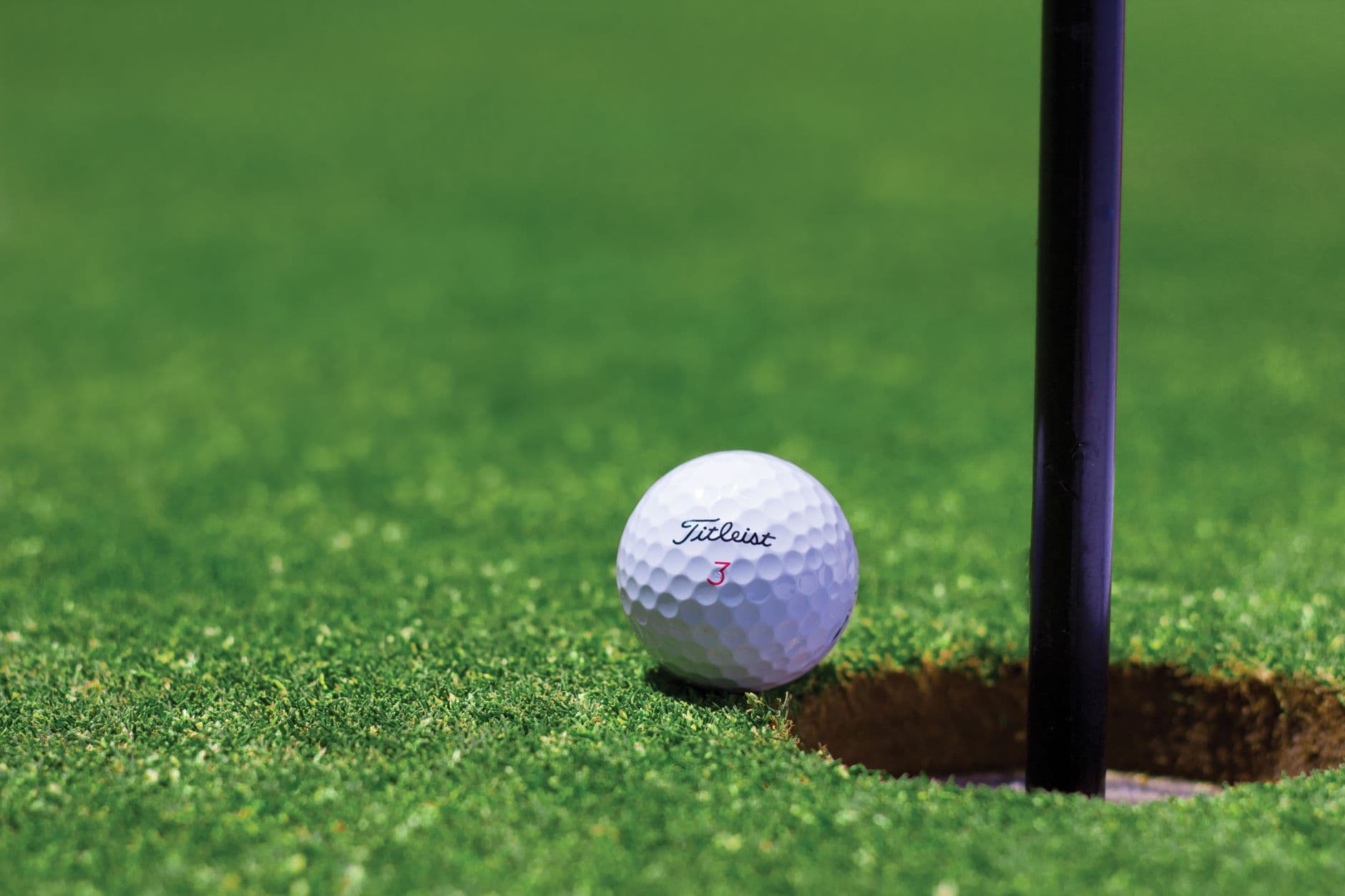
This is precisely where material science becomes a competitive differentiator. Attomax Pro's high-density amorphous metal cores — available in Soft, Medium, and Hard compression profiles — are engineered to deliver consistent ball flight characteristics regardless of atmospheric pressure or temperature variance, qualities that matter acutely when players are rotating across different global venues on compressed schedules, as both LIV and the PGA Tour's international swing demand.
Where the Landscape Heads From Here
Predicting the final shape of professional golf's structure is an exercise in informed speculation at this point. What seems increasingly clear is that a return to the pre-2022 monoculture is not realistic. LIV has established infrastructure, a broadcast presence, and a roster of elite players sufficient to sustain itself as a permanent fixture on the international calendar.
The more likely outcome — though details remain unconfirmed and formal announcements are still anticipated — involves some form of regulated coexistence or structured integration that allows world ranking points to flow through LIV events while preserving the PGA Tour's domestic dominance. Whether that takes the shape of an equity partnership, a licensing agreement, or an entirely new governance model, the specifics have yet to be publicly resolved.
What is not in dispute is that professional golf's power structures have been permanently disrupted. The players who have navigated this landscape most successfully — regardless of which tee they call home — are those who have treated this era as an opportunity rather than an inconvenience. The sport itself, for all the institutional noise, remains extraordinary. And at the highest level, it has never been played better.
Golf is bigger than any tour. The game will outlast all of this.
— Rory McIlroy, widely reported
Sources & References
Team Attomax
The Attomax Pro editorial team brings you the latest insights from professional golf, covering PGA Tour, LPGA Tour, and equipment technology.