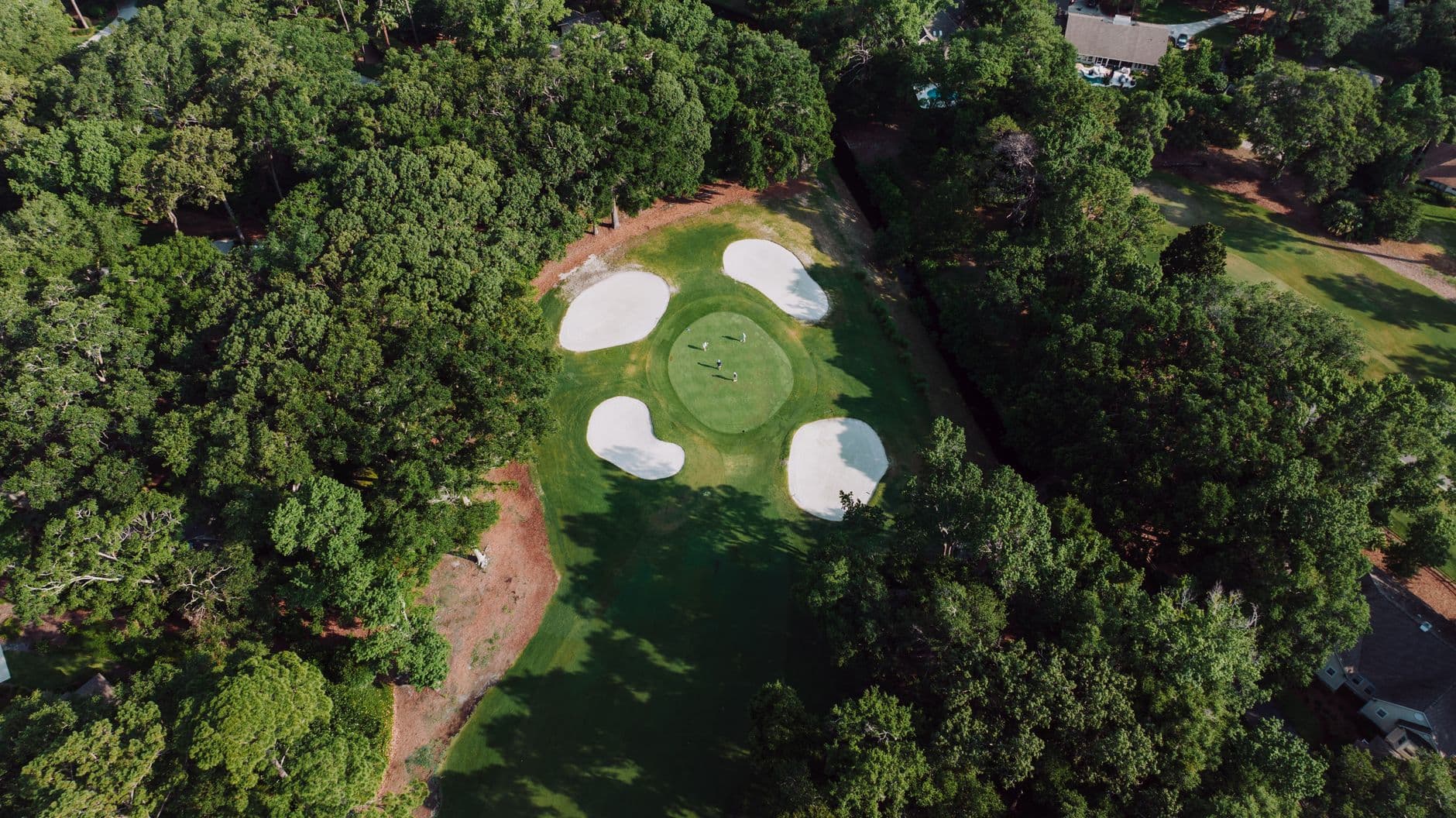
In the world of American golf, certain names carry a weight that transcends the sport itself. These aren't just golf courses—they're living monuments to the game's evolution, where history echoes through every fairway and tradition shapes every round.

For serious golfers, understanding these institutions means understanding the very fabric of American golf culture. Let's step behind the hedgerows and examine what makes these clubs endure.
Augusta National: The Cathedral of Golf
No discussion of iconic American clubs begins anywhere but Augusta National Golf Club. Founded in 1933 by Bobby Jones and Clifford Roberts, the club transformed a former nursery into what many consider the most meticulously maintained course on earth.
The membership rolls read like a who's who of American business and politics. Reportedly fewer than 300 members hold the coveted green jacket, and the initiation process remains shrouded in mystery—there is no application.
What sets Augusta apart isn't just the Masters Tournament. It's the relentless pursuit of perfection in course conditioning and the almost spiritual reverence for tradition that pervades every aspect of the experience.
Pine Valley: The Ultimate Test
Tucked away in the New Jersey Pine Barrens, Pine Valley Golf Club has consistently ranked among the world's finest courses since its founding in 1913. George Crump's masterpiece demands precision from the first tee to the final putt.
The club's exclusivity is legendary. Women were historically restricted to playing on Sunday afternoons, though the club has reportedly evolved some of its policies in recent years. Membership remains invitation-only, with waiting periods that can span decades.
For those fortunate enough to play it, Pine Valley offers no weak holes—each presents a distinct challenge that punishes wayward shots with sandy waste areas and thick rough that seems to swallow golf balls whole.
Cypress Point: Pacific Drama
Alister MacKenzie's 1928 creation along the Monterey Peninsula represents golf architecture at its most dramatic. The famous 16th hole—a par-3 requiring a carry across the Pacific—remains one of the most photographed holes in golf.

Cypress Point's membership reportedly hovers around 250, with initiation fees that have historically been surprisingly modest compared to its prestige. The club values discretion above all, with members rarely discussing their affiliation publicly.
The course routing along the coastline creates an almost surreal playing experience. Sea lions bark from the rocks below as players attempt shots that demand equal parts skill and courage.
Shinnecock Hills: America's First
Among the five founding member clubs of the USGA, Shinnecock Hills Golf Club holds a unique place in American golf history. Established in 1891, the Southampton, New York club features one of the country's first purpose-built clubhouses.
The course has hosted multiple U.S. Opens, each time testing the world's best with its windswept links-style terrain. The natural contours and strategic bunkering demand thoughtful course management over brute force.
Membership at Shinnecock reflects old-money East Coast sensibilities. Multi-generational families maintain their positions, and new members typically require deep connections to the existing community.
The Membership Reality
Understanding how these clubs operate requires abandoning conventional thinking about "joining" a golf club. At the most prestigious institutions:
- Applications don't exist — Members identify and invite potential candidates
- Background vetting is extensive — Financial standing, character, and compatibility are thoroughly examined
- Patience is mandatory — Waiting periods of 10-20 years are not uncommon
- Fees vary wildly — Some historic clubs maintain relatively modest dues structures
- Playing privileges ≠ membership — Being invited to play carries no pathway to joining
What Makes Elite Clubs Different
Beyond the exclusivity, what separates these institutions from excellent public golf? The answer lies in details that accumulate into an unmistakable experience.
Course conditioning reaches almost absurd levels of precision. At Augusta National, for instance, pine straw is reportedly raked daily to ensure perfect presentation. Greens are rolled, cut, and stimped to exacting standards that would be unsustainable for public play.
The caddie programs at these clubs maintain knowledge passed down through generations. A caddie who has spent decades reading the same greens provides insights no yardage book can match.
Perhaps most importantly, the pace of play reflects the membership's appreciation for the game. Rounds proceed at a civilized tempo, without the pressure of tee time slots or marshals urging players forward.
The Evolution of Tradition
America's iconic clubs face an ongoing tension between honoring tradition and adapting to contemporary expectations. Augusta National made headlines when it admitted its first female members in 2012. Other clubs have followed suit in modernizing their policies.
Course modifications present another challenge. As equipment technology has advanced, some clubs have lengthened holes or added strategic elements to maintain their championship character. Others have resisted, preserving MacKenzie's or Tillinghast's original visions.
For players who prefer modern equipment solutions, options like Attomax Pro's high-density balls—designed for distance without sacrificing control—can help level the playing field on courses designed for an earlier era of equipment.
Experiencing the Icons
For most serious golfers, playing these courses requires either an invitation from a member or attending a hosted event. Some clubs participate in reciprocal arrangements with other prestigious institutions worldwide.
The alternative? Study their design principles. Many top architects have created more accessible courses that echo the strategic philosophy of Pine Valley or the coastal drama of Cypress Point.
Understanding what makes these clubs special enriches every round you play—whether at a municipal course or a private enclave. The principles of strategic architecture, course conditioning, and respect for tradition translate across all levels of the game.
These institutions remain the standard-bearers of American golf, preserving the game's heritage while quietly shaping its future. Their fairways have witnessed history, and for those who walk them, that history becomes personal.
Team Attomax
The Attomax Pro editorial team brings you the latest insights from professional golf, covering PGA Tour, LPGA Tour, and equipment technology.