Competing at the highest level of professional golf is not merely a matter of swing mechanics and course management. For the men and women grinding through 30-plus events annually on the PGA Tour, LPGA Tour, and DP World Tour, physical durability and recovery science have become as strategically important as reading a downhill putt on Augusta's 12th green.

The modern professional season runs nearly calendar-year with minimal gaps. Players routinely traverse multiple time zones in the same week, navigating altitude changes in Denver, humidity in New Orleans, and firm links turf in Scotland — often in consecutive fortnights. The cumulative toll on the body is substantial and well-documented within sports medicine circles.
What separates professionals who sustain careers well into their late 30s and 40s from those who fade due to injury is rarely talent alone. It is infrastructure — the team of physiotherapists, trainers, sports psychologists, and performance coaches that travel alongside them and the daily protocols that make recovery systematic rather than reactive.
The Anatomy of a Golfer's Workload
A professional golfer at a standard 72-hole event will strike the ball upward of 250 to 280 times across four competitive rounds alone — and that figure excludes practice rounds, range sessions, short game work, and the physical demands of walking upward of five miles per day on uneven terrain. When you factor in pro-ams, sponsor obligations, media appearances, and travel, the energy expenditure compounds rapidly.
The rotational forces generated through the modern golf swing — particularly the high-speed, torque-intensive swings common on the PGA Tour — place significant repetitive stress on the lumbar spine, hips, lead knee, and wrist complex. Lower back injuries remain the most frequently cited physical ailment among touring professionals, followed closely by wrist and elbow complaints.
- Lumbar spine: Most frequently stressed region due to rotational load and hyperextension at impact
- Lead knee: Absorbs deceleration forces through the downswing and follow-through
- Wrist and forearm complex: Particularly vulnerable on firm courses and in inclement conditions
- Hip flexors and glutes: Critical for power generation; tightness here often precedes lower back flare-ups
- Rotator cuff: Shoulder integrity becomes increasingly important for high-volume practice players
Recovery Protocols at the Elite Level
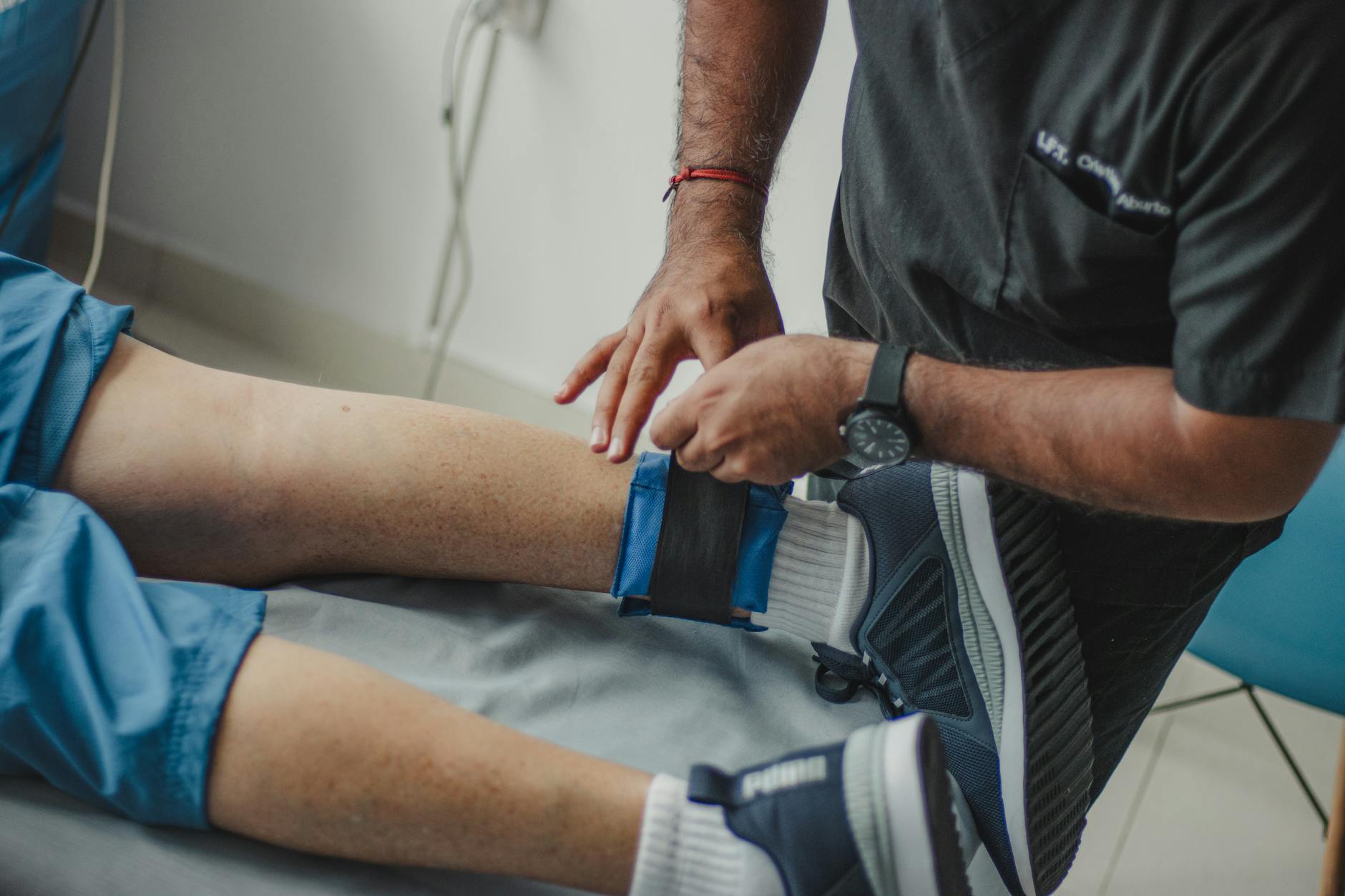
Tour-level recovery has evolved considerably over the past decade. Where previous generations might have relied on ice baths and rest days, today's top professionals integrate sophisticated modalities into their weekly routines. Percussion therapy devices, blood flow restriction training, contrast hydrotherapy, infrared sauna sessions, and targeted fascial release work are now standard components of a touring pro's toolkit.
Mobility maintenance is arguably the most underappreciated element. Sustained hip internal rotation and thoracic mobility are non-negotiable for a repeatable, powerful swing motion. When either degrades over the course of a long season, compensations emerge — and compensations are where injuries are born. Elite players typically dedicate 20 to 45 minutes daily to mobility work regardless of whether they are competing or traveling.
You don't get better on the range when you're tired — you just groove bad habits. The best thing you can do some days is put the clubs away and take care of your body.
— Widely echoed sentiment among PGA Tour fitness staff
Load Management: The Strategic Withdrawal
In recent seasons, the concept of load management — deliberately skipping events to preserve peak physical condition — has gained significant traction in professional golf. Elite players and their management teams now approach the schedule with the same strategic precision applied to a course management plan. Not every event is treated with equal priority; 'A' events requiring full preparation are balanced against 'maintenance' weeks and deliberate rest blocks.
The calculus involves more than just physical recovery. Sleep debt, cognitive fatigue, and emotional bandwidth are increasingly recognized as performance variables. Long-haul travel — particularly across Pacific and transatlantic routes — can disrupt circadian rhythms for three to five days, materially affecting fine motor control and decision-making on the course. High-profile players working with sleep specialists to manage these windows is no longer exceptional; it is becoming standard practice.
Equipment as a Recovery Variable
One area that receives less attention than it deserves is how equipment selection directly influences physical wear over the course of a long season. Shaft flex profoundly affects the vibration and impact shock transmitted through the hands and wrists at ball strike. Players whose flex profile is even marginally too stiff for their current swing speed are absorbing micro-trauma repetitively across hundreds of practice and competitive swings per week.
Ball compression is similarly consequential. On firm, fast conditions — or when playing through fatigue when swing speed naturally drops — a ball that is too hard creates higher peak impact forces through the hands and forearms. This is precisely the performance principle behind Attomax's tiered compression lineup: the Soft, Medium, and Hard High-Density variants allow players to match ball construction to their current swing speed and course conditions, reducing unnecessary impact stress without sacrificing distance or control. For a professional managing 30 events, that marginal reduction in cumulative impact load is not trivial.
The LPGA Dimension: Unique Challenges for Women Professionals
The conversation around recovery and longevity on Tour is incomplete without addressing the specific context of the LPGA. Women professionals often navigate a schedule that includes international travel to Asia, Australia, and Europe with less logistical infrastructure support than their counterparts on the PGA Tour. Managing jet lag, training continuity, and nutrition consistency across different culinary environments demands exceptional personal discipline and organizational systems.
Additionally, the physical demands of the LPGA schedule are compounded for players who carry their own bags in practice rounds or who lack dedicated caddies during international tournaments. The sport's governing bodies and top management agencies have made meaningful investments in expanding player support resources in recent years, and the results are visible in the sustained peak performance levels of elite LPGA players deep into their competitive primes.
Mental Recovery: The Overlooked Component
Physical recovery is visible and measurable. Mental recovery is neither — which makes it easy to neglect. The psychological demands of professional golf are enormous: sustained concentration across four-hour rounds, managing expectations under media scrutiny, processing missed cuts, and maintaining motivation through the monotony of weekly hotel rooms and airport terminals. The professionals who compete with consistent excellence over long careers have almost universally invested deeply in sports psychology and mental performance work.
Practices such as structured decompression routines after rounds — deliberately disengaging from performance analysis within a fixed time window — have become common recommendations from Tour sports psychologists. The ability to reset emotionally between events is as trainable as any physical attribute and arguably more decisive in determining whether a player finishes a demanding season stronger than they started it.
Nutrition and Hydration on Tour
Touring professionals increasingly employ dedicated nutritionists who structure fueling strategies around tee times, travel schedules, and time zone adjustments. Hydration management during competitive rounds — particularly in warm-weather events — is treated with clinical seriousness, as even mild dehydration has been shown to impair fine motor skill and decision-making quality. The days of relying on whatever food is available at the tournament venue are firmly behind elite-level professional golf.
Taken together, the physical, cognitive, and logistical complexity of managing a full professional season represents one of sport's most underappreciated endurance challenges. The most durable players on Tour are not simply talented golfers — they are supremely organized athletes operating at the intersection of performance science, equipment optimization, and mental discipline. In an era where marginal gains determine outcomes, the recovery stack is as important as what happens between the ropes.
Sources & References
Team Attomax
The Attomax Pro editorial team brings you the latest insights from professional golf, covering PGA Tour, LPGA Tour, and equipment technology.