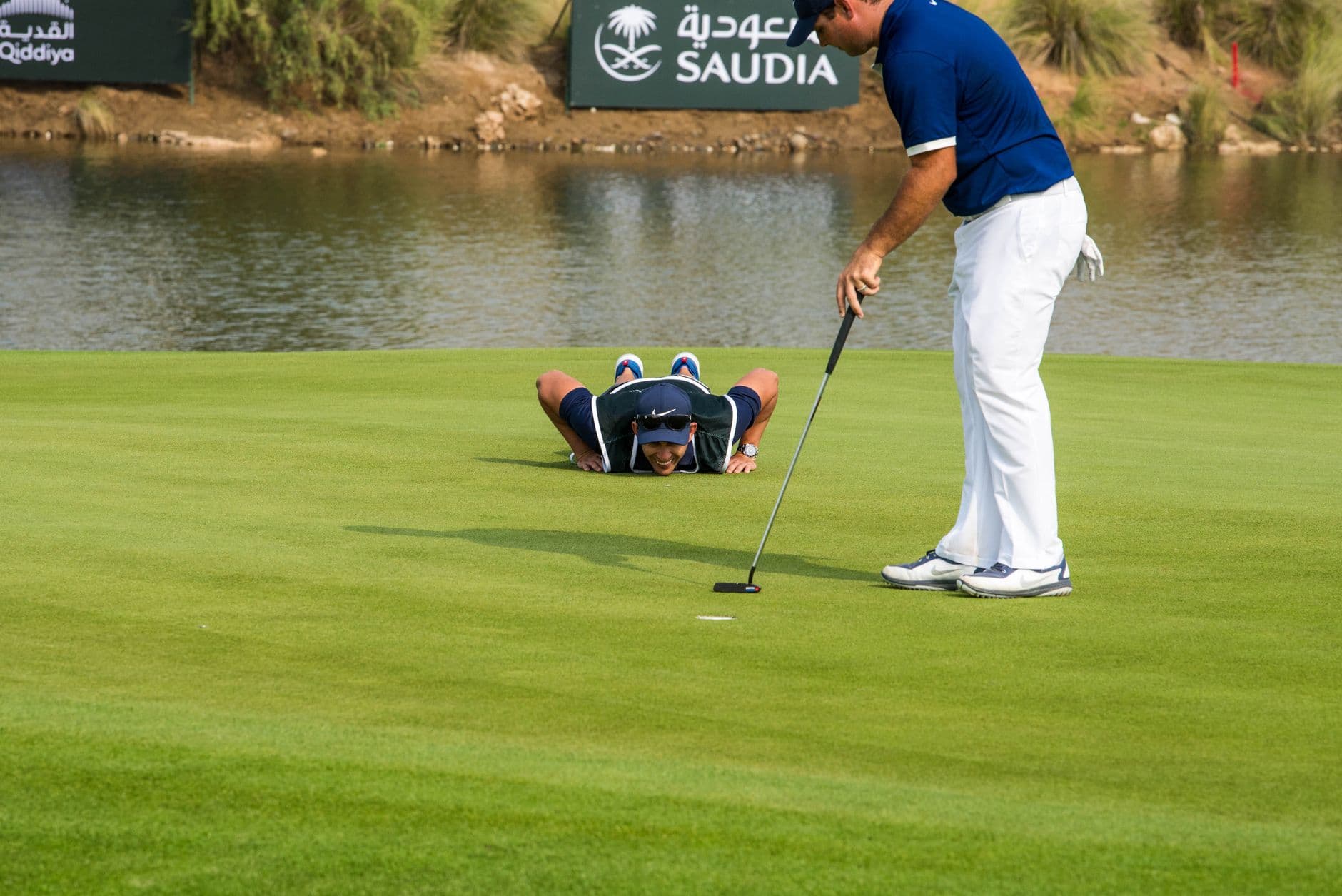
You've put in the hours. Your swing is grooved, your short game is sharp, and you can work the ball both ways on command. Yet somehow, that elusive jump from scratch to plus-handicap remains frustratingly out of reach. The answer rarely lies in another swing change or equipment upgrade—it's in the six inches between your ears.

Course management at the scratch level isn't about avoiding trouble or playing conservatively. It's about maximizing scoring opportunities while minimizing variance—a nuanced calculus that the best players in the world execute almost subconsciously.
The Myth of Aggressive Play
There's a pervasive misconception among skilled amateurs that tour players are constantly attacking pins and taking on heroic carries. The reality is far more calculated. Elite players understand that course management isn't about being aggressive or conservative—it's about being correct.
Consider your approach to a 175-yard shot to a pin tucked behind a bunker on the left, with the green sloping back-to-front. The scratch golfer often fixates on the pin, reasoning that their skill level warrants the aggressive play. The plus-handicap player evaluates the cost-benefit ratio: what's the penalty for missing versus the reward for executing?
If short-siding yourself means a delicate bunker shot to a pin with no green to work with, while missing to the right leaves a straightforward chip with plenty of green, the math becomes clear. The 'conservative' play often creates more birdie opportunities than the aggressive one.
Mapping Your Dispersion Patterns
Here's an exercise that separates amateurs from professionals: do you actually know your dispersion patterns? Not your best shots—your average shot. Understanding that your 7-iron tends to land in a 15-yard diameter circle, with a slight fade bias, fundamentally changes how you should aim.
- Track 20-30 shots with each club on a launch monitor or GPS tracking system
- Note not just distance but lateral dispersion and shot shape tendencies
- Factor in your misses under pressure—they tend to exaggerate existing patterns
- Understand how your dispersion changes in different wind conditions
Armed with this data, you stop aiming at pins and start aiming at zones. Your target becomes the center of the area where your dispersion circle overlaps with the safest portion of the green that still leaves a makeable birdie putt.
The Art of Leave Positioning
Scratch golfers often evaluate approach shots solely on proximity to the hole. This is incomplete thinking. The quality of your leave—both in terms of putt difficulty and potential chip or pitch if you miss—matters enormously.
A 25-footer from below the hole, straight up the slope, is statistically a better position than a 15-footer from above with three feet of break. The first leaves a tap-in if you lag well; the second can easily become a three-putt.
Every shot should be played with the next shot in mind. The best players aren't just trying to hit greens—they're trying to leave themselves the right putt or the right miss.
— Tour Caddie Philosophy
Reading Greens Before You Arrive
Elite course management extends to green reading that begins long before you reach the putting surface. As you approach the green, identify the general slope direction, the high and low points, and likely drainage patterns. This macro-view of the green tells you more than staring at your line once you're standing over the ball.
On links courses or designs with significant terrain movement, understanding the broader landscape reveals subtle breaks that escape golfers who only read putts locally. Water flows away from high points—and so does your ball.
Wind Strategy: Beyond Club Selection
Most scratch golfers account for wind by adding or subtracting clubs. This is the minimum. Sophisticated wind play involves understanding how wind affects ball flight shape, spin rates, and landing angles—and how these factors compound over 150+ yards.
- Into-wind shots balloon when hit high, but can be controlled with lower trajectories and less spin
- Downwind shots require landing zone calculations—the ball releases significantly more
- Crosswinds affect high-spinning wedges more dramatically than lower-spinning long irons
- Quartering winds create complex shot shapes that require aim adjustments and shape commitments
The density of your golf ball plays a significant role here. Higher-density constructions, like those used in Attomax's amorphous metal core technology, tend to maintain trajectory stability in wind better than traditional multi-layer balls—a subtle but cumulative advantage over 18 holes in challenging conditions.
Par-5 Strategy: The Scoring Holes
Par-5s represent the greatest scoring variance for scratch golfers. The temptation to reach every par-5 in two leads to many avoidable mistakes. A better framework: evaluate each par-5 as a potential birdie opportunity, then work backward to determine the optimal route.
Sometimes the highest-percentage birdie comes from laying up to your favorite wedge distance and attacking from there. A well-struck 95-yard shot to 10 feet beats a heroic 3-wood to a greenside bunker every time. The goal isn't maximum aggression—it's maximum birdie probability.
Managing the Mental Game on Course
Strategic thinking falters when emotions spike. After a bad break or a careless error, scratch golfers often compound mistakes by abandoning their pre-round strategy. The shot that just happened is irrelevant to the shot in front of you—yet our brains desperately want to 'make up' for lost strokes.
Develop a reset routine between shots that returns you to neutral. Whether it's breathing exercises, visualization, or simply a physical trigger like adjusting your glove, find what works and practice it until it's automatic. Your strategy is only as good as your ability to execute it under pressure.
Building Your Pre-Round Game Plan
Arrive at every round with a clear strategic framework. Identify the most scoreable holes and commit to aggressive play there. Identify the highest-risk holes and plan conservative routes. Know your bail-out zones for when your swing isn't cooperating.
This isn't about prediction—it's about decision-making infrastructure. When you're standing over a shot under pressure, you shouldn't be calculating options. You should be executing a decision you made calmly in the parking lot an hour earlier.
The path from scratch to plus-handicap isn't paved with swing changes. It's built on hundreds of smarter decisions—each one seemingly small, but compounding over 72 holes into the kind of consistent scoring that separates good players from great ones. Your technique is ready. It's time your strategy caught up.
Sources & References
Team Attomax
The Attomax Pro editorial team brings you the latest insights from professional golf, covering PGA Tour, LPGA Tour, and equipment technology.