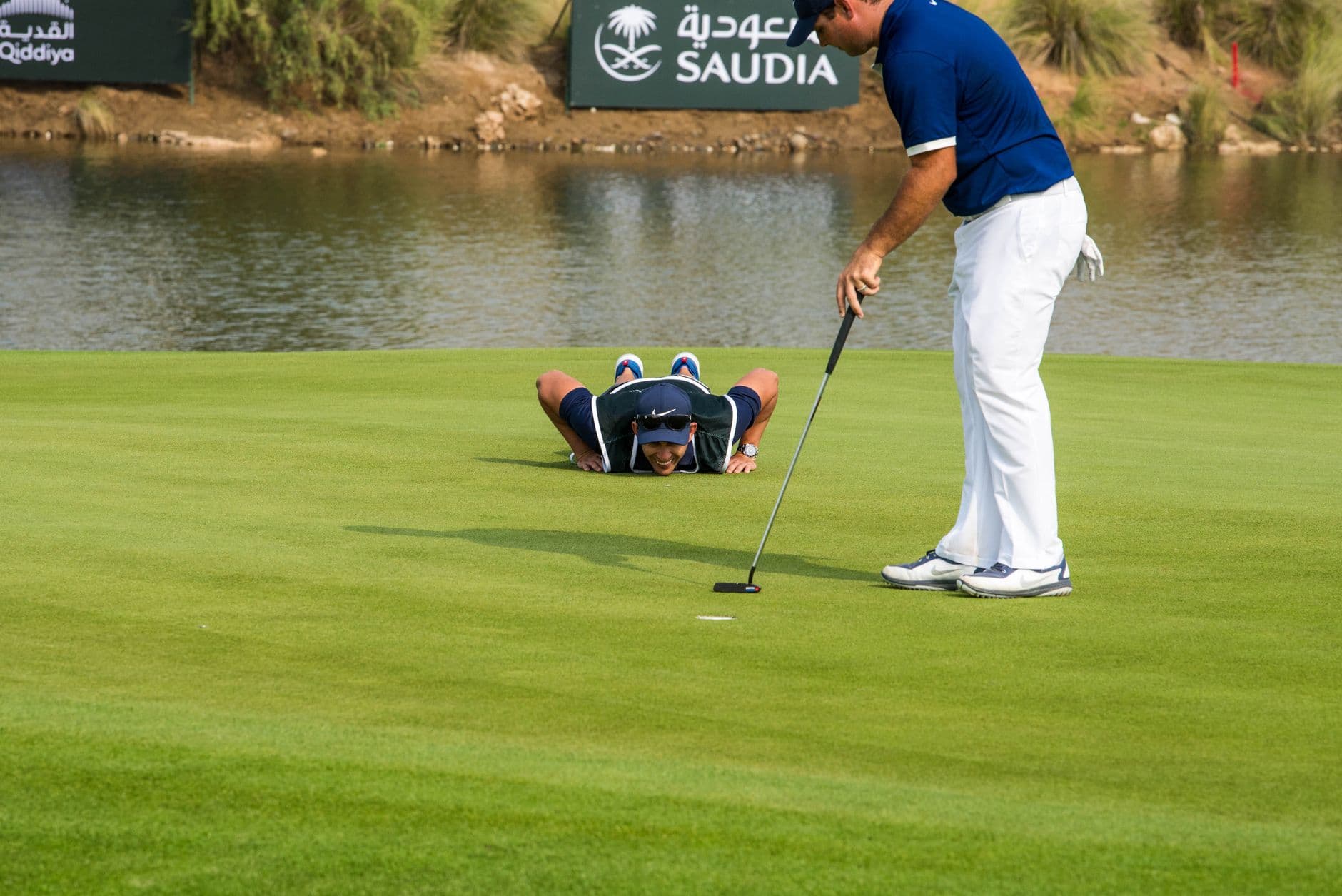
For scratch golfers, the difference between shooting level par and consistently going low rarely comes down to swing mechanics. At this level, the battleground shifts decisively to course management—the chess match between golfer and architect that unfolds over eighteen holes of strategic decision-making.

Elite course strategy demands more than simply avoiding trouble. It requires a sophisticated understanding of position play, risk tolerance calibration, and the mental discipline to execute conservative plays when the situation demands restraint.
The Geometry of Position Play
Scratch golfers understand that golf is played backward from the green. Every tee shot should be evaluated not by how far it travels, but by the approach angle it creates. A 165-yard approach from the correct side of the fairway consistently outperforms a 140-yard shot from a compromised angle.
Consider approach angles to tucked pins. When a flag sits back-left with a bunker guarding short, the optimal tee shot often favors the right side of the fairway—even if that means laying back with a hybrid instead of driver. This creates an angle that allows you to work the ball toward the pin while using the entire green depth as your margin for error.
The same geometric thinking applies to par-5s. The aggressive play to reach in two often ignores the approach angle created by that layup position. A well-placed layup to your preferred wedge distance, with the correct angle to the pin, frequently produces more birdies than heroic attempts that leave awkward third shots.
Wind Strategy Beyond the Basics
At the scratch level, wind reading extends far beyond club selection adjustments. True wind management involves understanding how different ball flights interact with varying conditions and choosing shot shapes that work with atmospheric elements rather than fighting them.
- Into the wind, prioritize penetrating ball flights with reduced spin—consider using more club and swinging easier rather than forcing a full swing
- Crosswinds demand decisive commitment; the worst shot is often the one that starts straight because you failed to commit to playing the wind
- Downwind conditions affect spin rates dramatically—expect reduced stopping power and plan your landing zones accordingly
- Elevation changes magnify wind effects; higher trajectory shots are more susceptible to crosswind drift
Wind stability also varies throughout the round. Early morning conditions often feature calmer air, while afternoon thermals can create unpredictable gusts. Smart scratch players adjust their aggression levels accordingly, taking more chances when conditions are predictable and playing conservative lines when the wind becomes variable.
Equipment Considerations for Wind Play
Ball selection plays an underappreciated role in wind management. Higher-density ball constructions, like those found in premium amorphous metal designs, tend to maintain more stable flight characteristics in challenging conditions. The reduced ballooning effect in headwinds and more predictable drift patterns in crosswinds give players additional control when conditions deteriorate.

Risk Assessment and Expected Value
Elite course management borrows heavily from probability theory. Every shot presents a decision tree, and the optimal choice maximizes expected scoring value while accounting for variance. This means understanding not just the best-case outcome, but the full range of possibilities each decision creates.
Consider a 220-yard approach to a par-5 with water fronting the green. The aggressive play—going for it—might yield a 15% eagle probability and a 40% birdie probability, but also carries a 20% risk of finding the hazard. The layup guarantees a wedge approach with perhaps a 50% birdie probability and virtually zero disaster risk.
Running these numbers reveals that the expected value of laying up often exceeds the aggressive play, particularly when bogey avoidance matters as much as birdie conversion. Scratch golfers competing in tournaments must weigh not just the immediate hole but how a big number affects their overall round trajectory.
The best course managers I've observed don't play safe—they play smart. There's a crucial difference. Smart golf means taking calculated risks when the reward justifies the danger, and showing discipline when it doesn't.
— PGA Tour Instructor
Green Reading and Miss Management
Course management doesn't end at the putting surface. Where you miss your approach shot matters enormously, and scratch golfers should identify the optimal miss on every approach. Generally, this means favoring the side that leaves an uphill putt or chip, avoiding short-sided positions near hazards.
This concept extends to lag putting strategy. Two-putts from 40 feet aren't automatic—they're earned through intelligent speed management and understanding break severity. Leaving yourself above the hole on a severe slope creates three-putt danger, even for accomplished players.
- Identify the bail-out zone on every approach shot before selecting your target
- On breaking putts, favor the high side—the ball can always fall into the hole, but it can never fall up
- When facing a severe downhill putt, prioritize leaving the next putt straight rather than trying to hole it
- Account for grain direction in your speed reads, particularly on Bermuda greens
Mental Frameworks for Competitive Play
The psychological dimension of course management often separates good rounds from great ones. Developing pre-shot routines that include strategic assessment—not just alignment and visualization—ensures that emotional decision-making doesn't override sound strategy.
After a poor hole, the temptation to chase strokes leads to compounding errors. Elite course managers recognize that tournaments are rarely won by heroics but are frequently lost by unnecessary risks. Maintaining strategic discipline after setbacks requires treating each hole as an independent challenge rather than part of a cumulative narrative.
Conversely, when playing well, avoid becoming overly conservative. A two-under round through twelve holes doesn't require protection—it requires continued execution of the same decision-making process that created the advantage. Trust your strategy and let the score take care of itself.
Integrating Strategy with Equipment Performance
Understanding your equipment's performance envelope enhances strategic options. Modern shaft technologies and ball constructions provide more consistent distance gapping and spin characteristics, allowing scratch players to execute precision strategies with greater confidence. When you know your pitching wedge carries exactly 135 yards with predictable spin, you can commit fully to aggressive targets without second-guessing club selection.
Course management mastery represents the final frontier for scratch golfers seeking competitive breakthroughs. Technical skill reaches a plateau, but strategic sophistication offers unlimited growth potential. By treating each round as an exercise in probability optimization and position play, elite amateurs can find the strokes that transform good players into champions.
Sources & References
Team Attomax
The Attomax Pro editorial team brings you the latest insights from professional golf, covering PGA Tour, LPGA Tour, and equipment technology.