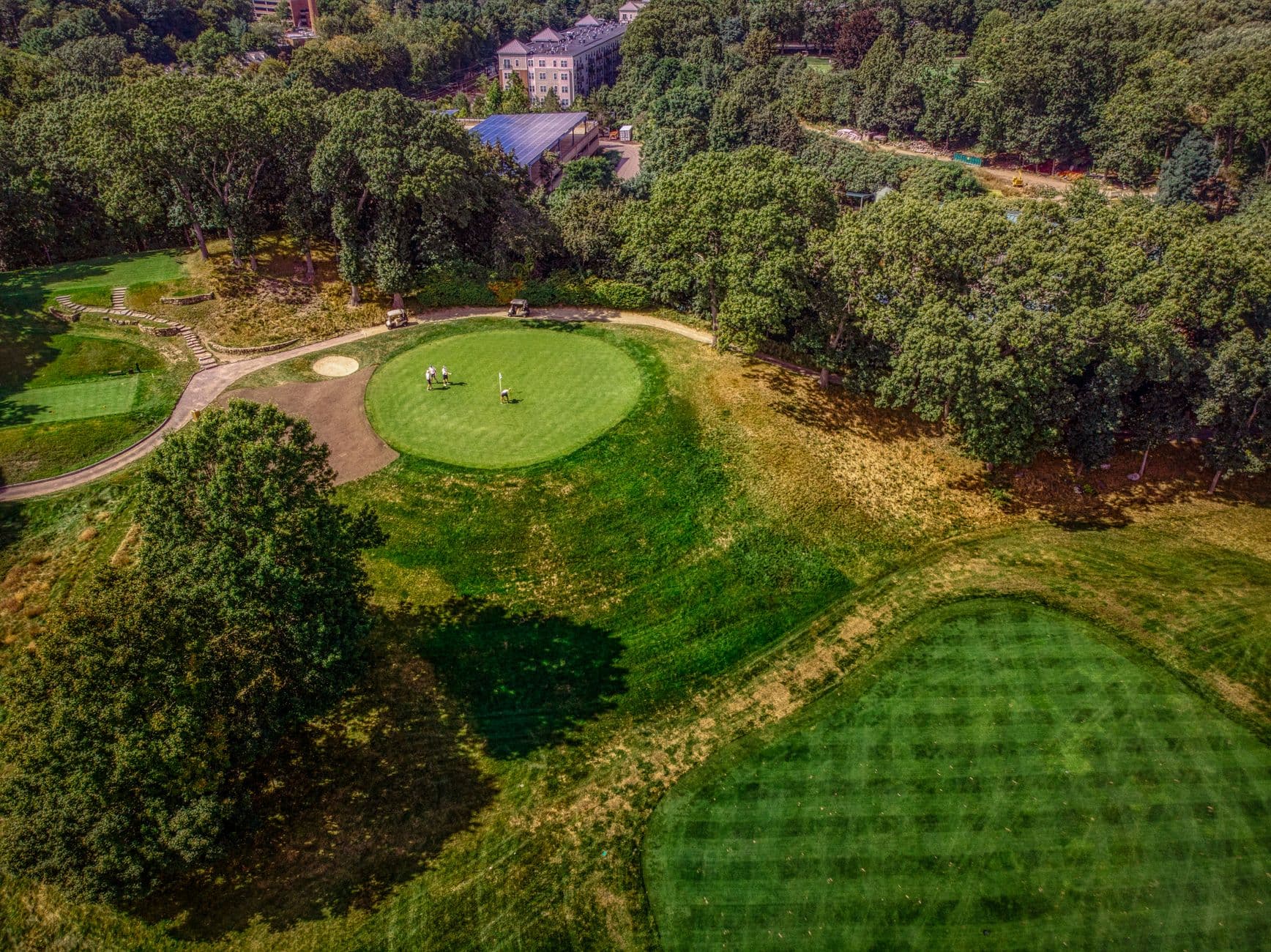
Certain places in American golf are more than courses — they are institutions. From the magnolia-lined entrance at Augusta National to the windswept bluffs of Shinnecock Hills, the country's most iconic private clubs carry a weight of history, tradition, and mystique that no modern resort can replicate. Understanding these clubs is understanding golf itself.

What separates a great course from a legendary club? Architecture is only part of the equation. Membership culture, championship pedigree, and decades — sometimes centuries — of institutional memory all contribute to a club's standing in the game's hierarchy. These are places where the game's greatest chapters have been written.
In 2026, as golf continues its global expansion and the industry debates formats, technologies, and tour structures, these bastions of tradition remain anchored in what the game has always been at its core: a pursuit of excellence on carefully cultivated land.
Augusta National: The Standard Against Which All Others Are Measured
Founded in 1933 by Bobby Jones and Clifford Roberts on a former Georgia indigo plantation, Augusta National Golf Club is arguably the most recognizable golf property on earth. Designed by Alister MacKenzie and Bobby Jones, the course was conceived as a strategic, playable layout that rewarded creativity over brute force — a philosophy that remains central to its identity nearly a century later.
The club hosts the Masters Tournament annually in April, making it the only Major played on the same course every year. That consistency has allowed generations of players, architects, and fans to study the course's evolution with extraordinary precision. Subtle alterations — lengthening holes, repositioning bunkers, growing the iconic azaleas — have kept Augusta competitive without sacrificing its essential character.
Membership at Augusta National is by invitation only, with a waiting list that is itself considered confidential. The membership roster, though never officially published, reportedly includes some of the most influential figures in American business, media, and sport. Access to play the course — outside of Masters week — is among the most coveted experiences in the game.
Shinnecock Hills: America's Links, Rooted in History
Established in 1891 in Southampton, New York, Shinnecock Hills Golf Club holds the distinction of being one of the five founding member clubs of the United States Golf Association. Its clubhouse, designed by Stanford White, is considered the oldest purpose-built golf clubhouse in the United States — a landmark in its own right.
The course itself, redesigned by William Flynn in the 1930s, plays through rolling terrain that mimics the links conditions of Scotland and Ireland. Exposed to the Atlantic winds sweeping off Southampton's coastline, Shinnecock demands a complete arsenal: trajectory control, shot shaping, and above all, intelligent course management. It is the kind of setting where understanding your ball's behavior in crosswinds is not optional — it is survival.
- Shinnecock Hills has hosted the U.S. Open multiple times, each edition considered among the most demanding in the championship's history
- The club's layout features virtually no trees, placing a premium on wind play and ground-game creativity
- Its 1891 founding predates the USGA itself, cementing its foundational role in American golf governance
- Stanford White's historic clubhouse remains one of the sport's most photographed architectural landmarks

Merion Golf Club: Where History Meets Intimacy
Merion Golf Club in Ardmore, Pennsylvania occupies a relatively compact footprint by championship standards, yet it has produced some of the most dramatic moments in golf history. Ben Hogan's iconic 1-iron approach on the 72nd hole at the 1950 U.S. Open — just 16 months after a near-fatal car accident — remains one of the sport's most enduring images.
Designed primarily by Hugh Wilson, who reportedly traveled extensively to study Scottish and English links before crafting Merion's East Course, the layout is a study in precision architecture. Its famously small, firm greens and angled fairways demand exact ball placement from tee to green. There is no hiding a wayward iron shot at Merion.
Merion is golf distilled to its purest form. Every shot has a consequence, and the architecture never lets you forget it.
— Golf architecture historian, widely attributed
Oakmont Country Club: The Hardest Test in American Golf
Located just outside Pittsburgh, Pennsylvania, Oakmont Country Club was founded in 1903 by Henry Fownes, a steel industrialist who wanted to build the most difficult golf course in the world. His son William continued that mission, and together they created a course defined by its legendary Church Pew bunkers, ferocious green speeds, and near-invisible fairway contours.
Oakmont's greens have historically run at some of the fastest stimpmeter readings in championship golf. The Church Pews — a series of parallel grass strips separating two massive bunkers between the 3rd and 4th holes — are among the most photographed and feared hazards in the sport. Making bogey from the Church Pews is considered a reasonable outcome.
Membership, Legacy, and the Weight of Tradition
Oakmont's membership tradition mirrors its playing philosophy: uncompromising. The club has historically maintained one of the strictest cultures in American private golf. Members take genuine pride in the course's difficulty, and there is a quietly held belief that scoring well at Oakmont reflects something deeper than a single round of golf.
Cypress Point Club: Architecture as Art
Tucked into the Monterey Peninsula in California, Cypress Point Club is consistently ranked among the most beautiful golf courses on the planet. Designed by Alister MacKenzie and opened in 1928, the course weaves through towering cypress trees, heathland, sand dunes, and oceanside cliffs in a sequence that feels almost cinematically choreographed.
Its 16th hole — a par-3 measuring roughly 230 yards over the Pacific Ocean — is considered one of the most spectacular single holes in golf. The tee shot demands both nerve and precision, with the ocean waiting on the left and rocks below. It is the kind of hole that forces honest conversation between a golfer and their equipment: the right shaft profile and ball flight can mean the difference between a thrilling birdie attempt and a penalty stroke.
Speaking of equipment precision — in exposed coastal environments like Cypress Point, where wind direction shifts dramatically by the hour, ball selection becomes a genuine strategic variable. High-density construction, like that found in Attomax's Pro series, provides the consistent flight characteristics and spin control that experienced players rely on when conditions can't be predicted hole to hole.
What These Clubs Share — And What They Teach Us
Despite their differences in geography, architecture, and membership culture, America's most iconic country clubs share a common thread: an unwavering commitment to the integrity of the game. None of these clubs have compromised their course conditions, membership standards, or championship aspirations in pursuit of commercial appeal.
- Strategic architecture: Every iconic club rewards intelligent course management over raw distance
- Conditioning excellence: Championship-level turf management maintained year-round, not just for major events
- Cultural continuity: Membership traditions, club histories, and caddying programs preserved across generations
- Championship pedigree: Each club has hosted — or continues to host — events that define golf's major narrative
- Scarcity and exclusivity: Limited membership and tightly controlled access preserve the experience
For serious golfers, visiting or playing any of these courses is transformative. The experience recalibrates your understanding of shot selection, green reading, and what it means to truly manage a round. These are not layouts you overpower — they are conversations you engage in over four hours, demanding full attention, technical competence, and strategic humility.
Great golf courses don't just challenge your swing. They challenge your thinking.
— Pete Dye, legendary course architect
As the game evolves with new technology, new tours, and new audiences, America's great country clubs stand as permanent reference points — reminders that golf's highest expression has always lived in the intersection of land, architecture, and competition. They are not museums. They are living institutions, and they remain the standard every serious golfer should aspire to experience.
Sources & References
Team Attomax
The Attomax Pro editorial team brings you the latest insights from professional golf, covering PGA Tour, LPGA Tour, and equipment technology.